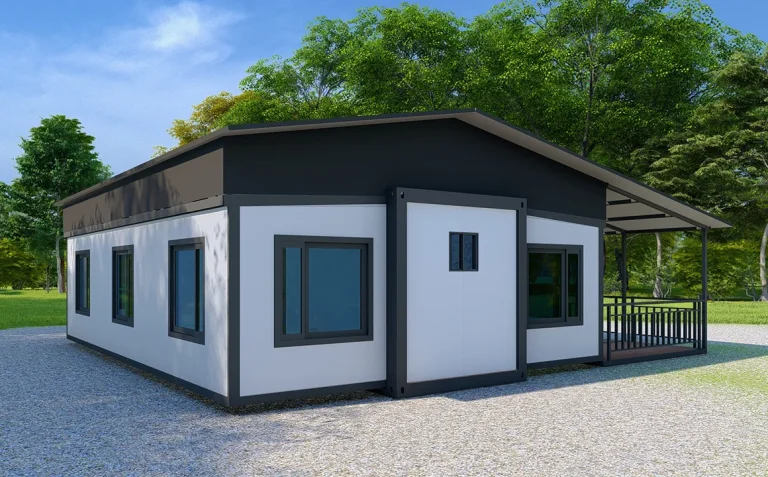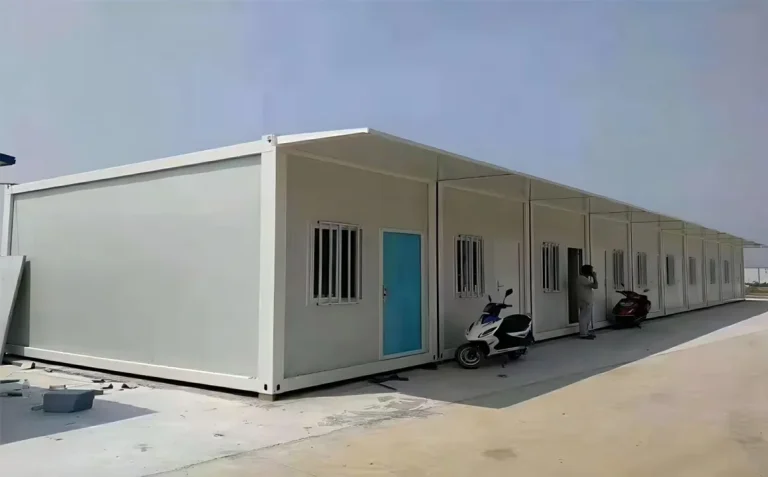








Project teams often lose time before real work even starts. Delayed office setup can slow meetings, paperwork, supervision, and site coordination. A container office solves this by giving you fast, practical, and professional office space exactly where your team needs it.
A shipping container office is a modular office solution built for speed, flexibility, and daily work efficiency. It gives contractors, developers, EPC companies, and project owners a reliable workspace for management, coordination, and support on construction sites, industrial projects, and temporary business locations.
Outline
What is a construction container office?
Why is a container office a smart choice for construction sites?
How is a shipping container office different from a traditional office?
What types of office container solutions are available?
Why does a ground-level office container work well on-site?
How can you customize a modular office container?
What sizes and floor plans should buyers consider?
Is rental or purchase better for a container office project?
What makes a portable office container durable and practical?
How do you choose the right supplier for your office project?
What Is a Construction Container Office?
A construction container office is a prefabricated office container designed to provide working space for project teams. It can be used as a manager’s office, meeting room, admin room, reception area, or technical workspace. Instead of waiting for permanent facilities, teams can start working with a ready-made office solution.
Unlike a traditional office, this type of container office is made for mobility and quick deployment. It is often installed on a job site, industrial yard, camp project, or temporary development area. The goal is simple: create efficient office space close to the real work.
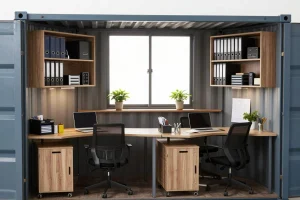
For many buyers, a modern shipping container office is not just a box. It is a complete office unit with insulation, lighting, doors, windows, power access, and interior options that support real daily use.
Why Is a Container Office a Smart Choice for Construction Sites?
A container office is a smart option because it helps teams move faster. On active construction sites, project managers, engineers, procurement staff, and supervisors need a working base for drawings, schedules, calls, records, and meetings. Without that space, productivity drops.
A mobile office solves this problem by bringing administration closer to operations. Teams do not need to work from unfinished buildings or remote temporary rooms. They can work directly at the container site, which improves response time and communication.
It also makes budget control easier. Compared with building temporary structures from scratch, a modular container office is usually more efficient in planning, transport, and installation. That is why it has become one of the most practical office solutions for modern construction projects.
Main advantages for project users
- Fast installation
- Professional workspace
- Better site coordination
- Flexible relocation
- Lower preparation time
- Suitable for short-term and long-term project use
How Is a Shipping Container Office Different From a Traditional Office?
The biggest difference is mobility. A shipping container office can be delivered, placed, connected, and used much faster than a traditional office. A fixed office depends on longer site preparation and more complex building work. A modular unit simplifies that process.
Another difference is purpose. A container office is designed for project work, field management, and temporary or semi-permanent operations. It is ideal for job site teams, engineering support, remote supervision, or field offices where flexibility matters more than formal architecture.
A third difference is scalability. A standard office building stays where it is. A modular office container can be expanded, repositioned, or reused in future projects. This makes modular office buildings much more attractive for companies that manage multiple locations.
| Factor | Container Office | Traditional Office |
|---|---|---|
| Setup speed | Fast | Slower |
| Mobility | High | Very low |
| Best use | Project and temporary use | Permanent fixed use |
| Expansion | Easier | More complex |
| Transport | Simple | Not relocatable |
| Reuse value | High | Low |
What Types of Office Container Solutions Are Available?
There are many ways to build a practical container office. Some projects need a single portable office for one manager. Others need multiple linked units to create meeting rooms, admin zones, and shared office space. The right solution depends on team size, workflow, and specific needs.
Some buyers prefer a simple mobile office container for short-term use. Others choose larger modular configurations for project headquarters. In many cases, buyers combine different units to create a more complete support system.
A modern office project may include:
- One main office unit
- One meeting room
- One reception area
- One combined office and storage room
- One sanitary support module
This is why modular container offices are so useful. They can be adapted to different project sizes and can grow with the site.
Why Does a Ground-Level Office Container Work Well On-Site?
A ground-level office is especially useful because it is easy to access every day. Staff may enter and exit the office many times with drawings, documents, laptops, sample materials, or tools. A ground-level office container makes that process smoother.
This setup is practical for teams that need quick movement between work zones and office functions. A ground-level installation can also help improve access for visitors, inspectors, and suppliers. In some cases, a ramp can make entry even easier.
A ground-level mobile office is often the most efficient choice for busy projects because it reduces unnecessary movement and supports easier daily operation. For many sites, having the office placed directly on the ground is simply the most practical answer.
container house
How Can You Customize a Modular Office Container?
One of the biggest strengths of a container office is flexibility. You can customize the interior based on your team size, workflow, and project type. A manager’s office needs one layout. A supervision room needs another. A sales office needs something different again.
Common customization options include:
- Open desk area
- Private manager room
- Meeting table area
- Reception space
- Filing and storage space
- Rest area
- Branding and signage
- Air conditioning and climate control
- Electrical hookup
- Extra windows and partitions
This level of customization helps buyers create a customizable office that matches real site work. Some clients want an open office plan, while others need separated zones for privacy and function. Good design means the office works for the team, not against it.
A well-planned modular office should also support comfort. Good lighting, airflow, and clear movement inside the unit all improve daily use.
What Sizes and Floor Plans Should Buyers Consider?
The right size depends on the number of staff, the daily tasks, and the site conditions. Smaller units are useful for one or two people. Larger units work better for bigger teams or mixed functions such as admin plus meetings.
A 20 ft office may be enough for a compact management team, while a 40ft office offers more flexibility for desks, storage, and visitor seating. That is why a real size comparison is important before purchase.
Buyers should ask clear questions:
- How many people will use the office?
- Is the office only for paperwork?
- Will it also store devices, samples, or project documents?
- Do you need meeting space?
- Do you need storage in one unit?
These answers help define the best floor plans and interior layout.
| Office Size | Typical Use | Best For |
|---|---|---|
| Small office unit | 1–2 staff | Site supervisor |
| Medium office container | 2–4 staff | Admin and meetings |
| Large 40ft office | 4+ staff | Full site team |
| Linked modular offices | Multiple teams | Project headquarters |
Is Rental or Purchase Better for a Container Office Project?
That depends on the project timeline. For very short use, rental or office rental may be suitable. Some businesses choose office containers for rent when they need a quick solution without long-term ownership.
However, many B2B clients prefer containers for sale because ownership offers more control. Purchased units can be branded, upgraded, relocated, and reused again. Over time, this often creates better value than repeated short-term rental.
A purchased portable office container also works better when the buyer wants special interior features or expects to use it on more than one job site. In this case, the office becomes an asset, not just a temporary expense.
What Makes a Portable Office Container Durable and Practical?
A good portable office container must be strong enough for demanding site conditions. This is why steel construction matters. Strong frames, secure doors, and weather-resistant materials help create a more durable unit.
Many offices use robust steel construction based on modular engineering principles similar to iso and iso shipping transport logic. This helps the office perform better during movement and repeated use.
Inside the office, function matters just as much as strength. A practical office should include:
- Good insulation
- Led lighting
- Secure power points
- Ventilation and cooling
- Clear entry access
- Useful desk arrangement
- Reliable lock systems
Some buyers also want a storage container office or a combined unit for admin work plus equipment storage. That can be especially useful on compact sites where every meter matters.
A fully equipped office gives teams more than shelter. It creates a productive and professional environment for planning, communication, and control.
Why Is Energy Efficiency Important in a Container Office?
Comfort has a direct effect on productivity. A poorly insulated office becomes too hot, too cold, or too noisy. A well-designed container office improves comfort and reduces wasted power.
This is where energy efficiency matters. Better wall and roof design, practical cooling systems, and well-placed windows help control indoor conditions. That makes the office easier to use for long hours.
For buyers managing remote or repeated projects, comfort is not a small issue. It affects morale, focus, and real operating cost. Good office design supports work quality as much as good equipment does.
How Do You Choose the Right Supplier for Your Office Project?
The supplier matters as much as the product. A reliable manufacturer should understand project delivery, transport planning, interior fit-out, and long-term reuse. The goal is not just to sell a container office, but to provide a working solution.
A buyer should check:
- Factory capability
- Export experience
- Material quality
- Ability to outfit offices for different uses
- Response speed
- Installation guidance
- Support for repeat projects
- Ability to handle office space needs
A professional supplier should also help buyers consider location and intended use, access method, climate, and whether the final design can meet local building codes where required.
Before placing an order, it is wise to request a quote with detailed specifications. That helps both sides clarify product scope, delivery expectations, and office performance.
Why Are Container Offices a Good Fit for Modern Project Management?
Modern projects move fast. They often start in undeveloped areas, temporary zones, or changing work environments. That is why a container office fits so well. It helps teams work where the action is.
These offices are ideal for contractors, developers, EPC firms, importers, camp builders, NGOs, and industrial operators because they solve a basic but important problem: where should the team work today?
A modular office gives the answer quickly. It creates practical office space, supports communication, and improves coordination from day one. In that sense, office containers come with more than walls and roofs. They come with speed, structure, and operational value.
FAQs
What is a container office used for?
A container office is used for management, supervision, meetings, planning, paperwork, and support work on projects, camps, industrial sites, and temporary business locations.
Is a shipping container office suitable for construction sites?
Yes. A shipping container office is highly suitable for construction sites because it is fast to deploy, easy to position, and useful for daily site coordination.
Can a container office be customized?
Yes. Buyers can usually customize the interior, windows, doors, partitions, cooling, lighting, wiring, and storage based on their project needs.
Are office containers durable?
Yes. Quality units use steel construction and weather-resistant materials, making them durable enough for repeated use across different projects.
Is it better to rent or buy a container office?
For very short projects, rental may work. For repeat use, branding, or special requirements, buying is often the better long-term option.
Can one unit include office and storage together?
Yes. A hybrid design can combine office functions with storage needs, which is useful for sites that want admin work and basic material storage in one place.
Key Takeaways
A container office is a fast and practical solution for modern site management.
A shipping container office helps teams create professional workspace close to real operations.
Ground-level access makes office use easier on active projects.
Buyers can choose different sizes, layouts, and interior functions based on project needs.
A modular office can support both short-term and repeated project use.
Ownership often creates better long-term value than repeated office rental.
Strong materials, good lighting, and comfort features improve daily office performance.
A reliable supplier should support both product quality and project execution.
Modern office containers are ideal for construction, engineering, industrial, and temporary field operations.
The right office setup helps teams start faster and manage projects more efficiently.