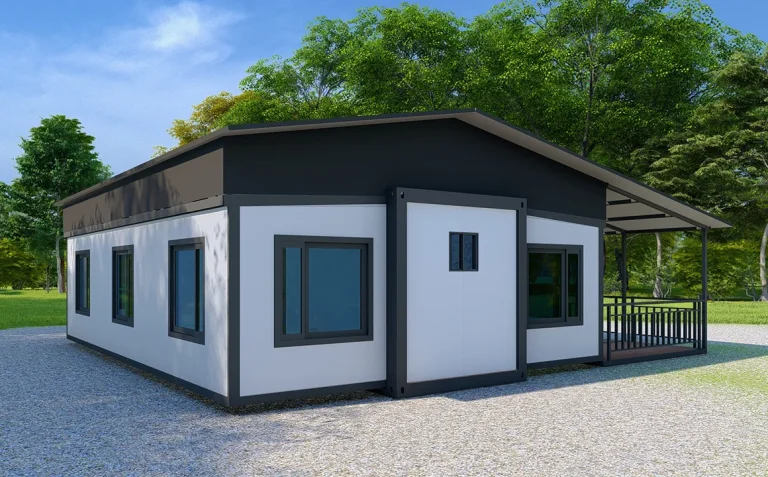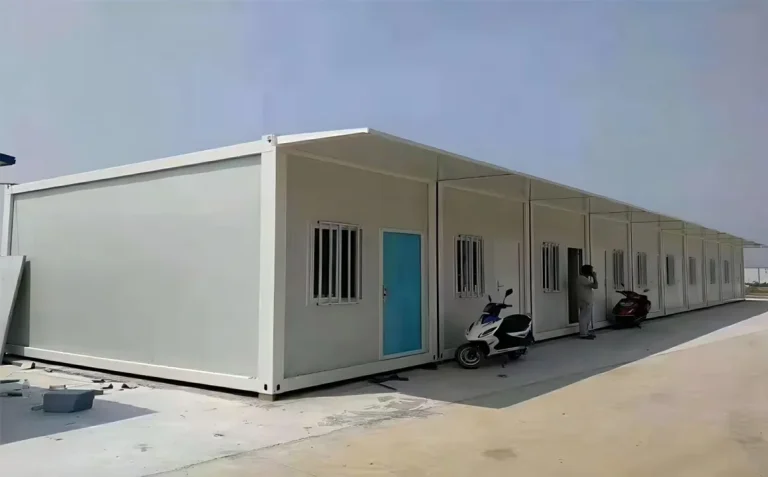








Finding fast, reliable housing is hard. Traditional building is slow, costly, and full of delays. That gets worse when your project needs quick delivery, easy transportation, and flexible installation. A flat pack container house solves this with faster setup, lower site work, and project-ready modular space.
A flat pack container house is a type of prefab building made with factory-produced parts that ship efficiently and assemble quickly on site. It is widely used for offices, camps, schools, clinics, and accommodation because it is cost-effective, durable, customizable, and easier to deploy than many traditional homes or site-built structures.
Container House
Outline
What is a flat pack container house?
Why are flat pack container houses becoming so popular?
How does a 20ft flat pack container house work?
What materials make a modular container building strong and safe?
How important are insulation and sound insulation in container houses?
Can you customize the layout and design?
Are flat pack container homes better than traditional homes for some projects?
Where are these prefab container buildings commonly used?
What should B2B buyers check before choosing a container house factory?
How can a China-based manufacturer support global project delivery?
What Is a Flat Pack Container House?
A flat pack container house is a modular building system shipped in parts and assembled on site. Unlike modified shipping containers, these units are designed for easier loading, better space utilization, and more flexible project planning. The core idea is simple: factory precision plus field efficiency.
In real B2B projects, buyers do not just want a basic container home. They want dependable housing solutions for staff camps, remote offices, disaster response, municipal projects, and temporary or semi-permanent use. That is where container houses stand out. They can be deployed faster, scaled more easily, and adjusted to different site conditions.
From my perspective as a China-based factory serving project clients, the biggest value is not only product supply. It is system support. A good prefab container solution helps buyers reduce uncertainty in procurement, transport, installation, and future expansion.
Why Are Flat Pack Container Houses Becoming So Popular?
The rise of flat pack container buildings comes from speed, flexibility, and cost control. Many contractors and developers now need buildings that can move faster than conventional schedules. A modular system helps reduce on-site labor, simplify installation, and shorten project lead time.
These container houses are also appealing because they are an affordable alternative to traditional construction in many use cases. For camps, offices, classrooms, clinics, and worker accommodation, they offer more predictable costs compared to traditional construction methods. That matters when budgets are tight and deadlines are fixed.
Another reason is logistics. A flat-pack structure reduces wasted shipping volume. More units can fit into one shipment, which helps control shipping cost. For overseas EPC projects, mining sites, and government jobs, that creates a practical and measurable advantage.
Why buyers choose this model
- Faster procurement and rapid assembly
- Lower transport volume and easy transportation
- Flexible expansion with modular design
- Strong fit for temporary housing and permanent and temporary use
- Easier site planning than many traditional houses
How Does a 20ft Flat Pack Container House Work?
A 20ft flat pack container house is one of the most common sizes in project supply. It is compact, practical, and easy to combine into larger building systems. A single unit can work as an office, guard room, bedroom, meeting room, or sanitary room depending on the interior plan.
The structure is typically delivered as top frame, bottom frame, wall panels, corner posts, doors, windows, and connection components. Workers install the parts step by step on site. This quick assembly approach works well for construction sites, workforce camps, municipal use, and emergency deployment.
For many B2B buyers, the value is not just one standard 20ft unit. The value is the ability to combine many container units into a scalable project. Units can be linked side by side or stacked based on the required layout, local engineering needs, and site conditions.
| Typical 20ft Unit Consideration | What Buyers Care About |
|---|---|
| Size and module standard | Easy planning and repeatable design |
| Packing efficiency | Lower freight cost |
| Installation method | Less site labor and faster launch |
| Interior options | Office, dormitory, clinic, toilet, storage |
| Expansion potential | Better long-term project flexibility |
What Materials Make a Modular Container Building Strong and Safe?
A good modular container building depends on strong raw materials and precise production. In most project-grade systems, the structure uses galvanized steel, steel profiles, and a durable galvanized steel frame to improve strength and corrosion resistance. For global deployment, that is essential.
Wall systems often use sandwich panels, including rock wool sandwich or EPS-based options depending on fire, thermal, and budget needs. Exterior surfaces may use color steel, while inner boards can include cement board or other finishing materials selected for climate, hygiene, or cost targets.
For B2B buyers, safety is never optional. Many projects require materials that are fireproof, weather-resistant, and suitable for local compliance standards. The best systems are used in construction projects because they balance strength, speed, and maintainability.
Common structural and wall materials
- Galvanized steel frame
- Roof and wall systems with insulated sandwich panels
- Cement board for selected interior areas
- Color steel outer layers
- Door and window systems matched to climate and function
How Important Are Insulation and Sound Insulation in Container Houses?
Insulation is one of the first things professional buyers ask about, and for good reason. A building that looks strong but performs poorly in heat or cold can create problems for comfort, power use, and long-term operating cost. Good wall and roof design helps insulate the structure and improve indoor stability.
High-quality panel systems support thermal insulation, heat insulation, and better control of heating and cooling needs. In many climates, this helps lower energy bills and improves working or sleeping conditions. That is especially important in mining, camp housing, and municipal accommodation.
There is also the question of sound insulation. Offices, dormitories, clinics, and meeting rooms need quieter interiors. Better panel density, tighter connection details, and proper sealing all improve comfort. That is one reason modern container houses are increasingly chosen for professional projects, not just basic site shelters.
In real project use, buyers remember performance long after delivery. Good insulation turns a basic module into a practical, usable building.
Worker Accommodation Camp
Can You Customize the Layout and Design?
Yes. One of the major reasons buyers choose flat pack container systems is the ability to customize. You can adjust room count, openings, finishes, electrical plans, and sanitary layouts based on the project purpose. That makes the system highly adaptable.
A smart modular design also supports future changes. You may start with a sales office, then convert units into staff accommodation or clinic rooms later. This flexibility is useful for engineering companies, camp operators, and distributors who serve different industries.
From a manufacturing view, customization is more than color or appearance. It includes staircase options, corridor connection, insulation grade, window type, plumbing layout, and installation method. A truly customizable solution gives B2B buyers more control over project outcomes.
Popular customization options
- Room division and interior living space
- Door and window placement
- Electrical and plumbing systems
- Exterior finish and roof options
- Staircase and multi-unit connection systems
- Toilet, shower, office, and dormitory configurations
Are Flat Pack Container Homes Better Than Traditional Homes for Some Projects?
In many cases, yes. Flat pack container homes are not meant to replace all traditional homes, but they are a strong alternative to traditional building for many business and project needs. When speed, transport efficiency, repeatability, and budget control matter, modular wins.
For example, a workforce accommodation project does not usually need the same build process as permanent urban traditional houses. It needs reliable rooms, stable quality, safe installation, and fast delivery. That is why a container home solution often fits better.
These systems also support sustainable housing goals. A factory-made process can reduce waste, improve consistency, and simplify future relocation or reuse. In that way, they support more eco-friendly and energy-saving project planning.
Flat pack vs traditional building
| Factor | Flat Pack Container | Traditional Construction |
|---|---|---|
| Build speed | Fast | Slower |
| Site labor | Lower | Higher |
| Transport | Easily transported | Not movable |
| Expansion | Easy | More complex |
| Cost control | More predictable | Often variable |
| Best use | Camps, offices, schools, clinics | Long-term fixed residential |
This is why many buyers see it as an affordable alternative to traditional building methods that makes homeownership more accessible in some markets and makes project housing easier in commercial use.
Where Are These Prefab Container Buildings Commonly Used?
These buildings are used almost everywhere that speed and flexibility matter. A flat pack office is common on construction sites, while larger building clusters are used for camps, schools, clinics, dormitories, retail points, and field command centers.
For NGOs and relief agencies, they can support emergency shelters and service facilities. For industrial and mining operators, they work well as site offices, accommodation, and service buildings. For developers and distributors, they become scalable building solutions across multiple regions.
They are also suitable for tiny homes, sample display units, and service hubs, although the strongest demand usually comes from B2B project buyers. In short, these modules are suitable for temporary deployment, but with the right specifications they also support long-term use.
Typical applications
- Workforce camps
- Site offices
- Clinics and classrooms
- Government support buildings
- Sales offices
- Retail kiosks
- Temporary building projects
- Accommodation blocks
- Storage and utility support near storage containers
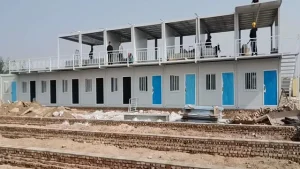
Worker Accommodation Camp
What Should B2B Buyers Check Before Choosing a Container House Factory?
Choosing the right container house factory is about more than price. You should review production capacity, technical support, engineering understanding, export experience, and ability to deliver documentation. A leading manufacturer should support both product quality and project execution.
Buyers should ask clear questions about materials, panel thickness, load-bearing design, packing method, and installation guidance. It is also wise to ask whether the system is designed to be energy-efficient, what fire rating options are available, and how the factory manages corrosion protection and detail finishing.
Just as important, check whether the supplier understands regulations in your area. Local standards for fire safety, structure, and electrical systems may differ from one country to another. A project-ready supplier should help reduce risk before shipment, not after problems appear on site.
Buyer checklist
- Material specs and panel options
- Export packing and loading plan
- Installation instructions
- Experience with overseas projects
- Engineering response speed
- Quality control process
- Compliance awareness
- After-sales support
How Can a China-Based Manufacturer Support Global Project Delivery?
A strong Chinese supplier can do more than fabricate products. We can help B2B buyers with drawings, packing plans, installation logic, customization support, and batch delivery scheduling. This matters when your project includes dormitories, offices, toilets, clinics, or multi-module blocks.
Because factory production is centralized, prefabricated construction becomes easier to manage. A professional supplier can coordinate quantity planning, product matching, and export-ready packaging for large orders. That is especially useful for EPC firms, distributors, and government contractors managing complex timelines.
In my experience, buyers value suppliers who think like partners. They do not only ask for competitive pricing. They also want predictability, communication, and products that are containers are designed for real field use. A trusted factory helps turn procurement into deployment.
Why Does Modular Design Matter for Long-Term Value?
The biggest strength of a modular system is long-term flexibility. A building can start small and grow later. That saves space, protects capital, and improves efficient space planning in changing project environments.
The modular design allows for easy relocation, reconfiguration, and phased installation. For buyers managing remote operations, this is a practical benefit. It means the building stock can move with the project instead of being abandoned after one contract ends.
This is also why prefabricated houses and prefabricated container systems are gaining more attention in global project markets. They support better planning, smarter cost control, and more flexible expansion than many fixed, slow-build solutions.
Are Flat-Pack Container Houses Good for Sustainable and Energy-Efficient Projects?
Yes, especially when the specification is chosen carefully. These systems can support sustainable living, lower transport waste, and more controlled factory production. In many cases, they are also designed to be energy-efficient through better panel choice, tighter sealing, and improved wall and roof assembly.
Good modules can improve energy efficiency with better thermal design in the walls and roofs. That matters because comfort and operating cost are linked. When buildings perform better, owners spend less on power and maintenance.
For public projects, camp buildings, and long-duration accommodation, the best approach is to choose a system that balances durability, comfort, and shipment efficiency. That creates a safe and secure living space while still keeping the project practical and scalable.
Mini Case Study: Why Project Buyers Prefer Flat Pack Container Buildings
A contractor needs a fast accommodation block for a remote site. Traditional building would take too long, and local labor is limited. The team chooses a prefab container solution with dorm rooms, toilets, and office units.
The result is simple:
- Faster delivery
- Lower site complexity
- Better schedule control
- Easier expansion later
- More predictable quality
That is why a modern flat-pack container house works well for project buyers. It supports both speed and control. And in real business, those two things matter a lot.
FAQs
Are flat pack container houses durable enough for long-term use?
Yes, if the structure uses quality steel, good coatings, and proper panel systems. Durability depends on material grade, design detail, installation quality, and maintenance plan.
Can I use a flat pack container house as a permanent building?
In many cases, yes. These systems support permanent and temporary use, but you should always check engineering requirements and local approval rules before final deployment.
What is the main advantage of flat-pack containers over modified shipping containers?
Flat-pack containers are easier to ship efficiently and often offer more flexible building configurations. They are made for modular assembly rather than simple container conversion.
Are these container houses energy-efficient?
They can be. With proper insulation, panel selection, and sealing, the structure can become more comfortable and reduce power use. That is important for both camps and office buildings.
Can a container house factory provide custom project solutions?
A capable factory should. Buyers often need custom room plans, climate options, power systems, and interior arrangements. Strong suppliers help customize based on actual project needs.
Are flat pack container homes only for temporary building use?
No. While they are excellent for temporary housing, they are also used for long-term accommodation, public facilities, and commercial support spaces when designed correctly.
Key Takeaways
A flat pack container system gives B2B buyers faster, more flexible project delivery.
Container houses work well for camps, offices, schools, clinics, and accommodation blocks.
A 20ft flat pack container house is a practical standard module for scalable deployment.
Material quality matters: look for galvanized steel, reliable panels, and strong engineering support.
Good insulation, thermal insulation, and sound insulation improve comfort and operating value.
The ability to customize makes modular buildings fit more project scenarios.
These products are often a smarter choice than traditional building for fast, repeatable site work.
A reliable container house factory should support engineering, packing, export, and project communication.
For many clients, modular units are a proven cost-effective way to create modern, scalable housing.