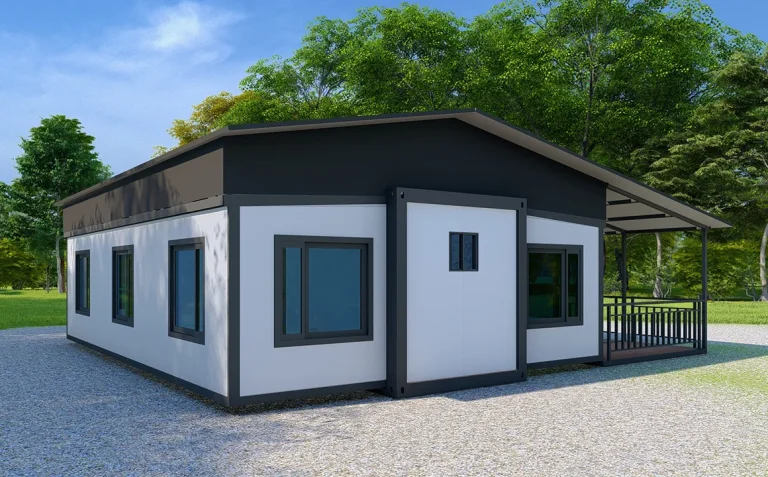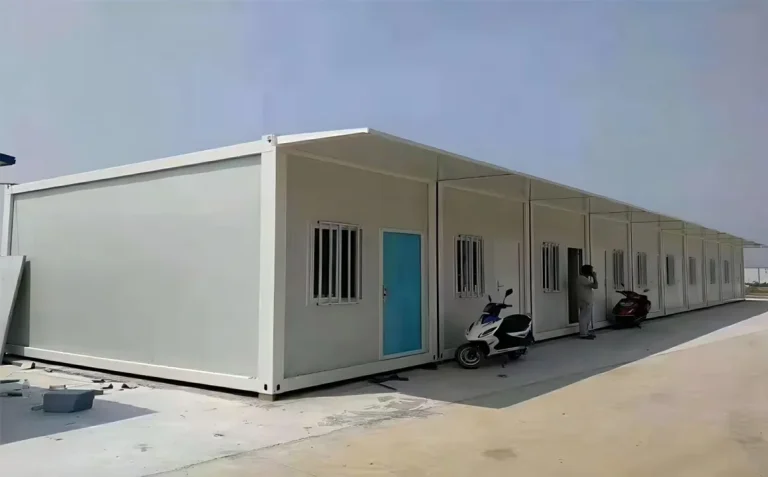








Project delays, rising labor costs, and remote-site housing pressure can quickly slow down construction plans. When traditional building takes too long, budgets stretch and mobilization suffers. A reliable folding container house supplier solves that with faster deployment, factory-made consistency, and project-ready modular housing.
A folding container house manufacturer provides factory-built prefab units that ship efficiently and install fast. These units can serve as offices, dormitories, site camps, clinics, and temporary or semi-permanent living space. For contractors, EPC firms, governments, and importers, they offer a practical, scalable alternative to traditional construction. Modular construction is widely valued for faster timelines, stronger quality control, and lower site disruption.
folding container house
Article Outline
What is a folding container house manufacturer?
Why is a folding container house a smart prefab choice?
How is a folding container house different from a shipping container house?
What types of modular container houses are available?
Why do project clients choose expandable container house solutions?
What materials and structures matter most?
How fast can prefab container housing be installed?
Where are container home and modular house systems used?
How do customized services support B2B projects?
What should buyers ask before they contact us?
What Is a Folding Container House Manufacturer?
A container house manufacturer designs, engineers, and produces factory-made housing units for fast delivery and field installation. In our case, as a China-based factory focused on modular container buildings, we supply folding, detachable, flat pack, and expandable container models for global B2B clients who need practical, scalable site buildings.
A professional supplier does much more than sell a box. We help clients customize layout, dimensions, insulation, interior finishing, door and window plans, electrical systems, and packing methods. That matters for construction contractors, real estate developers, municipal buyers, NGOs, and mining operators who need a complete housing solution, not just a basic shell.
The market supports that demand. The Modular Building Institute says modular construction is valued for speed, productivity, and better project control, while global trade data shows strong international demand for prefabricated buildings across major importing markets such as Germany, the United States, Saudi Arabia, and Indonesia.
Why Is a Folding Container House a Smart Prefab Choice?
A folding container house is popular because it reduces transport volume and simplifies installation. The structure is engineered so wall, roof, and floor elements fold into a compact unit for shipment, then open on site into usable living space. That makes it a very cost-effective option when shipping efficiency and fast deployment matter.
Compared with traditional construction, this kind of prefab house can help reduce weather delays, labor pressure, and site coordination risks. Modular construction is often completed much faster than site-built work; the Modular Building Institute cites studies indicating modular projects can be finished about 20% to 50% faster in many cases.
For B2B buyers, the value is simple. A well-made prefabricated house lets you mobilize crews earlier, set up dorms or offices faster, and control schedules with less uncertainty. That is especially useful for workforce camps, industrial projects, municipal programs, and emergency deployment.
How Is a Folding Container House Different From a Shipping Container House?
Many buyers use the terms interchangeably, but they are not the same. A shipping container is originally designed for cargo transport. A shipping container house adapts that cargo box into usable accommodation or office space. A folding container house, by contrast, is designed from the start as a building product.
That difference affects layout freedom, insulation, door and window placement, and transport efficiency. A cargo-based container home can be durable, but it often carries the dimensional logic of freight. A purpose-built modular container unit is usually easier to plan for project housing because it is made for people, utilities, and repeat installation.
Here is a quick comparison:
| Option | Core purpose | Main advantage | Main limitation |
|---|---|---|---|
| Shipping container conversion | Cargo box reused as shelter | Strong steel shell | Less layout flexibility |
| Folding container house | Purpose-built project housing | Fast transport and quick installation | Designed around standard modular sizes |
| Expandable container house | Compact shipping, larger deployed footprint | More spacious interior | More moving parts and setup steps |
| Flat pack container house | Packable components assembled on site | Efficient for bulk delivery | More site assembly needed |
For many project clients, the right answer is not one format only. It is the right mix of prefab container, flat pack container house, and expandable container house based on site conditions and occupancy plans.
What Types of Modular Container Houses Are Available?
There is no single best format for every project. Most buyers compare four main types: folding container house, detachable modular units, flat pack container house, and expandable container house systems. Each serves a different deployment logic.
A 20ft unit is often the most common starting point because it balances transport efficiency and usable floor area. A 40ft option may work better for larger offices or linked spaces. Some clients ask for a portable container house for repeated relocation, while others need a semi-permanent prefabricated container house for workforce accommodation, clinics, classrooms, or site administration.
Expandable formats have become especially attractive because they ship compact and open into a larger room footprint. That makes expandable homes, expandable portable units, and expandable living concepts useful where users want more comfort without giving up logistics efficiency. Modular systems also allow multi-container combinations for larger camp layouts and shared facility blocks.
Why Do Project Clients Choose Expandable Container House Solutions?
An expandable container solves a common project problem: how to ship a compact unit and still create a more comfortable interior after installation. When opened, the side sections extend outward and create a larger living environment than a closed transport format would suggest.
That is why expandable container homes and expandable container house models are increasingly discussed in the housing industry. For government projects, site camps, NGOs, and distributors, they can provide a better balance between logistics and usability. They are also appealing when a client wants a modular home feel rather than a narrow box-like room.
This does not mean every job should choose expansion. A folding container house is often better when the top priority is sheer transport quantity and rapid rollout. But when the user wants more open interior flow, 2 bedrooms, meeting space, or a better family-use plan, expandable layouts deserve serious attention.
Expandable Container House
What Materials and Structures Matter Most?
B2B buyers should pay close attention to structure, insulation, envelope materials, and manufacturing control. A dependable unit typically uses a steel structure or light steel structure frame, with insulated walls built from sandwich panel systems. Common cladding elements may include color steel plate surfaces and weather-resistant finishes.
A good modular unit must balance weight, strength, and installation ease. Buyers often ask about wind resistance, floor loading, roof drainage, corrosion protection, and how waterproof fireproof performance is handled. The right answer depends on climate, code expectations, occupancy type, and service life.
From a project perspective, structure quality is not just about strength. It is also about repeatability. Factory production under strict quality control improves consistency, which is one reason modular construction is associated with better quality control and fewer site variables compared with conventional build methods.
How Fast Can Prefab Container Housing Be Installed?
Speed is one of the strongest selling points of prefab and modular buildings. Because the major components are made in the factory, the site team spends less time on cutting, forming, and assembling raw construction materials in the field. That shortens the path from delivery to occupancy.
Industry sources consistently point to faster schedules. The Modular Building Institute highlights research showing that modular methods can cut project timelines significantly, while also lowering site disruption and helping teams work around weather delays.
For practical planning, a portable prefabricated unit can often be unloaded, unfolded or assembled, connected to utilities, and prepared for use far faster than a comparable site-built room. Exact timing depends on foundation readiness, crane or forklift access, crew size, and fit-out scope. But the schedule advantage is real, and for project clients, that often means lower operating costs and earlier use of the site.
Where Are Container Home and Modular House Systems Used?
A modern container home is no longer limited to simple site rooms. These systems are used for worker accommodation, school buildings, field clinics, command centers, sales offices, police or checkpoint rooms, mine camps, and public-service support units. In some markets, they are also used as a tiny home, tiny house, or tourism cabin format, though our main focus is B2B project use.
For humanitarian and temporary deployment, speed and dignity matter. UNHCR defines emergency shelter as a habitable covered living space that should provide security, privacy, and healthy conditions, and its shelter guidance emphasizes the need for robust, rapidly deployable solutions that fit context and standards.
That is why temporary housing, emergency response units, and even refugee camp support infrastructure often rely on fast, repeatable modular approaches. A well-designed prefabricated house can support offices, sanitation blocks, dorms, kitchens, and clinics in one coordinated camp plan.
How Do Customized Services Support B2B Projects?
Large buyers rarely want an off-the-shelf room with no adjustment. They want customized services that fit their tender, logistics route, climate, and user profile. This can include plan layout, insulation level, façade style, bathroom package, power specification, plumbing arrangement, and region-specific finishing details.
That is where we add value as a China-based factory. We can customize door locations, glazing, wall thickness, roof systems, and utility layouts so the final container house is project-ready. For distributors, we can adapt product configuration for their target markets. For contractors and EPC firms, we can package mixed unit types for offices, dorms, meeting rooms, and auxiliary spaces.
Factory support also includes drawings, production scheduling, packing plans, and after-sales coordination. When a client is buying in bulk, product support is not a side issue. It is part of the whole delivery result. Good quality control, timely documentation, and responsive communication are just as important as the module itself.
What Should Buyers Ask Before They Contact Us?
Before you contact us, define the real job. How many units are needed? Are they for accommodation, office, clinic, guard post, or mixed-use? Will the site need 20ft standard modules, a prefab expandable layout, or a blend of folding and detachable units?
Here is a practical buyer checklist:
What is the project type and duration?
Is the unit temporary, semi-permanent, or long-term?
What climate and code requirements apply?
Do you need a modular house, dorm, mobile office, or camp package?
Should the unit be fully customizable or based on a standard model?
Do you need furniture or utility packages to furnish the units?
Are certifications such as sgs testing or project documents required?
What shipping method and unloading method are available?
The more clearly these points are defined, the better the proposal will be. For many buyers, a strong supplier relationship begins not with a catalog request but with a technical conversation. That is why the best time to contact us is early, before layout and transport assumptions are locked in.
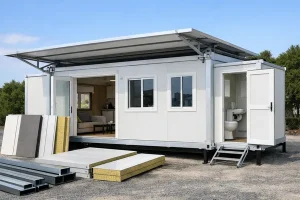
prefab expandable container house
A Simple Use-Case Table for Buyers
| Buyer type | Recommended product direction | Why it fits |
|---|---|---|
| Construction contractor | Folding container house + dorm blocks | Fast rollout and repeat deployment |
| Real estate developer | Expandable container house or premium modular home | Better user experience and layout value |
| Government or municipal owner | Detachable or flat pack container house | Scalable for schools, clinics, offices |
| EPC or engineering company | Mixed modular camp package | One-source coordination |
| Importer or distributor | Standardized prefab house range | Easier stocking and market expansion |
| NGO or disaster-relief operator | Rapid prefabricated house deployment | Quick shelter support and flexibility |
Case Example: Workforce Camp Mobilization
A remote industrial client needed staff accommodation, a mobile office, and washroom support near a time-sensitive project site. Traditional housing was too slow and too exposed to weather and labor uncertainty. The client needed a faster alternative to traditional site building.
The answer was a mixed camp plan: folding container house units for dorms, detachable units for sanitary facilities, and one expandable container office block for administration. Because the modules were factory-built, the team reduced on-site work and moved into operation much earlier than a conventional program would allow. That kind of acceleration is exactly why modular construction is increasingly chosen across global project delivery.
FAQs
What is a folding container house?
A folding container house is a factory-built modular unit designed to fold into a compact transport form and open on site into usable space. It is commonly used for camps, offices, accommodation, and rapid project deployment.
Is a container home the same as a shipping container home?
Not always. A container home can be a purpose-built modular product, while shipping container homes usually begin as cargo containers converted for habitation. Purpose-built units are often easier to adapt for project housing.
What is the difference between folding and expandable container homes?
Folding units focus on transport efficiency and fast setup. Expandable container homes ship compact too, but open sideways to create a larger interior footprint after installation.
Can I customize the layout and finish?
Yes. Most B2B clients need project-specific plans. A good factory can customize layout, insulation, windows, doors, bathrooms, finishes, and utilities based on climate, standards, and site use.
Are these houses eco-friendly?
They can support eco-friendly building goals because factory production can reduce site waste, improve material control, and support better energy planning than scattered on-site construction. Modular construction is also widely associated with reduced waste and stronger sustainability performance.
Are modular container houses suitable for off-grid projects?
Yes, many are suitable for off-grid or remote projects when paired with the right utility package, such as solar systems, water tanks, septic options, and insulated wall assemblies.
Key Takeaways
A folding container house manufacturer provides fast, scalable housing for construction, EPC, government, NGO, mining, and distribution clients.
Prefab and modular systems can reduce schedule risk, improve quality control, and speed up occupancy.
Folding container house units are ideal when transport efficiency and rapid setup matter most.
Expandable container house formats suit buyers who want more interior room after deployment.
Purpose-built container house products differ from converted shipping container units in layout logic and project suitability.
Material selection, insulation, structural design, and factory quality control are critical for long-term performance.
Humanitarian and temporary deployment projects value fast, robust housing that supports privacy, safety, and healthy living conditions.
The best results come from early planning, clear specifications, and strong factory support from design through delivery.