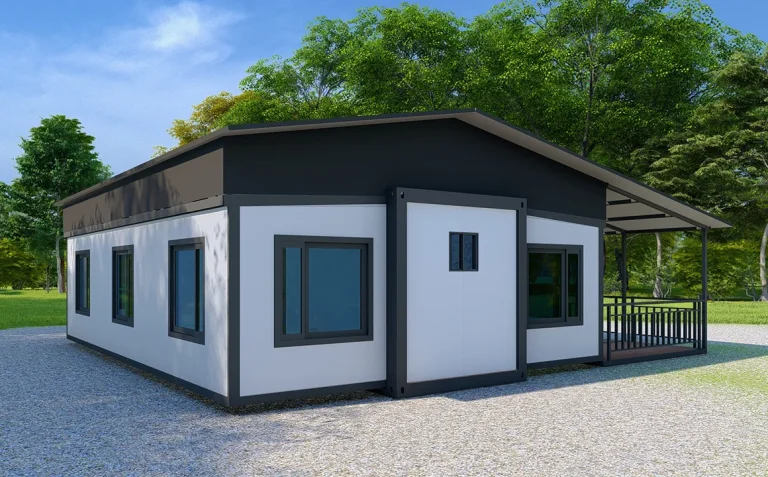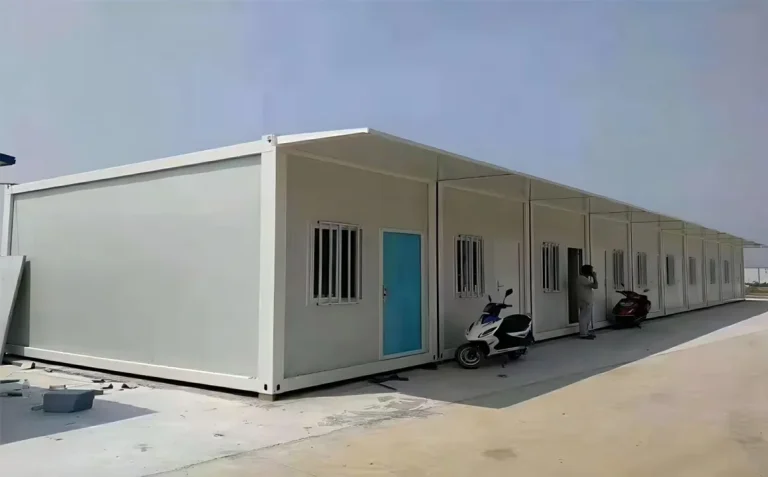








A container project can look cheap and fast at first. Then insulation fails, moisture builds up, code reviews slow the job, and hidden reinforcement costs appear. The smart solution is to understand the real risks early and choose project-ready container houses instead of guessing your way through using shipping containers.
The most common problems with a shipping container home are poor insulation, condensation, rust and corrosion, layout limits, structural changes around openings, and code approval issues. These problems are real, but they are manageable when the project uses proper engineering, factory prefabrication, quality wall systems, and compliance with local building codes.
Outline
Why do container houses create problems when people use shipping containers directly?
Is insulation the biggest issue in a shipping container home?
Why are condensation, ventilation, and mold growth such common problems?
Do rust and corrosion make shipping containers a bad long-term choice?
Can cutting windows and doors compromise the structural integrity?
Are building codes and permits harder for container construction?
Does a container home feel too small inside?
How do utilities, floors, and finishing work add complexity?
Much does it cost to fix the hidden problems of container housing?
Why do modular prefab container houses solve many of these issues better?
Why do container houses create problems when people use shipping containers directly?
A lot of trouble starts when people confuse a cargo box with a finished building. Shipping containers were designed for transport, stacking, and global freight handling. They were not designed as ready-made living rooms, offices, schools, or camp housing. That is why a raw container often needs major work before it becomes a safe and comfortable abode. ICC’s shipping-container guideline exists for exactly this reason: repurposed containers are being converted into IRC and IBC uses, but they still need proper design, review, and approval.
When people start building with shipping containers without enough planning, they often run into the same set of common problems: weak thermal performance, moisture risk, layout limits, and expensive retrofits. A raw container may look strong because the shell is industrial, but the shell alone does not give long-term comfort. A project still needs to address climate, walls, openings, services, and code.
This is why many B2B buyers now move away from rough container conversion and toward engineered modular systems such as flat pack container house solutions or expandable container house factory programs. Those products are built for occupancy from the start, not forced later into a housing role.
Is insulation the biggest issue in a shipping container home?
In many climates, yes. One of the first problems with a shipping container home is that the shell is metal, and metal moves heat very quickly. The U.S. Department of Energy explains that insulation works by reducing heat flow through conduction, convection, and radiation, and that moisture control and air leakage control also matter in the building envelope.
That matters because shipping containers are steel. If you try living in a metal box without enough thermal design, it can feel hot in the summer and cold in winter. The shell can conduct heat and cold fast, and that reduces comfort. To fix that, you must insulate well, control air leakage, and select the right wall and roof build-up for the local climate.
The trade-off is space. When you insulate from the inside, you reduce interior space and headroom. That is one reason factory-built container housing often uses better wall systems, cladding, and smarter panel design. Buyers who want more interior clearance may also choose high cube containers or fully engineered prefab container modules rather than converting a raw box.
Why are condensation, ventilation, and mold growth such common problems?
Moisture is the second major issue. EPA says mold problems are driven by moisture, and it advises people to act quickly if they see condensation on windows, walls, or pipes because condensation can signal high humidity. EPA also recommends venting moisture-producing appliances and reducing the moisture source. DOE likewise says moisture control improves comfort and helps prevent mold growth.
That is a big warning for container living. If warm indoor air meets a cold steel shell, water can form on interior surfaces. Without proper ventilation, insulation, and air sealing, that moisture can lead to mold growth, odor, damage to finishes, and poor long-term comfort. A container project that skips ventilation design often ends up spending more later on dehumidifiers, repairs, or finish replacement.
This is why a serious project needs window planning, an hvac system, exhaust strategy, and moisture control together. If ventilation is one of your main concerns, a related guide like how do you ventilate a container home should sit close to this topic in your content structure.
Do rust and corrosion make shipping containers a bad long-term choice?
Rust is not automatic, but it is a real risk. Once you start modifying, cutting, welding, storing on poor foundations, or exposing the structure to wet or coastal conditions, corrosion becomes a long-term issue. That does not mean container projects fail by default. It means the project must use the right coating, detailing, drainage, and inspection plan. ICC’s guidance exists because containers used as buildings are structural elements and need safe design and review, not just cosmetic conversion.
In practice, rust and corrosion often show up where water stays too long: edges, cuts, weld points, floor transitions, damaged paint, and badly sealed penetrations. If the shell is old, used containers can carry more uncertainty than a purpose-built prefab system. That is why many project buyers prefer new modular housing frames over random second-hand cargo units.
For website structure, this topic also connects naturally to do container homes rust easily, because buyers often search the rust question directly before they decide whether to buy a container home at all.
Can cutting windows and doors compromise the structural integrity?
Yes, it can. A container shell works as a structural box, so once you cut large openings for windows and doors, you may compromise the structural integrity if reinforcement is not added correctly. ICC’s shipping-container guidance specifically exists to help design, review, and approve containers when they are used as building elements, because those changes affect how the structure performs.
This becomes more serious when multiple units are combined. If you use two containers, remove major wall sections, or create wide interior openings, you may need to reinforce the entire structure so loads transfer correctly. The more aggressively you cut the shell, the more the project moves away from “cheap reuse” and toward engineered container construction.
That is one reason direct DIY conversion is often overrated. A purpose-built modular container house can prefabricate openings, wall systems, and support members in the factory instead of improvising them on site.
Are building codes and permits harder for container construction?
Often, yes. ICC notes that jurisdictions have faced a lack of clear permitting requirements and standards for repurposed containers, which is exactly why the G5 guideline was created. The guideline is meant to help jurisdictions, owners, architects, builders, and engineers safely review this kind of project.
For buyers, this means building codes are not a minor detail. A project may need structural review, energy-code review, fire-safety review, and proof of compliance with local building codes before approval. The moment you plan to build a container house for long-term use, you must make sure the design can comply with local regulations and site rules.
This is another reason factory-developed housing systems are attractive to EPC firms, contractors, and government buyers. Standardized models reduce uncertainty. Content-wise, this topic also links well to what foundations are needed for container homes, because foundation and anchoring are part of code acceptance too.
Does a container home feel too small inside?
It can. A raw container can feel narrow, especially after adding wall lining, insulation, service runs, and finish layers. Once you frame, insulate, and run utilities, the usable area can shrink more than many buyers expect. That is one reason some people love the look of shipping container architecture online but feel disappointed by the real internal layout.
This does not mean container housing cannot work. It means layout matters. A single-container concept may suit temporary offices, guard rooms, storage-adjacent functions, or compact living. But if the goal is family housing, worker accommodation, classrooms, or long-term offices, buyers often want a larger modular footprint, more headroom, and smarter room planning. That is where expandable container house for sale and related systems become more practical than a small single-box conversion.
The problem is not only square meters. It is also comfort. Limited width, low ceiling zones, and service chases can make living in a container feel tighter than the raw outside dimensions suggest.
How do utilities, floors, and finishing work add complexity?
Another hidden issue is services. A raw shell still needs water, drainage, lighting, insulation, interior finish, and ways to run utilities cleanly. Once you start adding plumbing, electrical routing, floor build-up, and wall systems, the project becomes much closer to normal home building than many first-time buyers expect.
The floor is a good example. Buyers sometimes assume the original base is ready to use, but real occupancy use often needs extra leveling, moisture management, finish layers, and service routing. The same is true for roofing, wall lining, and service penetrations. Every opening, cable pass, or mechanical penetration must be detailed to avoid leaks, heat loss, or future corrosion.
That is why container projects often look simple from the outside but become detail-heavy inside. For long-term occupancy, the shell is only the beginning.
Much does it cost to fix the hidden problems of container housing?
This is where many projects change direction. People ask much does it cost because they assume a container house must be cheaper than traditional building. Sometimes it is. Sometimes it is not. Once you add engineering, transport, craning, reinforcement, wall build-up, insulation, finishes, services, and permit work, the cost picture changes fast. ICC’s guidance makes clear that repurposed containers used as buildings are part of formal building review, not an informal shortcut.
The hidden-cost pattern is simple: the cheaper the starting shell, the more often the buyer has to spend later to correct comfort, moisture, and code issues. That is why many global project clients now compare direct conversion against factory-built prefab units as an alternative to traditional site construction and also as an alternative to raw container conversion.
From a B2B perspective, the best question is not “What is the cheapest box?” It is “What is the lowest total installed cost for safe, code-aware, comfortable, project-ready use?”
Why do modular prefab container houses solve many of these issues better?
Because purpose-built systems are designed for occupancy from the start. A good prefab factory does not simply use a container as a cargo shell and hope for the best. It designs the wall build-up, roof, structure, openings, MEP routing, and finish package as one coordinated product. That reduces the chance that insulation, corrosion control, code review, and interior comfort will fight each other later.
This is where modern container houses become more practical for contractors, developers, NGOs, industrial camps, and municipal projects. Folding, flat-pack, detachable, and expandable systems can be engineered for transport and site speed while still improving thermal performance, moisture control, and long-term usability. That is a much stronger B2B offer than simply cutting a container into a home on site.
It also explains why your article ecosystem should connect this topic with flat pack container house, expandable container house factory, and what foundations are needed for container homes. Buyers rarely stop at one question. They move from “What goes wrong?” to “What system solves it better?”
Problem vs Better Solution Table
| Common problem | Why it happens | Better project approach |
|---|---|---|
| Poor insulation | Metal shell transfers heat and cold quickly | Engineered wall/roof systems, proper thermal design |
| Condensation and mold growth | Moisture + cold surfaces + weak ventilation | Ventilation + insulation + air sealing + HVAC planning |
| Rust and corrosion | Wet conditions, bad detailing, weak protection | Proper coating, drainage, factory finish control |
| Structural issues after cutting | Openings weaken the shell | Reinforced prefab design before site delivery |
| Code approval delays | Repurposed containers still need building review | Use systems designed for code-aware project delivery |
| Tight interior layout | Wall build-up reduces usable width | Expandable or modular layouts with better planning |
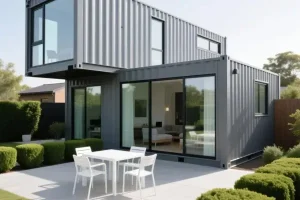
container home
FAQs
Are container houses a bad idea?
Not necessarily. The problem is not the concept itself. The problem is poor execution. A well-engineered modular container house can work very well, while a rough converted cargo box can create comfort, moisture, and code issues.
What is the biggest problem with a shipping container home?
For many projects, the biggest issue is the combination of insulation and moisture control. If heat flow, condensation, and ventilation are not handled correctly, comfort drops and mold risk goes up.
Do container homes rust easily?
They can if drainage, coatings, detailing, and maintenance are weak. Modified areas, cut edges, and wet environments need extra attention. That is why corrosion planning matters from the start.
Are shipping containers hard to get approved as buildings?
They can be. ICC created dedicated guidance because jurisdictions need a framework for design, review, and approval of repurposed ISO containers used as building elements.
Are modular prefab container houses better than converting used containers?
For many B2B projects, yes. Purpose-built modular units usually reduce uncertainty around insulation, layout, reinforcement, site speed, and long-term comfort.
Should I buy a container home or a prefab modular unit?
If your project is temporary, small, and simple, a basic container approach may work. If you need repeatability, code confidence, better finishes, and long-term comfort, a project-ready prefab modular unit is often the smarter path.
Key things to remember
The main risks in using shipping containers for housing are insulation, condensation, rust, code approval, and layout limits.
A raw shipping container home is not automatically a finished building system.
Moisture control and ventilation matter as much as insulation.
Large cuts for openings can compromise the structural integrity if reinforcement is not planned properly.
Compliance with local building codes should be part of the project from day one, not an afterthought.
Hidden costs often come from correction work, not from the shell itself.
Factory-built modular container housing usually solves many of these issues better than raw DIY conversion.
For B2B buyers, the best solution is the one that delivers fast installation, code-aware design, and long-term comfort together.