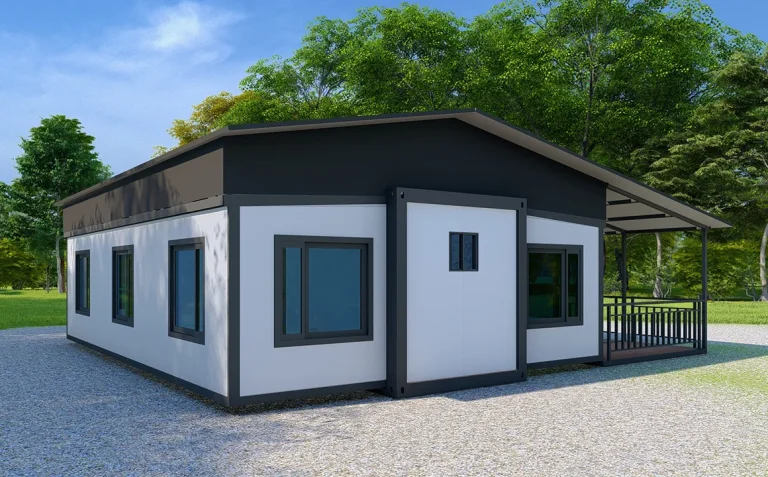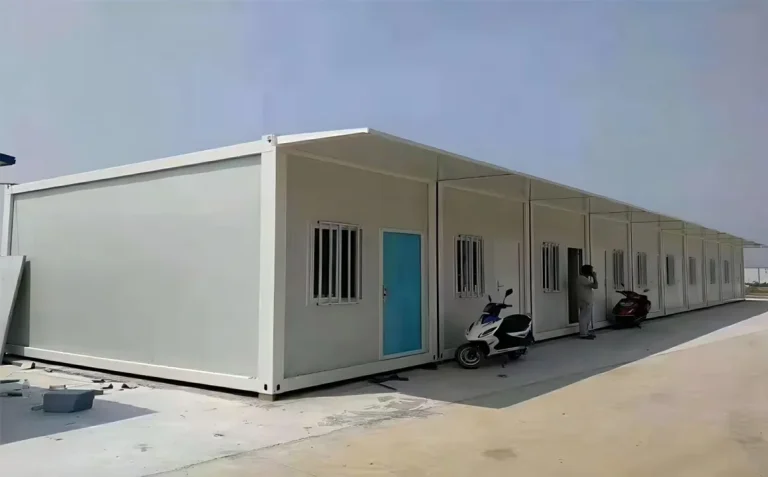








A container home can be strong, fast to build, and cost-effective. But many buyers worry about one thing: rust. If moisture, poor drainage, weak coatings, or bad modification work are ignored, small rust spots can grow. The solution is smart design, inspection, and regular maintenance.
Container homes can rust over time, but they do not rust easily when the steel, coating, drainage, insulation, and maintenance are handled correctly. Most shipping containers are made from corten steel, also called weathering steel, which forms a protective oxide layer. However, moisture, salt air, dents, damaged paint, poor weld work, and condensation can still lead to corrosion. Weathering steel is designed to form a protective patina in suitable environments, but FHWA guidance also stresses that drainage is a first line of defense against localized corrosion.
Article Outline
Do Container Homes Rust Easily?
Why Do Shipping Containers Rust Over Time?
What Is Corten Steel and Why Does It Matter?
How Long Do Shipping Container Homes Last?
Where Do Rust Spots Usually Appear on a Container Home?
How Do Climate, Rainwater, and Condensation Affect Rust?
How Can Insulation and Ventilation Prevent Condensation?
How Do Modification, Weld Work, and Dents Affect Corrosion?
How Can You Prevent Rust on a Container Home?
What Should B2B Buyers Inspect Before Ordering Container Homes?
Do Container Homes Rust Easily?
A container home does not rust easily if it is made with good materials, coated well, installed correctly, and maintained regularly. The steel structure of a container is designed for tough use. Shipping containers are built to carry cargo, handle weather, and survive transport across long distances.
But this does not mean a shipping container home is rust-proof. It is still a steel structure. When steel is exposed to moisture and oxygen, rust can start. If the surface coating is damaged, if rainwater stays on the roof, or if the container sits in a wet climate without protection, corrosion may develop.
For project buyers, the better question is not “Do container homes rust?” The better question is “How can we control rust from the beginning?” As a China-based factory specializing in modular container houses, Sinomega focuses on project-ready solutions such as flat pack house, folding, detachable, and expandable models. The right model, coating, roof detail, foundation, and site plan can reduce the risk of home rust from day one.
Why Do Shipping Containers Rust Over Time?
Shipping containers rust because they are made from steel. Steel can react with air and water. This reaction creates oxidation, which we call rust. If the container is exposed to moisture for a long time, the rust may spread.
The main cause of rust is simple: moisture plus oxygen. But in real projects, several factors make the problem worse:
- Humid climate
- Coastal salt air
- Damaged paint
- Scratches from transport
- Poor drainage
- Standing rainwater
- Low-quality coating
- Bad weld repair
- Interior condensation
- Dirt or debris holding water
- Untreated cut edges after modification
A shipping container home over time may start to show small rust spots. These small spots are not always dangerous. Surface rust can often be cleaned, treated, and repainted. The real problem begins when rust is ignored until it affects the structural integrity of the container.
For large B2B projects, prevention is cheaper than repair. A camp project, disaster relief housing project, or mining accommodation site may use dozens or hundreds of units. If each container has the same coating problem, the repair cost can grow quickly.
What Is Corten Steel and Why Does It Matter?
Many shipping containers are made from corten steel, also known as weathering steel. This steel is not magic, but it is stronger against atmospheric corrosion than ordinary steel in many environments. Weathering steel initially corrodes and then develops a rust-like patina that limits further oxidation.
In simple words, containers are made from corten steel so they can handle outdoor use better. The surface can form a protective oxide layer when exposed to weather. This layer helps slow deeper corrosion. That is why many containers remain strong for decades when used and maintained correctly.
However, corten steel is not stainless steel. It can still rust away if water stays on the surface or if the container is exposed to salt, wet debris, scratches, and poor coating conditions. Weathering steel needs proper wet-dry cycles to form a stable protective layer, and research and highway guidance both warn that trapped moisture, chlorides, and debris can accelerate localized corrosion.
This is important for building a shipping container home. Once we cut windows, doors, plumbing holes, and electrical openings, we change the steel body. Every cut edge, every weld area, and every repaired surface must be treated carefully.
How Long Do Shipping Container Homes Last?
Many buyers ask: “How long do shipping container homes last?” A well-designed and maintained container home can last for decades. In many discussions, buyers often see claims that a shipping container home will last 25 to 50 years, depending on climate, coating, foundation, insulation, and maintenance.
The average lifespan is not fixed. A one-trip container in a dry inland area may last much longer than a heavily used container placed near the sea without repainting. A well-coated modular container home with a roof, good drainage, and regular maintenance can easily exceed a basic 25-year lifespan. But a poorly maintained steel container in a salty coastal area may show serious corrosion much earlier.
Here is a practical lifespan guide:
| Condition | Possible Effect on Lifespan |
|---|---|
| One-trip container | Better starting condition |
| Used containers | Need stronger inspection |
| Dry climate | Lower corrosion risk |
| Coastal climate | Higher salt corrosion risk |
| Good drainage | Reduces standing water |
| Damaged coating | Increases rust risk |
| Regular maintenance | Helps extend its lifespan |
| Poor insulation | May cause interior condensation |
| Proper ventilation | Helps prevent moisture buildup |
| Strong foundation | Keeps the steel away from standing water |
For B2B buyers, the goal is not just to ask, “How shipping container home last?” The better goal is to choose a system that stays strong for decades with planned inspection and maintenance.
Where Do Rust Spots Usually Appear on a Container Home?
Rust spots often appear where water collects, paint is damaged, or steel has been cut. For a container home, the most common areas include the roof, corners, bottom rails, door frames, window openings, weld seams, and places with scratches or dents.
Common rust locations include:
| Rust Area | Why It Happens |
|---|---|
| Roof | Standing rainwater or weak drainage |
| Bottom rails and end sections | Contact with moisture or ground splash |
| Window cut edges | Coating damaged during cutting |
| Door openings | High use and exposed edges |
| Weld seams | Heat affects protective coating |
| Scratched side walls | Transport or installation damage |
| Dented panels | Water may collect in low spots |
| Under floor frame | Poor airflow or wet foundation |
| Around screws | Water enters small gaps |
| Interior corners | Condensation buildup |
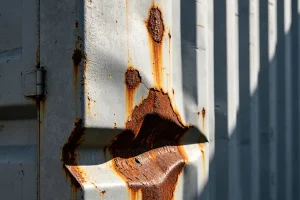
A small dent may not look serious, but it can hold water. A small scratch can expose the steel container surface. A small gap around a window can allow water to enter the wall system. These are the small issues before they turn into bigger repairs.
That is why every project should include inspection after transport and after installation. Buyers should inspect the roof, corner castings, rails and end sections, door frames, window cuts, and all modified areas.
How Do Climate, Rainwater, and Condensation Affect Rust?
Climate has a major effect on container corrosion. In a dry inland area, a container may stay in good condition for a long time. In a humid coastal area, salt and moisture can increase the risk of rust. FHWA guidance for weathering steel notes that high salt exposure can prevent weathering steels from developing a protective rust patina, making painting and maintenance necessary in those service environments.
Rainwater also matters. If water flows away from the roof and walls, the risk is lower. If water stays on the surface, rust may develop faster. Poor drainage is one of the most common causes of steel corrosion because wet surfaces do not dry quickly.
Interior condensation is another hidden problem. When warm indoor air touches a cold steel surface, water droplets may form inside the wall or roof. This can lead to corrosion from inside the container walls. It can also damage insulation, interior panels, and finishes.
This is why a container building needs more than steel strength. It needs smart design, roof slope, sealing, insulation, ventilation, and moisture control.
How Can Insulation and Ventilation Prevent Condensation?
A container house needs good insulation because steel can expand and contract with temperature changes. Without insulation, the inside surface may become too hot in summer and too cold in winter. This can create comfort problems and increase the chance of condensation.
The type of insulation matters. Some projects use rock wool panels, polyurethane sandwich panels, or spray foam insulation. Spray foam can help seal gaps when applied correctly, while panel systems can support faster modular production. The right choice depends on climate, budget, fire requirements, and project use.
To prevent condensation, the design should combine insulation and ventilation. Insulation reduces temperature difference. Ventilation helps move moist air out. In wet climates, moisture control is very important. If indoor humidity stays high, even a well-coated container can face corrosion risk from the inside.
A good container home should:
- Insulate roof and wall areas properly
- Seal gaps around windows and doors
- Use ventilation in bathroom and kitchen areas
- Keep the steel dry where possible
- Avoid trapped moisture inside wall cavities
- Use suitable vapor control based on climate
- Design drainage for roof and wall details
In simple terms: keep water out, let moisture escape, and protect the steel.
How Do Modification, Weld Work, and Dents Affect Corrosion?
A standard shipping container is strong because its structure works as a system. The corrugated side walls, corner posts, frame, roof, and floor all work together. When we cut a large opening for a window or door, the strength of the container may change. Good engineering and reinforcement are needed.
Modification also affects rust risk. Cutting steel removes the original coating. Welding creates heat-affected areas. If these areas are not cleaned, primed, sealed, and painted correctly, rust may start from the exposed metal.
Important modification points include:
- Treat all cut edges
- Recoat weld seams
- Reinforce large openings
- Protect screw holes
- Seal window and door frames
- Repair coating after transport
- Avoid low spots that hold water
- Check dents or rust before finishing
This is why factory modification is often better than rough site modification. In a controlled workshop, the manufacturer can cut, weld, prime, paint, and inspect the container before shipping. This helps reduce the risk of corrosion and improves final quality.
For buyers comparing detachable container house and modified shipping container units, the decision should include transport method, installation time, structural needs, and rust prevention details.
How Can You Prevent Rust on a Container Home?
To prevent rust, buyers should start before the container reaches the site. Rust prevention begins with material selection, design, surface treatment, and packaging. It continues with site installation, drainage, inspection, and regular maintenance.
Here is a practical prevention checklist:
| Rust Prevention Step | Why It Helps |
|---|---|
| Choose good starting material | Reduces hidden corrosion risk |
| Use anti-rust primer and paint | Protects exposed steel |
| Repair scratches quickly | Stops surface rust from spreading |
| Add roof slope or cover | Reduces standing water |
| Improve drainage | Moves rainwater away |
| Seal windows and doors | Prevents water entry |
| Treat weld areas | Protects modified steel |
| Use proper insulation | Reduces interior condensation |
| Add ventilation | Removes moist indoor air |
| Raise the container from ground | Reduces ground moisture exposure |
| Schedule regular maintenance | Catches small issues early |
Rust removal should not be delayed. If small rust appears, clean the area, remove loose rust, apply primer, and repaint with suitable coating. For deeper corrosion, the damaged area should be checked by a qualified person before repair.
For project buyers, a simple maintenance plan can protect the lifespan of your container home. This includes annual inspection, after-storm checks, roof cleaning, drainage cleaning, coating repair, and seal inspection.
What Should B2B Buyers Inspect Before Ordering Container Homes?
B2B buyers should inspect both the product design and the supplier’s production process. A low price means little if the units rust too early or require frequent repair. Good container maintenance starts with good manufacturing.
Before placing an order, check:
- Steel and frame specification
- Coating system
- Roof drainage design
- Wall panel and insulation type
- Window and door sealing
- Weld treatment process
- Anti-rust paint quality
- Factory quality control
- Packing method
- Installation instructions
- Warranty terms
- Spare parts support
- Project references
For large projects, buyers should also ask how the unit will perform in the local climate. A desert project, tropical rainforest project, coastal camp, and cold mountain site each need different design details.
Sinomega provides modular container solutions for construction contractors, real estate developers, government and municipal project owners, EPC companies, importers, distributors, workforce camp companies, NGOs, and industrial or mining project operators. Related product options include expandable container house, folding container house, and project housing systems for different site needs.
Case Study: Rust Prevention for a Coastal Workforce Camp
A workforce camp buyer needed modular housing near a coastal industrial site. The project required fast delivery, strong structure, and long service life. The buyer’s main concern was rust because the site had salt air, high humidity, and heavy rain.
The solution was not only “better paint.” The full plan included corrosion-resistant coating, careful weld treatment, roof drainage improvement, raised foundation design, sealed window openings, moisture-control insulation, and a maintenance checklist.
The project also used repeatable modular units to make installation faster. For future expansion, the buyer could add more units with the same design. This is the advantage of project-ready modular housing: the product, installation, and maintenance plan can be considered together.
For similar projects, buyers can review Sinomega’s project cases and request a technical discussion before finalizing the design.
Container Home Rust Prevention Chart
| Project Environment | Rust Risk | Recommended Action |
|---|---|---|
| Dry inland area | Low | Standard coating and annual inspection |
| Rainy climate | Medium | Strong drainage and roof protection |
| Coastal area | High | Anti-corrosion coating and frequent inspection |
| Tropical climate | High | Ventilation, sealing, and moisture control |
| Cold climate | Medium | Insulation and condensation prevention |
| Mining site | Medium to high | Durable coating and damage inspection |
| Disaster relief site | Medium | Fast setup plus basic maintenance plan |
| Long-term residential use | Medium | Better roof, insulation, and regular maintenance |
This chart helps project buyers think clearly. Rust risk is not only about the container. It is about where the container is placed and how it is used.
Are Container Homes Environmentally Friendly If They Need Rust Maintenance?
A container home can be an environmentally friendly option when it reuses steel structure, reduces material waste, and supports fast modular construction. But it must be designed and maintained correctly. A poorly protected container that needs constant repair is not a good long-term solution.
Rust prevention helps sustainability. When we keep the steel protected, the building lasts longer. When the building lasts longer, fewer materials are wasted. When modular units are planned well, they can be moved, reused, expanded, or repurposed for future projects.
This is why modular container house solutions are useful for camps, offices, housing projects, emergency shelters, and temporary facilities. They combine manufacturing control with project flexibility.
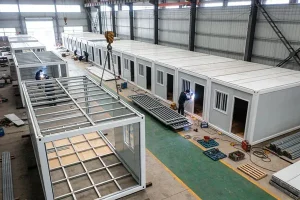
When Should You Ask for a Professional Quote?
You should ask for a professional quote when you know the project location, quantity, purpose, size, layout, climate, and expected service life. A serious supplier cannot give the best recommendation from one question alone.
Before contacting a factory, prepare:
- Project country and city
- Number of units
- Use: home, camp, office, clinic, school, shelter
- Required layout
- Climate and corrosion exposure
- Local wind, snow, or seismic needs
- Insulation requirements
- Interior finish level
- Delivery port
- Installation plan
- Maintenance expectations
Then the manufacturer can recommend coating, roof design, insulation, frame details, and product type. For a fast response, you can request a container house quote with your project details.
FAQs About Container Home Rust
Do container homes rust easily?
Container homes do not rust easily when they are properly coated, installed, drained, insulated, and maintained. However, because they are made from steel, they can rust if exposed to moisture, salt, damaged paint, or poor drainage for a long time.
Why do shipping containers rust?
Shipping containers rust because steel reacts with oxygen and moisture. Salt air, scratches, dents, standing water, damaged coating, and poor weld treatment can speed up corrosion.
How long do shipping container homes last?
A well-maintained shipping container home can last for decades. Many buyers expect 25 to 50 years, but the real lifespan depends on climate, material quality, coating, drainage, insulation, and regular maintenance.
Can rust damage the structural integrity of a container home?
Yes. Surface rust is usually manageable, but deep corrosion can reduce the strength of the container. Buyers should inspect rust level carefully, especially on bottom rails, corners, weld areas, and structural frames.
How do I prevent rust on a container home?
You can prevent rust by using good coatings, repairing scratches quickly, improving drainage, sealing cut edges, treating weld areas, using proper insulation, adding ventilation, and performing regular maintenance.
Does insulation help prevent rust?
Yes. Good insulation helps reduce interior condensation. When condensation is controlled, the risk of interior corrosion is lower. Insulation should be combined with ventilation and moisture control.
Are used containers more likely to rust than one-trip containers?
Usually, yes. Used containers may already have dents, rust spots, worn coatings, and hidden damage. One-trip containers often start in better condition, but they still need proper coating and maintenance.
Is corten steel rust-proof?
No. Corten steel is corrosion-resistant, not rust-proof. It can form a protective oxide layer, but it can still corrode in salty, wet, or poorly drained environments.
Key Takeaways
Container homes can rust, but they do not rust easily when designed and maintained correctly.
Most shipping containers use corten steel, also called weathering steel, which can form a protective oxide layer.
Corten steel is corrosion-resistant, not rust-proof.
Moisture, salt air, damaged paint, dents, poor drainage, bad weld treatment, and condensation can lead to corrosion.
Good rust prevention starts with material selection, coating, drainage, insulation, ventilation, and regular inspection.
Surface rust can often be repaired, but deep corrosion can affect structural integrity.
A well-maintained shipping container home can last 25 to 50 years or more, depending on climate and maintenance.
For B2B buyers, the safest choice is to work with a factory that understands modular housing design, anti-rust treatment, project delivery, and long-term maintenance.
Before ordering, share your project location, climate, use case, unit quantity, layout needs, and expected lifespan so the manufacturer can recommend the right container house solution.