







Author: Sinomega House Technical Team | Published: September 23, 2026 | Information basis: current Sinomega product information and project quotation requirements
Folding container houses for sale are not one standard product. Sinomega positions Z-Type and Y-Type folding houses differently, so distributors, government buyers and emergency-project contractors should compare wall integration, setup sequence, packing, layout, utilities and destination engineering before requesting a final quotation.
What both folding models have in common
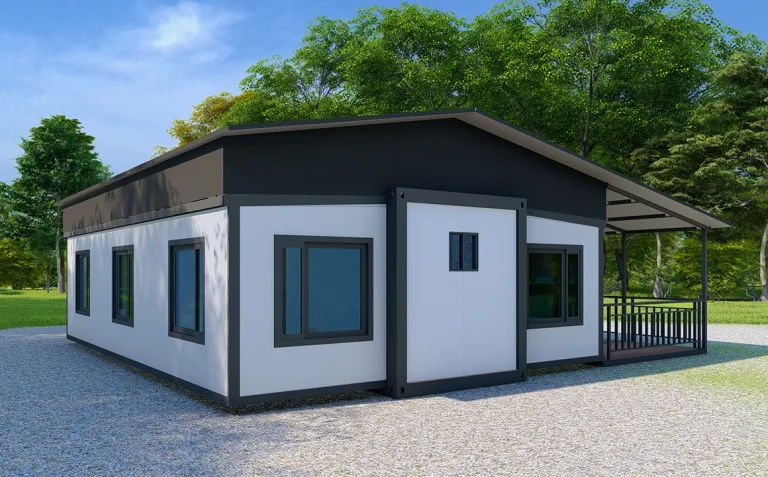
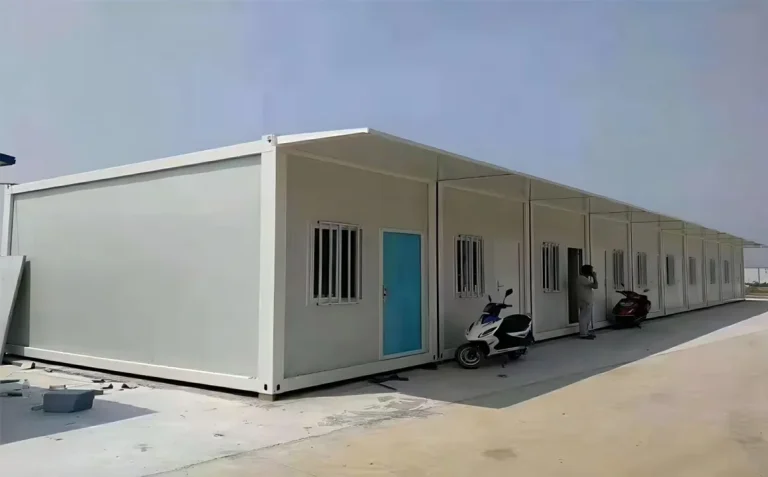
Sinomega describes the Folding Container House (Z-Type / Y-Type) as a collapsible product for temporary housing, site offices, emergency response and workforce camps. The product page lists a galvanized steel structure, fire-resistant insulation panels, customizable colour and layout, a standard listed size of 2438 x 5800 x 2520 mm, listed occupancy of 1-2 people and listed power of 12 kW.
The page also states a 1:4 transport volume ratio and expansion in 5-10 minutes. These are product-page claims, not a project installation guarantee. Confirm the exact model, packing method, crew, equipment and destination requirements in the technical schedule.
Z-Type vs Y-Type folding container house
The following comparison uses Sinomega's product-page positioning. It is a selection starting point, not a substitute for drawings or structural review.
| Decision factor | Z-Type positioning | Y-Type positioning | What to confirm before ordering |
|---|---|---|---|
| Wall integration | Positioned around stronger wall integration | Not presented with the same wall-integration emphasis | Connection details, panel joints and approved drawings |
| Wind-related selection | Product page gives higher wind-resistance positioning | No project-specific wind value is published | Design wind speed, calculations and destination review |
| Setup emphasis | Integrated wall arrangement may affect the opening sequence | Positioned around faster setup | Crew, lifting/handling equipment and site method statement |
| Packing question | Confirm folded dimensions and protection for the selected Z-Type | Confirm folded dimensions and accessory packing for the selected Y-Type | Loading diagram, gross weight and units per container |
| Layout | Colour and layout customization are listed | Colour and layout customization are listed | Room schedule, doors, windows, sanitary and electrical scope |
| Best first question | What structural and site condition drives the Z-Type choice? | What deployment sequence drives the Y-Type choice? | Which assumptions are included in the quotation? |
Neither model should be called wind-rated, fireproof, earthquake-proof, waterproof or code-compliant without product-specific evidence and a destination-code review. The table identifies questions, not unverified performance values.

When does a Z-Type make sense?
The Z-Type may be worth investigating when the project brief places more attention on wall integration or the supplier's stated higher wind-resistance positioning. That does not make it automatically suitable for a coastal, high-wind or seismic site. The buyer still needs the design basis, connection details, foundation assumptions and local review.
Ask the factory to show the relevant wall, roof and floor connections on the drawing. If a distributor sells a “reinforced” option, the quote should name the changed members, panels, fasteners, coating or calculations. A label without a revised specification is difficult to verify.
When does a Y-Type make sense?
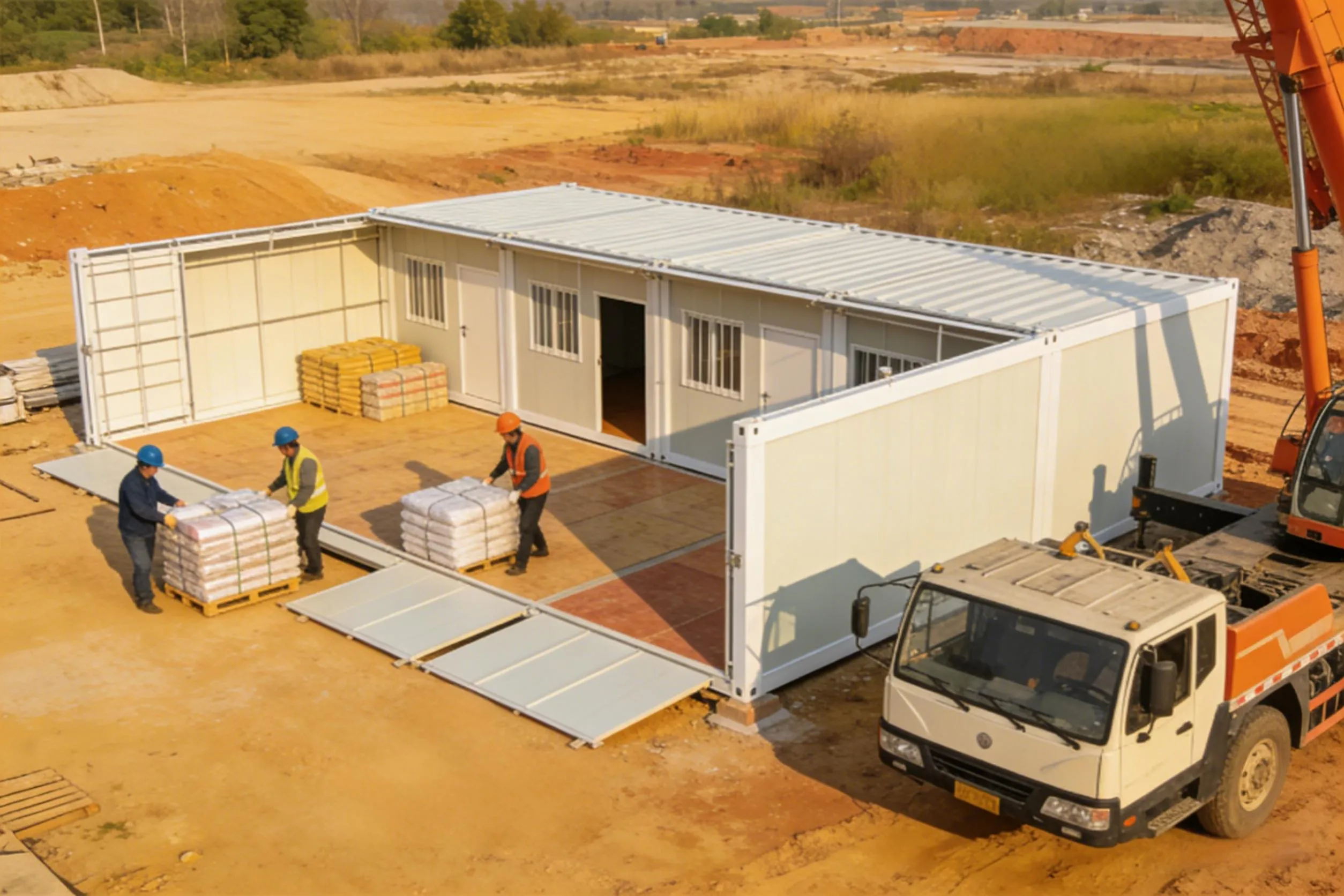
The Y-Type is positioned around faster setup and compact shipping. That can be useful for phased relief deployment, temporary offices or a project with a tight opening window. The benefit depends on site access, crew readiness and the actual sequence supplied with the chosen configuration.
Do not convert the stated 5-10 minute expansion figure into a complete installation programme. Unloading, levelling, opening, connection checks, weather sealing, utilities, furnishings and inspection remain separate tasks.
Check the layout before comparing prices
An advertised folding container house for sale may show a basic shell while the project needs a working room. Send the same schedule to every supplier:
- intended use and occupancy;
- room arrangement and furniture;
- doors, windows and escape routes;
- bathroom, kitchen and sanitary interfaces;
- incoming power, circuits, lighting and air-conditioning provisions;
- floor, wall, ceiling and external finish;
- branding, colour and identification marks.
The listed 12 kW power value is a product-page figure. Confirm the voltage, frequency, connected load and local electrical requirements for the selected design.
Shipping and site constraints decide more than the product label
The stated 1:4 transport volume ratio can support a freight-planning conversation, but the quote still needs packed dimensions, weight, centre of gravity, lifting points, accessory packing and a loading diagram. A folding format may reduce transport volume compared with a module shipped at its full occupied width, while creating a more involved opening and inspection sequence on site.
Before dispatch, verify:
- road and port access;
- container or vehicle loading limits;
- unloading crane, forklift or sling requirements;
- folded and opened clearances;
- foundation or support-point concept;
- drainage, electrical and sanitary routes;
- storage protection if units will be deployed later.
The project page can help frame applications such as worker accommodation, temporary offices and emergency housing, but the site plan must use the selected model's drawing.
What should be included in a folding-house quotation?
Ask the manufacturer to separate standard supply, optional supply and buyer-supplied work. The commercial schedule should identify:
- Z-Type or Y-Type model and drawing revision;
- structural frame, panels, roof, floor, doors and windows;
- layout, finishes and furniture;
- electrical, sanitary, kitchen, bathroom and HVAC scope;
- packing list, weights, loading plan and protection;
- quantity, delivery sequence and Incoterm;
- export documents, inspection, warranty and spares;
- installation support, foundations, utilities and exclusions.
No verified public price range is available for these models. A supplier should price the requested configuration, quantity, destination and delivery responsibility rather than provide an unsupported unit figure.
Confirm documents and destination engineering
Local building and fire codes, destination-country electrical and sanitary rules, and shipping-line requirements determine what evidence is needed. Request drawings, material information, installation instructions, electrical diagrams and available test documentation for the selected model.
Sinomega's source material says the destination project must confirm engineering, code, wind, fire and electrical details. Keep that boundary in the purchase order. The factory can provide product information and engineering input, but the buyer or appointed local professional may remain responsible for permits, foundations and final sign-off.
Z-Type and Y-Type selection workflow
Use a short comparison workflow before asking for a final offer:
- define the use, occupancy, site and deployment sequence;
- request both model drawings with the same room schedule;
- mark differences in wall integration, connections, packing and setup;
- confirm utilities, documents, inspection and local responsibilities;
- compare matched quotations and record exclusions;
- approve one revision-controlled technical schedule before production.
This process helps an overseas buyer compare the product rather than comparing two different scopes under the same “folding house” label.
Frequently asked questions
What is the difference between Z-Type and Y-Type folding houses?
Sinomega positions Z-Type around stronger wall integration and higher wind-resistance positioning, while Y-Type is positioned around faster setup and compact shipping. Confirm the exact structural, handling and engineering differences in the drawings.
How much does a folding container house for sale cost?
No verified public price range is available. Price depends on model, quantity, layout, panels, utilities, equipment, packing, delivery terms, destination and documentation. Request a configuration-specific quotation.
Are the listed dimensions and power standard for both models?
The product page lists 2438 x 5800 x 2520 mm, 1-2 people and 12 kW. Confirm whether those values apply to the selected variant and layout before using them for procurement or approval.
Does the 5-10 minute claim mean the building is ready to use?
No. It describes the stated expansion step. Unloading, levelling, connections, inspection, furniture, utilities and commissioning are separate activities.
Can the models be customized?
Sinomega lists customizable colour and layout. Confirm the drawing cycle, branding files, finishes, optional systems, minimum quantities and approval responsibility in the offer.
Which model is better for emergency projects?
There is no universal answer. Compare the opening sequence, access, crew, packing, room schedule, climate, local rules and replacement or maintenance plan. Choose the model whose documented scope fits the deployment plan.
Request a matched Z-Type and Y-Type quotation
Use the Sinomega folding container house product page and send the same room schedule, site limits, quantity and document list for both variants. The Sinomega project page can help define the application, and the contact page is the right place to request drawings, packing data and a final quotation. For factory-level verification, review the container house factory checklist before approving the supplier scope.