

Are you running a project and need space fast? Maybe a construction site office, a temporary classroom, or even a data center? Waiting for traditional construction is slow and expensive. Your project has a deadline. Every day you wait is a day you lose money and progress.
This delay is more than just an inconvenience. It can cause a chain reaction of problems. Your team is stuck without a place to work. Your students have no classroom. Your business can’t expand its IT power. The problem grows bigger every day. You feel stuck, watching your timeline and budget slip away.
But there is a way to get the space you need, right when you need it. The answer is the modular container. This guide will show you how these building blocks can solve your space problem quickly and easily.
- Are you looking for a building module like a site office, worker housing, or a clinic? Jump to our section on modular buildings.
- Are you looking for an IT module like a containerized data center? Jump to our section on modular data centers.
Modular Container Definition in Plain English
Let’s look at what a modular container is. The word sounds technical, but the idea is simple.
Modular container for buildings
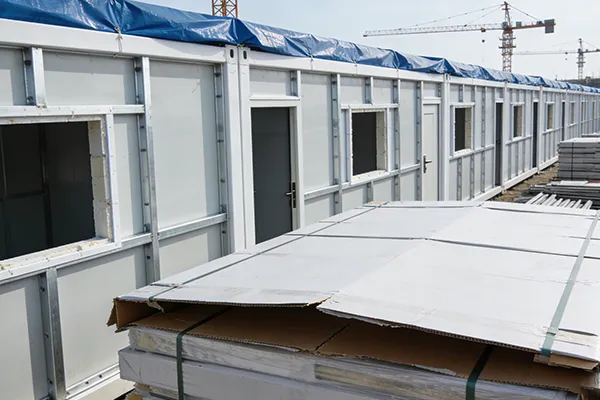
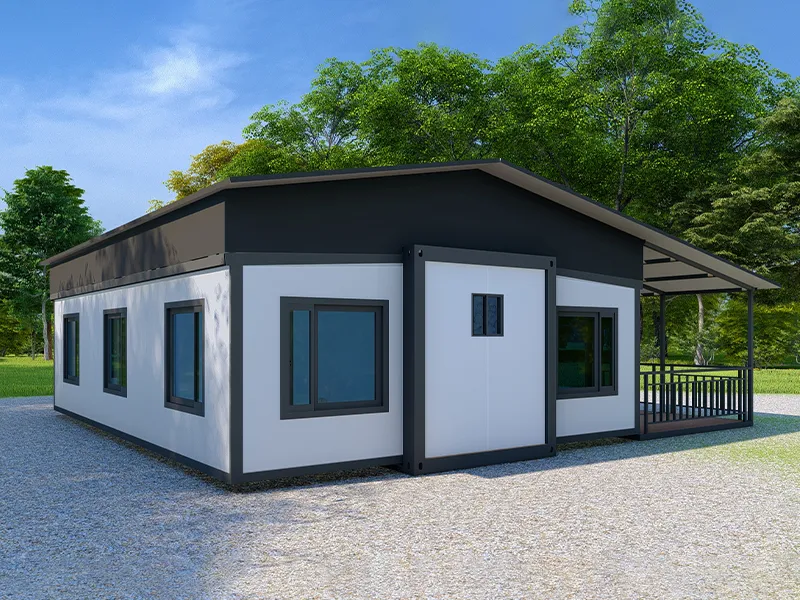
A modular container for buildings is a strong, pre-made room. Think of it like a big, strong block. These blocks are built in a factory. Then, they are brought to your location.
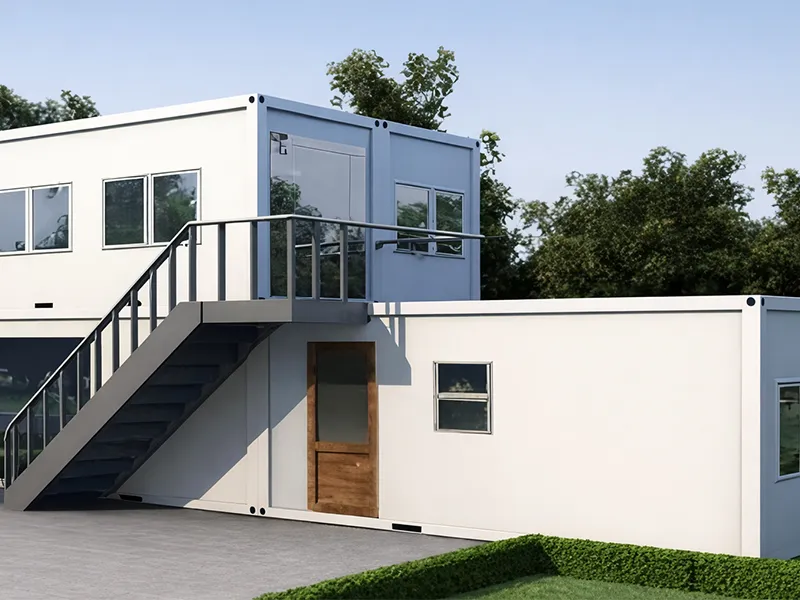
You can use one by itself. Or, you can connect them. You can place them side-by-side to make a bigger room. You can also stack them to make a multi-story container building. This is a type of container-based modular construction.
Modular container for data centers
A modular container for data centers is different. It is a special box made for computers. It is a full data center packed into a strong, portable container.
This is called a containerized data center module. It has everything needed for IT work. It has power, cooling, and network gear. It is a plug and play modular container. You bring it to your site, connect it, and it works.
Modular Container
What Makes It “Modular” (Not Just a Container)
You may think this is just a shipping container module. But it is more than that. The “modular” part is very important.
- Standard Sizes: Modular containers use repeatable sizes. Many are based on ISO container sizes, like the 20ft ISO container or 40ft ISO container. This makes them easy to plan with and transport.
- Easy to Connect: They have special connectors. These are called corner castings and twist lock connection systems. This is how we can build a multi module container building. You can add more modules as you need more space. This makes the system scalable.
- Pre-installed Systems: A modular container comes ready to use. A building module has all the container electrical wiring and container plumbing system parts inside. An IT module has its power and cooling systems ready to go. This is called a turnkey container fit out.
Main Types of Modular Containers (Quick Comparison)
There are a few main types of modular containers. The best one for you depends on your needs.
Building-focused types
- ISO Shipping Container Conversions: These are real shipping containers. They are changed to become offices or homes. They are very strong.
- Purpose-Built Modular Containers: These are made from scratch to be buildings. They often use a structural steel frame container and insulated container module walls. They are made for people from day one. Many providers, like Sinomega House, specialize in these high-quality, factory-built container modules.
- Flat-pack / Knock Down Modules: A flat pack container is a special type. It ships in a thin, flat package. You assemble it on site. This saves a lot of money on shipping. You can fit many flat pack houses inside one normal shipping container.
- Foldable / Expandable Modules: A foldable container unit is even faster. It arrives folded. You just unfold it. An expandable container module, like an expandable container house, can get bigger after it is placed. A 20ft expandable container house can become much larger.
| Feature | Flat-Pack Container | Foldable Container | Expandable Container |
| Problem it solves | High shipping costs | Need for very fast setup | Need for more space from one unit |
| How it works | Arrives as a kit, assemble on site | Arrives folded, unfold on site | Arrives as one box, slides out |
| Setup Time | A few hours | As little as 5-10 minutes | A few hours |
| Best for | Remote projects, saving money | Emergency sites, very fast needs | When you need a bigger room from one box |
IT-focused types
- Containerized Data Center: This is a single, all-in-one portable data center container. It is a “data center in a box.”
- Modular/Prefab Data Center Blocks: These are separate, big pieces. You might have one containerized power and cooling module. You connect it to another module that holds the computers.
Common Use Cases (What People Actually Buy Them For)
People use modular containers for many jobs. They are useful when you need good space quickly.
Construction and industrial sites
This is a very common use. Big projects need offices and places for workers.
- Site office container: A comfortable place for managers to work. A modular site office is a popular choice.
- Welfare unit container: A place for workers to rest and eat, like a canteen container unit.
- Worker accommodation containers: Safe and clean places for workers to sleep. This is also called construction worker housing or labor camp container housing. These are used for mining camp container units and oil and gas camp containers.
Public and commercial buildings
Modular containers are also used for schools, shops, and clinics.
- Modular container classroom: A fast way to add more space to a school.
- Modular container clinic: A clean, safe place for medical care.
- Modular container retail kiosk: A small shop or container café module.
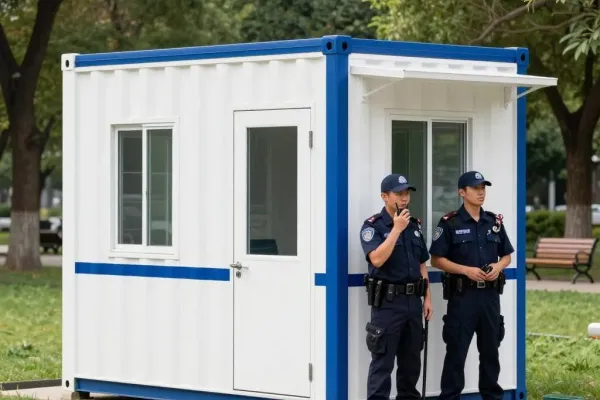
- Guard house container: A small, secure modular container security booth.
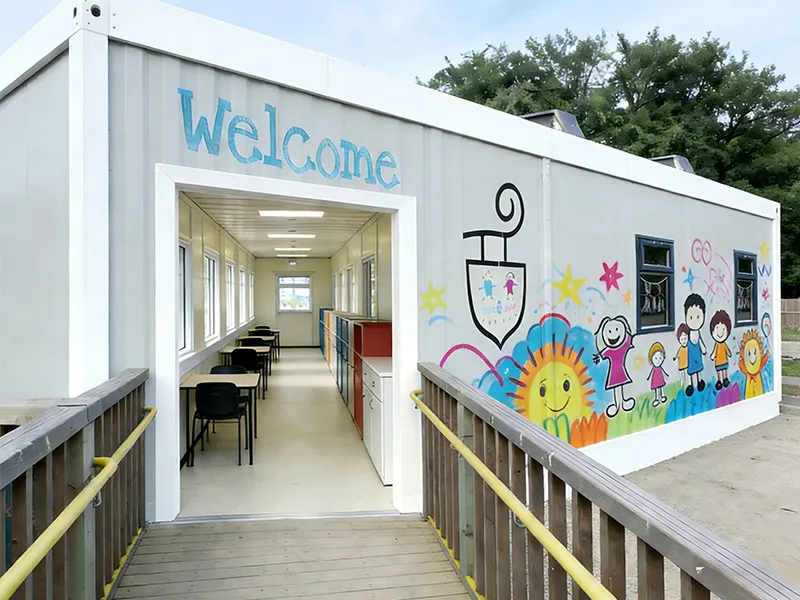
Modular container classroom:
IT and infrastructure
For tech companies, speed is very important.
- Edge data center container: Puts computer power closer to users.
- Temporary capacity expansion: Add more IT power during a busy time.
- Rapid deploy data center container: Get a new data center running in weeks, not years.
Typical Specs and Standards You’ll See
When you look at modular containers, you will see some common words and numbers.
Common sizes (and why ISO matters)
The sizes are often based on standards from the International Organization for Standardization (ISO). An ISO 668 standard defines the size of shipping containers. This is why 20ft and 40ft are common. A 40ft High Cube container is taller for more room. Using these sizes makes them easy to ship by truck, train, or boat.
Core technical elements (building modules)
A good modular building is more than just a box.
- Structure: The frame must be strong. It is often a structural steel frame container. It needs to be a seismic resistant modular units and have a wind load rated container building.
- Insulation: This keeps the room warm or cool. Walls are made of sandwich panels. These can have Rockwool insulation, PU (polyurethane) insulation, or EPS insulation. A good insulated container module saves energy.
- MEP: This stands for Mechanical, Electrical, and Plumbing. This includes the HVAC for container module, lighting and sockets prewired, and a preinstalled bathroom module. Leading manufacturers can provide a complete turnkey container fit out.
- Protection: A weatherproof container unit with an anti-corrosion coating will last for years.
Core technical elements (data center modules)
A modular data center container has high-tech parts.
- Power: It needs a UPS (uninterruptible power supply) and an electrical distribution board.
- Cooling: It uses special air conditioners like a CRAC (computer room air conditioner).
- Racks: These are the frames that hold the computers.
- Monitoring: Sensors watch the temperature and power.
Pros and Cons (When Modular Containers Make Sense)
Modular containers are a great tool. But they are not perfect for every job.
Key advantages
- Speed: This is the biggest benefit. Offsite manufacturing container units means your building is being made while your site is being prepared. Installation is fast. A prefab folding container house can be ready in minutes.
- Quality: Factory-built container modules are made in a controlled setting. The quality is often better and more predictable than building outside. Companies with ISO 9001 certification show they are serious about quality.
- Scalability: You can start small and add more stackable modular containers later.
- Relocatable: Many demountable modular containers can be moved to a new site. They are reusable container modules.
Main trade-offs
- Transport: You need a truck and a crane. This can be hard in some places.
- Permits: You may still need building permits.
- Layout: The box shape can limit some designs.
Modular Container vs Alternatives (Fast Decision Section)
How does a modular container compare to other options?
- vs Traditional Construction: Traditional is slow and costs can change. Modular is fast with a fixed price.
- vs Prefab “Panelized” Buildings: Panelized buildings ship as flat walls. They take longer to build on site than a full modular unit.
- vs Mobile Office Trailer: Trailers are often less strong and not as comfortable as a purpose-built modular office.
- vs Building a Server Room: A containerized data center is much faster to get working than building a new server room from scratch.
How a Modular Container Project Works (Step-by-Step)
Here is how a project works, from idea to finished building.
- Define Need: How many people? How many rooms? What will it be used for?
- Choose Type: Do you need a flat pack container house, a foldable one, or a standard module?
- Confirm Standards: What are the local rules? Do you need a fire rated container module?
- Site Prep: Prepare a simple foundation. Bring power and water lines.
- Factory Production: The module is built in a factory. This can take a few weeks.
- Shipping & Placement: The finished module is shipped to your site and lifted into place with a crane.
- Connection: The modules are connected. The power and water are hooked up.
- Ready to Use: Your new space is ready to use, much faster than you thought possible.
How a Modular Container Project Works
Buying Checklist (What to Ask Before You Request a Quote)
You need a new space, and you think a modular container is the right choice. But projects are stressful. You worry about making a mistake. What if you forget something important? What if you choose the wrong product and it causes delays or costs more money?
This worry can stop you from moving forward. You need to be sure you are asking the right questions. You need to feel confident that you are getting a solution that truly fits your needs, your site, and your budget.
Here is a simple checklist to give you that confidence. It is your solution to making a smart, safe choice. Use this list when you talk to a container house factory. This will help them give you the best price and the best product.
For modular container buildings
- Use: What is it for? An office? A home? A container dormitory module?
- Climate: Where is the project? Does it need strong heating or cooling?
- Safety: Are there special fire or safety rules?
- Utilities: Do you need bathrooms and kitchens? Ask about the container kitchen module.
- Layout: Will you stack them? How will they connect?
- Delivery: Can a large truck get to your site?
For containerized data centers
- IT Load: How many computers will you put inside?
- Power & Cooling: What is your plan for power and cooling?
- Monitoring: How will you manage the system?
- Timeline: When do you need it to be working?
FAQ (People Also Ask)
- What is a modular container used for?
It is used for almost any kind of building you can think of! This includes site offices, worker housing, schools, clinics, and even detachable container houses. - Is a modular container the same as a shipping container?
No. Some are made from used shipping containers, but many are purpose-built from new materials, with a strong steel frame and insulated walls designed for living and working. - How long does it take to install a modular container building?
The on-site installation is very fast. A simple building can be ready in a day. A foldable container house can be ready in just minutes. - Can modular containers be stacked safely?
Yes. They are designed to be stacked, often up to three or more stories high. They use strong corner castings and twist locks to connect safely. - Do modular containers need permits?
Usually, yes. Most places require a permit for any type of building. It is best to check with your local government. - What’s the difference between flat-pack, foldable, and expandable containers?
Flat-pack ships in a kit to save freight costs. Foldable unfolds on site for super-fast setup. Expandable slides out to create a larger space from a single container. - What is a containerized data center and when is it better than a traditional build?
It is a self-contained, portable data center. It is better when you need to deploy IT infrastructure very quickly, in a temporary location, or in a remote area where construction is difficult.
Summary
A modular container is a smart solution for a common problem: the need for space, fast. Whether you need a modular container building for your team or a containerized data center for your IT hardware, these factory-built units offer speed, quality, and flexibility that traditional construction cannot match.
Are you ready to solve your space problem? Tell us about your project. Let us know the use case, location, and size you need. We will help you create a plan and give you an estimate for your own modular container system.