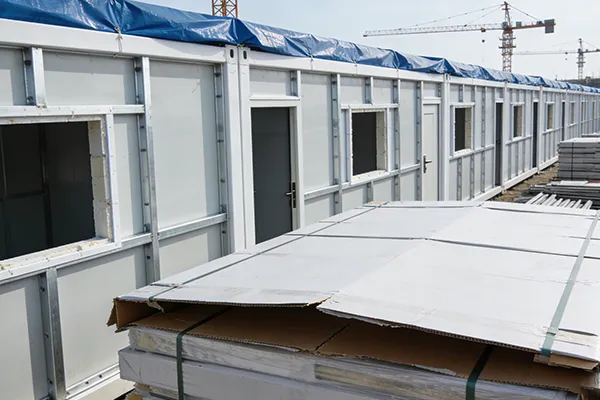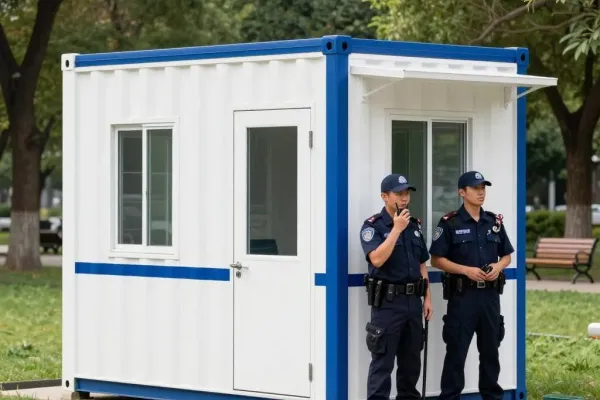


Delays, rising costs, and unpredictable site conditions make traditional construction risky for projects that demand speed and control. These problems grow fast in remote sites, emergency housing, and workforce camps. Flat pack building systems solve this by shifting work to factories and enabling fast, reliable on-site assembly with modular, project-ready components.
A flat pack building is a modular construction system where pre-engineered panels and structural components are manufactured in a factory, packed flat for transport, and assembled on-site. This approach reduces shipping volume, shortens construction timelines, lowers labor costs, and allows flexible customization for residential, commercial, and temporary housing projects.
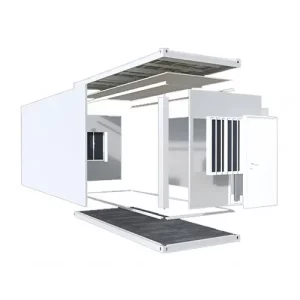
flat pack container house
Executive Summary
Flat pack buildings are factory-made modular systems shipped flat and assembled on-site.
They cut transport volume by up to 60–70% versus volumetric modules (project-dependent).
Ideal for workforce camps, disaster relief, remote sites, and fast-track housing.
Assembly typically takes hours to days, not months.
Designs are customizable for layout, insulation, finishes, and codes.
Best value when speed, logistics efficiency, and scalability matter most.
What Is a Flat Pack Building in Modern Construction?
A flat pack building uses pre-cut, pre-engineered components—walls, floors, roofs, frames—that are manufactured in a factory and shipped as compact packages. Unlike volumetric modules, which ship fully assembled, flat pack systems arrive as panels and structural parts ready for on-site assembly.
From my experience supplying modular systems to EPC contractors and government projects, the flat pack concept works best when projects face tight timelines, challenging logistics, or phased expansion needs. The construction work shifts off-site, where quality is controlled, and the site focuses on assembly rather than fabrication.
Flat pack housing spans many use cases: temporary camps, permanent residential homes, classrooms, clinics, offices, and site accommodation. The method blends modular precision with flexibility in layout and finishes.
How Does a Flat Pack Home Differ from Modular Buildings?
Both flat pack homes and modular buildings rely on factory manufacturing, but their delivery and assembly differ.
Key differences:
| Aspect | Flat Pack Homes | Volumetric Modular Buildings |
|---|---|---|
| Transport | Shipped flat (panels) | Shipped as full modules |
| Shipping cost | Lower | Higher |
| On-site work | Assembly required | Minimal |
| Flexibility | High | Moderate |
| Access constraints | Excellent for remote sites | Requires crane access |
Flat pack systems excel when transport, shipping costs, or site access limit large modules. Volumetric units shine when crane access is easy and speed on site is the top priority. Many construction companies use both methods depending on project needs.
What Are Flat Pack Homes and Who Uses Them?
Flat pack homes are pre-designed or custom home solutions delivered as building kits. They are used by:
Construction contractors managing remote or phased projects
Government and municipal housing programs
NGOs needing rapid, repeatable housing units
Workforce camp builders for mining, oil & gas, and infrastructure
Importers and distributors of prefab buildings
As a factory supplier, we often support clients who need consistent quality across dozens or hundreds of units, with clear drawings and standardized assembly steps.
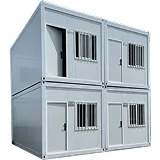
Container houses
What Is Included in Flat Pack Building Kits?
A flat pack kit typically includes:
Structural frame (steel or timber)
Wall panels (insulated or non-insulated)
Floor and roof panels
Doors, windows, and fixings
Electrical and plumbing provisions (optional)
Detailed assembly manuals
These building kits are engineered to be put together with basic tools and trained labor. For large projects, we also provide installation guidance and supervision to ensure speed and safety.
How Are Flat Pack Buildings Manufactured in a Factory?
Manufacturing happens in a controlled factory environment, where precision and repeatability matter. Components are pre-cut, drilled, and tested before packing.
This offsite approach improves reliability, reduces material waste, and shortens the supply chain. In my experience, factory production also makes it easier to meet international standards for structural, insulation, and fire performance—especially important for public-sector projects.
How Are Flat Pack Buildings Delivered and Transported?
Once manufactured, components are packed flat, labeled, and loaded for transport. Because the units ship compactly, more floor area fits into each container or truck.
For overseas projects, this means lower shipping costs and easier customs handling. For inland or remote sites, it reduces the number of trips required. Flat pack systems are often delivered to site in phases, matching construction schedules.
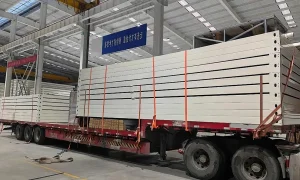
Container house transportation
How Does On-Site Assembly Work?
On-site assembly is straightforward and fast. Crews follow numbered components and step-by-step manuals. Typical steps include:
Foundation or platform preparation
Frame erection
Panel installation
Roof placement
Services connection
Finishes and inspection
Depending on size, a unit can be assembled in hours to a few days. This speed is a major advantage over conventional construction, especially where weather or labor availability is uncertain.
What Are the Benefits of Flat Pack Construction?
The benefits of flat pack systems are practical and measurable:
Cost-effective logistics
Faster build times
Reduced on-site labor
Flexible layouts and future expansion
Predictable quality from factory production
For projects comparing conventional construction with modular options, flat pack methods are often cheaper to build than traditional approaches when time and logistics are included.
Can Flat Pack Buildings Be Customized?
Yes. Flat pack systems are highly flexible. Clients can customize:
Layout and room size
Insulation levels for climate
Exterior finishes
Windows and doors
Electrical and plumbing layouts
From architect-led residential designs to standardized camp layouts, customization balances speed with project identity.
Are Flat Pack Homes Suitable for Residential Use?
Absolutely. Many residential projects now use flat pack home building systems. With proper insulation, finishes, and compliance checks, they meet modern living standards.
Flat pack homes are also popular for backyard studios, secondary dwellings, and rental units, especially where speed and footprint control matter.
Flat Pack vs Conventional Construction: When Does It Make Sense?
Flat pack construction works best when:
Speed is critical
Labor costs are high
Sites are remote or constrained
Projects require scalability
It may not be ideal for highly bespoke, one-off luxury builds where site craftsmanship is the priority. Understanding these trade-offs is key.
Compliance, Safety, and Standards
Professional flat pack systems are engineered to meet applicable construction methods and codes. Always verify:
Structural calculations
Fire and insulation ratings
Local code compatibility
Reputable suppliers provide drawings, calculations, and support through approval stages.
FAQs
Is a flat pack building durable?
Yes. When properly engineered and assembled, flat pack buildings are as durable as traditional structures and designed for long service life.
How long does assembly take?
Small units may assemble in a day. Larger buildings take several days, depending on size and crew experience.
Are flat pack homes cheaper?
Often, yes—especially when transport, labor, and time savings are considered.
Can flat pack buildings be relocated?
Many designs allow disassembly and relocation, depending on foundation and services.
Do flat pack systems include insulation?
Most systems include insulation options tailored to climate and use.
Who should consider flat pack construction?
Contractors, developers, NGOs, and project owners needing speed, predictability, and scalable housing.
Key Takeaways
Flat pack buildings are factory-made, site-assembled modular systems.
They reduce logistics costs and speed up construction timelines.
Ideal for camps, housing, and fast-track projects worldwide.
Customizable, scalable, and reliable when supplied by experienced factories.
Best results come from early planning and supplier collaboration.
Next Step (Expert Consultation)
If you’re evaluating flat pack buildings for a project, the smartest move is a layout and logistics review before procurement. We routinely help contractors and project owners compare flat pack, folding, expandable, and volumetric options—so you choose the right system from day one.