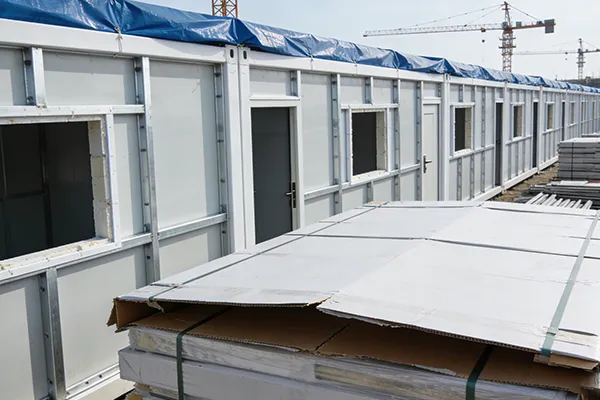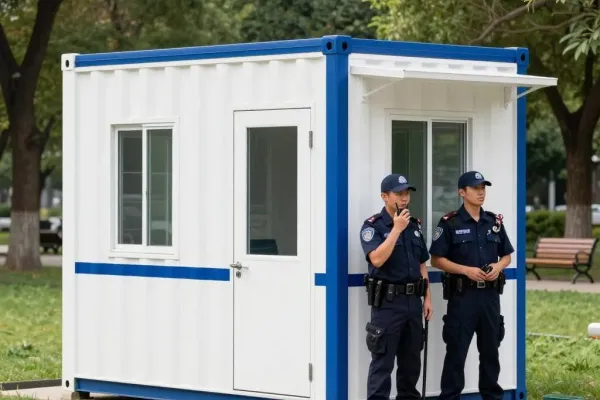


Construction projects move fast—but your tools, materials, paperwork, and people still need a safe place to live. When storage goes missing or gets wet, schedules slip, costs rise, and everyone gets frustrated.
A container in construction is a strong, transportable storage container (often a shipping container) or a purpose-built construction container used on a construction site for site storage, secure equipment holding, temporary offices, and even container-based building
Article outline
- What does “container” mean in construction, and why do construction sites use them?
- Shipping container vs storage container vs construction container: what’s the difference?
- What sizes come in various sizes—and how do 20 ft and 40 ft containers fit a construction site?
- What do construction storage containers store (and how do they keep a site organized)?
- Buy or rent: should you buy a shipping container or rent a construction storage container?
- How do you turn a container into a workspace, office, or first aid room on-site?
- Can a container become a container-based building or shipping container home for projects?
- Building code basics: what rules apply to shipping container buildings in the U.S. and beyond?
- Weather, condensation, and comfort: insulation, climate-controlled storage, and rust prevention
- Offsite vs on-site delivery: logistics, crane lifts, and project management tips
What does “container” mean in construction, and why do construction sites use them?
On a construction site, a container usually means a lockable steel box that you can move by truck. People use a storage container to protect materials and tools, reduce theft, and keep site storage predictable. Instead of scattered piles and wet cartons, the site gets one controlled storage space that the whole crew can find.
I’ve supported construction projects in harsh environments—coastal humidity, desert heat, mining dust. A container solves a simple problem: you need extra space, right where the work happens. Containers give a project a clean system: one place for inventory, one place for safety gear, one place for sensitive items.
As a China-based factory focused on modular container houses (folding, detachable, flat pack, expandable), we also see containers used as more than storage. A container can become a unit used for office work, security, and even emergency housing—especially when a municipality or NGO needs fast deployment.
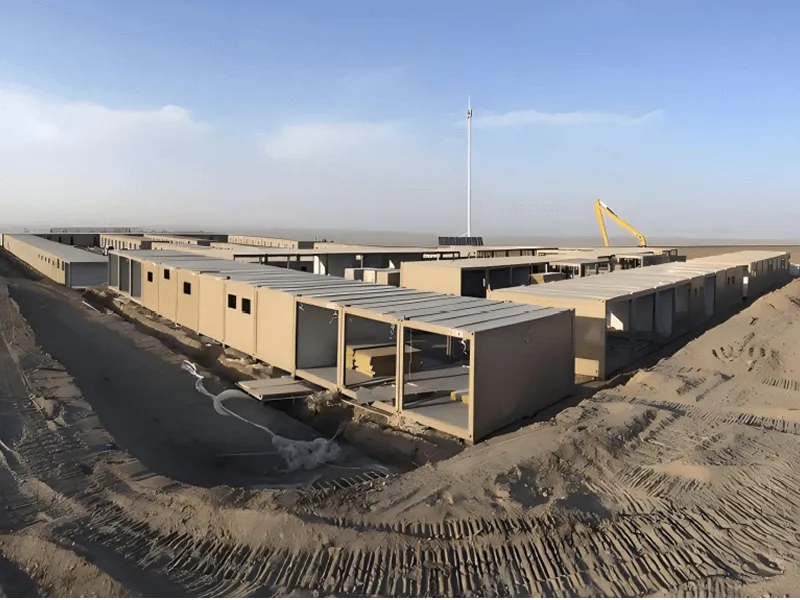
What does “container” mean in construction
Shipping container vs storage container vs construction container: what’s the difference?
People often use these words interchangeably, but the intent matters:
- A shipping container is built for international transport. Shipping containers are designed to move by sea, rail, and road and to stack safely. Many have a CSC safety approval plate governed by the International Maritime Organization’s Convention for Safe Containers (CSC) .
- A storage container is any container used primarily for storage—new and used. It may be a steel shipping unit or a modified box made for static storage.
- A construction container often means a container configured for site use: extra doors, windows, electrical wiring, lighting, shelving, and better security. Many construction companies order these as “ready-to-work” units.
In real projects, containers may start life as transport units and then get repurposed. That’s where modified shipping containers and repurposed shipping containers come in. You can repurpose a standard unit, or you can prefabricate a construction-ready module in a factory (like ours) and ship it out fast.
“The CSC… maintains a high level of safety… by providing generally acceptable test procedures…” — IMO summary of the CSC Convention
What sizes come in various sizes—and how do 20 ft and 40 ft containers fit a construction site?
Most buyers recognize standard shipping container lengths like 20 ft and 40 ft (also written as 40 feet). These are based on ISO standards for intermodal containers (see ISO 668 references such as ISO 668 overview and industry explanations like ISO 668 quick guide).
Here’s a simple sizing view you can use in early planning:
| Common name | Typical use on a construction site | Space feel | Best for |
| 10 ft | Small storage unit | Tight but efficient | Tool lockup, spares |
| 20 ft | Standard storage container | Easy to place | Materials, site storage, secure storage |
| 40 ft | Large shipping container | “Mini-warehouse” | Bulk inventory, staging |
| High-cube | Extra interior height | Better airflow | Shelving, light assembly |
The key is layout. Containers are stackable when engineered and sited correctly, but most projects start with ground placement for easy access. If you’re looking to keep workflows smooth, plan container doors facing the main material route, not the fence line.
What do construction storage containers store (and how do they keep a site organized)?
Construction storage containers shine when you treat them like a system, not a dumping box. The best sites assign zones. For example:
- Zone A: consumables (fasteners, tape, PPE)
- Zone B: power tools and calibration items
- Zone C: high-value equipment (laser levels, meters)
- Zone D: documents, small parts, fixtures
This approach helps keep the site organized. It also reduces “search time,” which is a hidden cost in building projects.
A container can hold anything that fits, but smart teams store items in a way that supports daily work. For contractors and EPC firms, the biggest win is predictable access. For importers and distributors serving multiple sites, the win is standardization: same racks, same labels, same lock plan.
Quick checklist for secure storage
- Solid lock box + hardened padlock
- Shelving and bins (avoid floor piles)
- Moisture control (especially in extreme weather)
- Inventory sheet + simple sign-out
When a container is configured correctly, it can safeguard the items that keep the project moving.
Buy or rent: should you buy a shipping container or rent a construction storage container?
This is one of the most common questions I hear from project managers: buy a shipping container or use container rentals?
Here’s a practical decision table:
| Situation | Better choice | Why |
| Short project (weeks to a few months) | rent a construction storage container | Less capital, faster setup |
| Multi-site program (repeat projects) | Buy | You standardize and reuse |
| Remote or mining operations | Buy or modular | You control quality and spares |
| Need custom doors, wiring, HVAC | Buy + factory modification | Better long-term ROI |
| Disaster relief surge | Rent or NGO stock | Speed and flexibility |
A container is usually cost-effective when reuse is high. But rental is often smarter when schedules are uncertain or when you’re managing a quick build.
We often advise clients like workforce camp construction companies to buy modular units for longer deployments, then use rentals only for overflow storage. It’s a hybrid approach that many projects adopt once they see the numbers.
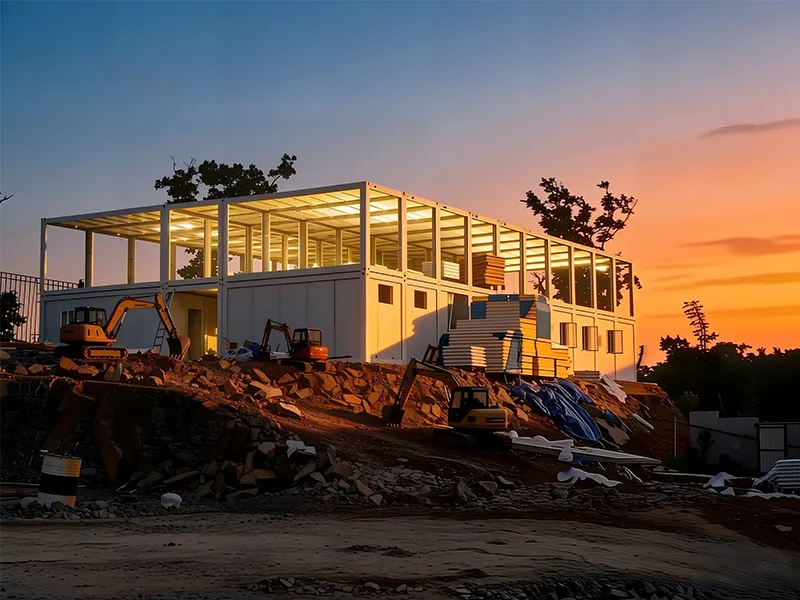
How do you turn a container into a workspace, office, or first aid room on-site?
A container can become a workspace quickly if you plan the essentials:
- Power and lighting (safe, code-aligned electrical wiring)
- Ventilation and basic comfort
- Workbenches + storage
- Clear entry/exit routes
Many projects convert a construction container into:
- Site office
- Meeting room
- Security checkpoint
- Tool crib
- first aid room
- QA/QC inspection station
When you need a better environment, a climate-controlled container can add cooling and dehumidifying. Some sites use small air conditioning units and insulation panels to stabilize temperature and protect sensitive supplies.
From our factory perspective, “make it usable on day one” is the goal. That’s why we prefabricate interior wiring, lighting, outlets, and wall finishes before shipping. It reduces onsite chaos and improves safety.
Can a container become a container-based building or shipping container home for projects?
Yes—especially when speed matters. A container-based building can serve as temporary housing, guard rooms, classrooms, clinics, or a dormitory for workers’. You’ll also hear the consumer phrase shipping container home, but in B2B construction we usually talk about shipping container houses as workforce housing or project accommodation.
There are two common approaches:
- Repurposed shipping containers: you convert used containers with cutouts, insulation, windows, and finishes.
- Purpose-built modular units: you build modules designed for occupancy from the start (folding, detachable, flat pack, expandable).
Both can work. Repurposed units can be faster when local labor is strong and code approval is clear. But purpose-built modular units win when you need predictable quality, fast deployment across multiple countries, and consistent specs.
Mini case study (how many projects do it today)
An EPC client building an industrial facility needed emergency housing for early-phase staff. They placed expandable modules onsite in a staged layout: sleeping units, sanitation, dining, and an admin block. The result: fewer delays, better retention, and simpler project management because every unit used the same standard dimensions and connection
Building code basics: what rules apply to shipping container buildings in the U.S. and beyond?
If you plan habitable space, you must consider building code and local approvals. In the U.S., the International Code Council includes specific sections for intermodal shipping containers in the International Building Code (IBC). For example, the 2024 IBC contains limitations and conditions for shipping containers used as buildings
Here’s the practical takeaway: a shipping container is strong, but once you cut openings (door/window cutout), you change the structure. Engineers often need to verify loads, connections, and foundations. This is true for permanent buildings and also for semi-permanent site units.
For global projects, you’ll also see:
- Local structural codes and wind/seismic rules
- Fire requirements and egress
- Electrical and sanitation standards
- Requirements for temporary housing in relief operations
For disaster-related temporary housing, FEMA publications show how community sites and temporary units are managed in the field .
If your buyer is a municipality, NGO, or mining operator, it helps to ask early: Is this storage only, or is it habitable? That one decision drives the compliance path.
Weather, condensation, and comfort: insulation, climate-controlled storage, and rust prevention
This part is where many teams get surprised. A steel box reacts to temperature swings. Condensation forms when warm air hits cool steel walls. That moisture can damage packaging, tools, and finishes.
Here’s how we address it in real projects:
- insulation: add insulation panels to stabilize interior temperature.
- insulate the roof and the hottest wall exposure when possible.
- Use vents or dehumidifiers for climate-controlled storage.
- Avoid direct ground contact where water pools.
- Protect metal—especially near the sea—to prevent rust.
A simple “moisture risk chart” helps teams choose upgrades:
Moisture Risk on a Construction Site (simple view)
Low |■■
Med |■■■■■
High |■■■■■■■■
Very High (coastal / tropical) |■■■■■■■■■■■■
If you store cement, paper cartons, electronics, or medical supplies, I strongly recommend a climate plan. A climate-controlled container (with ventilation and humidity control) isn’t luxury—it helps keep deliveries usable.
We also build modular units using factory-installed wall systems that reduce cold-bridge issues. It’s one reason many industrial and mining project operators prefer purpose-built modules over basic used containers.
Offsite vs on-site delivery: logistics, crane lifts, and project management tips
A container is transportable, but smooth delivery still needs planning. The biggest mistakes are simple: no clear access road, no leveling plan, and no schedule alignment with the crane.
On-site delivery tips
- Confirm ground bearing and leveling points
- Plan truck turning radius and gate width
- Prepare foundations or blocks before arrival
- Schedule a crane when stacking or placing in tight areas
- Keep unloading zones clear for safety
Offsite preparation can reduce site work. In our factory flow, we prefabricate interiors, test electrical systems, and pack spare parts. When the unit arrives onsite, your crew connects utilities and starts using it. That lowers risk and speeds up setup.
This matters for construction contractors and EPC teams because delays multiply. When containers are built offsite with a checklist, you avoid “last-minute improvisation.”
For importers and distributors, offsite standardization is also a business advantage. You can offer consistent modules to different markets, with only minor changes to meet specific requirements.
Practical comparison: storage-only containers vs modular project housing
Many clients ask us for a “simple way” to decide. Here’s a clear comparison:
| Feature | Storage container | Shipping container conversion | Modular container house (factory-built) |
| Main purpose | Site storage | Storage + light occupancy | Habitable housing / offices |
| Comfort | Low | Medium (depends) | High (designed for it) |
| Speed to deploy | Fast | Medium | Fast (when standardized) |
| Compliance | Basic | Depends on use | Designed to meet project specs |
| Best for | Tools, materials, fixtures | Hybrid needs | Workforce camps, emergency housing, admin blocks |
If your plan is long-term accommodation—like workforce camps or disaster response—modular systems often reduce lifecycle cost because maintenance is easier and parts are standardized.
FAQs
What is the difference between a shipping container and a construction container?
A shipping container is built for transport and stacking in logistics. A construction container is a container configured for jobsite use—often with doors, shelving, electrical wiring, and better access features for a construction site.
Can I use a storage container as an office on a construction site?
Yes, but plan ventilation, power, lighting, and safety exits. For better comfort, add insulation and consider a climate-controlled container to handle heat and condensation.
Do construction storage containers need permits?
For storage-only use, permits are often simpler, but rules vary. If the container becomes habitable or part of a building, building code requirements can apply (see IBC references for shipping containers used in buildings in the U.S. IBC 2024 section).
Is it better to buy a shipping container or rent one?
If you need storage for a short period, container rentals can be efficient. If you expect reuse across many projects, buy a shipping container—or order modular units that match your long-term program.
How do I prevent condensation inside a container?
Use insulation, add ventilation, and manage humidity. In high-humidity climates, climate-controlled storage (or a climate-controlled container) is the safest choice for protecting materials and tools.
Are recycled shipping containers safe to use?
Many recycled shipping containers are safe for storage if inspected and maintained. For buildings or housing, engineering checks matter—especially after cutouts and modifications. Also confirm container identification and safety standards such as CSC-related compliance for transport use .
A final note from our factory team: how we help projects succeed
If you’re looking at containers at construction sites as a “quick fix,” you’re already on the right track. The next step is turning that fix into a reliable system: choose the right container type, plan access, control moisture, and decide early whether you need storage or habitable space.
As a China-based factory specializing in modular container houses—folding, detachable, flat pack, and expandable—we support contractors, developers, EPC firms, NGOs, and industrial operators with project-ready solutions. We can repurpose where it makes sense, and we can deliver purpose-built modules when speed, comfort, and compliance matter most.
If you’re looking for a dependable supply partner, send us your site plan, climate, and timeline. We’ll recommend a container layout and module mix that matches your scope.
Key takeaways (remember these)
- A container on a construction site is used for secure site storage, staging, and sometimes living/working space.
- A shipping container is transport-rated; a construction container is site-configured; a storage container is the general storage category.
- Common sizes include 20 ft and 40 ft; plan doors and access to keep the site organized.
- For short jobs, rent a construction storage container; for repeat programs, buying is often smarter.
- Moisture matters—condensation control and insulation protect tools and inventory.
- For housing and offices, check building code and engineer structural changes after cutouts.
- Factory-built modular units reduce onsite work and simplify project management across many projects.