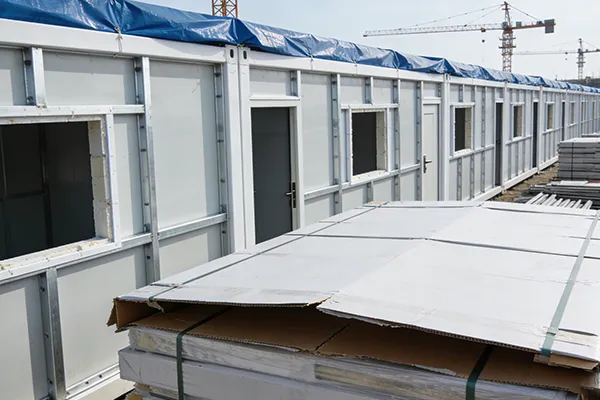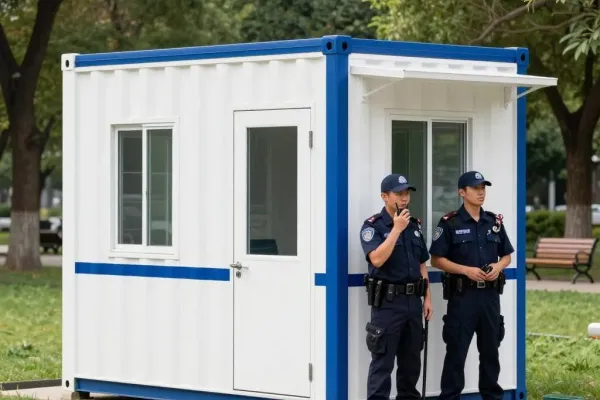


Introduction: The Challenge of Predictability in Modern Construction
Conventional construction projects are frequently exposed to risks of timeline extensions and budget overruns. Factors such as adverse weather, skilled labor shortages, and on-site logistical challenges can introduce significant unpredictability, impacting financial returns and project completion dates. For developers, contractors, and project owners, this lack of control complicates planning and jeopardizes profitability. Off-site modular construction presents a process-driven alternative, engineered to mitigate these variables by moving a substantial portion of the building process into a controlled factory environment.
This guide provides a technical overview of the three primary types of modular construction, outlining their definitions, applications, and the key criteria for selecting the most appropriate method for a given project.
The 3 Core Types of Modular Construction
Modular building is broadly categorized based on the form and completeness of the components fabricated off-site. The primary methodologies are:
- Volumetric Modular Construction (3D Modules)
- Panelized Construction (2D Panels)
- Hybrid Modular Construction (Integrated 3D & 2D Systems)
1. Volumetric Modular Construction: Factory-Finished 3D Structures
Definition:
Volumetric construction involves the off-site manufacturing of complete three-dimensional modules. These units are typically steel- or wood-framed “boxes” that are factory-finished to a high degree, often including structural elements, insulation, wiring, plumbing, interior finishes, and exterior cladding.
Typical Applications:
This method is exceptionally well-suited for projects with a high degree of design repetition.
- Hotels and Motels
- Multi-family Residential Buildings and Apartments
- Student and Workforce Housing
- Healthcare Facilities and Hospital Wings
- Data Centers
Advantages:
- Maximum Schedule Acceleration: On-site foundation work and off-site module fabrication occur concurrently, dramatically shortening the overall project timeline.
- Enhanced Quality Control: The controlled factory environment enables consistent production standards, precision engineering, and rigorous quality assurance checks, independent of site conditions.
- Reduced On-Site Disruption: With up to 90% of construction completed off-site, noise, traffic, and general disruption in the surrounding community are minimized.
Limitations & Applicability Conditions:
- Transportation Logistics: Modules are large and require specialized transport. Project viability is dependent on clear, accessible road routes from the factory to the site, free of significant obstructions like low bridges or tight turns.
- Design Constraints: While highly customizable, the need to transport modules can impose limitations on their maximum width, length, and height. However, innovative designs such as expandable container houses that enlarge on-site, or folding container houses designed for rapid deployment, represent advanced solutions engineered to balance transport efficiency with final usable space.
- Site Access & Crane Requirements: The site must have adequate space for large cranes to operate and sufficient laydown area for staging modules before installation.
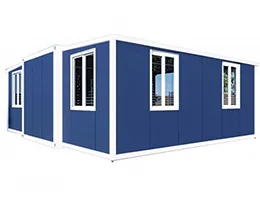
The 3 Core Types of Modular Construction
2. Panelized Construction: Flexible 2D Building Systems
Definition:
Panelized construction is a form of prefabrication where flat structural panels—such as walls, floor cassettes, and roof trusses—are manufactured off-site. These panels can range from open-stud frames to closed panels complete with insulation, windows, and exterior sheathing.
Typical Applications:
The flexibility of panelized systems makes them suitable for a wide range of building typologies, especially those with large open-concept interiors or unique architectural features.
- Custom Single-Family and Low-Rise Residential Homes
- Commercial Shell Buildings (e.g., warehouses, retail centers)
- Schools and Institutional Buildings
- Building Additions and Extensions
Advantages:
- Greater Design Flexibility: Less constrained by transportation logistics, panel systems allow for more complex architectural designs and expansive, open-plan spaces.
- Efficient Transportation: Panels can be flat-packed, allowing for more components to be shipped on a single truck, which can reduce transportation costs. This principle is highly refined in systems like flat pack houses, where entire building kits are condensed for optimal logistics.
- Reduced Structural Weight: Panelized systems are often lighter than fully outfitted volumetric modules, potentially simplifying foundation requirements.
Limitations & Applicability Conditions:
- Increased On-Site Labor: Assembly of panels into a complete structure requires more on-site work and time than setting volumetric modules. Interior and exterior finishing, as well as MEP (Mechanical, Electrical, Plumbing) installation, are predominantly site-based activities.
- Weather Dependency: While the building shell can be erected quickly, the extensive on-site finishing work remains susceptible to weather delays.
- Coordination Needs: Requires precise coordination between the panel manufacturer and on-site trade contractors to ensure seamless assembly and integration.
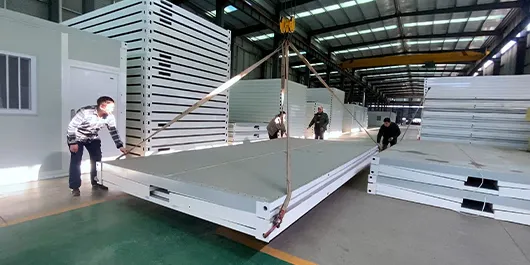
Flexible 2D Building Systems
3. Hybrid Modular Construction: An Integrated Approach
Definition:
Hybrid modular construction strategically combines both volumetric (3D) and panelized (2D) systems, often alongside traditional site-built elements. This approach leverages the distinct benefits of each method within a single project.
Typical Applications:
Hybrid systems are ideal for complex projects that can benefit from the efficiency of volumetric modules for certain areas and the flexibility of other systems for different parts of the structure.
- Urban Infill and Mixed-Use Developments
- Student housing with standardized dorm rooms (volumetric) and large common areas (panelized or site-built).
- Hospitals with repetitive patient rooms (volumetric) and unique diagnostic or surgical wings (site-built).
Advantages:
- Optimized Performance: Allows project teams to use 3D modules for service-intensive areas like kitchens and bathrooms to maximize speed, while using 2D panels or steel frames for lobbies, atriums, or custom facades to achieve specific design goals.
- Balanced Cost and Speed: Provides a middle ground that can capture significant schedule savings from volumetric components while retaining the design freedom and transport efficiency of panels.
- Enhanced Design Possibilities: Unlocks architectural solutions that may not be feasible with a single construction methodology.
Limitations & Applicability Conditions:
- Complex Coordination: Demands a high level of upfront design integration and meticulous project management to coordinate between different manufacturers and on-site teams.
- Supply Chain Management: Requires careful management of multiple fabrication and delivery schedules.
- Technical Expertise: Successful execution relies on an experienced architect, engineer, and general contractor familiar with integrating different construction systems.
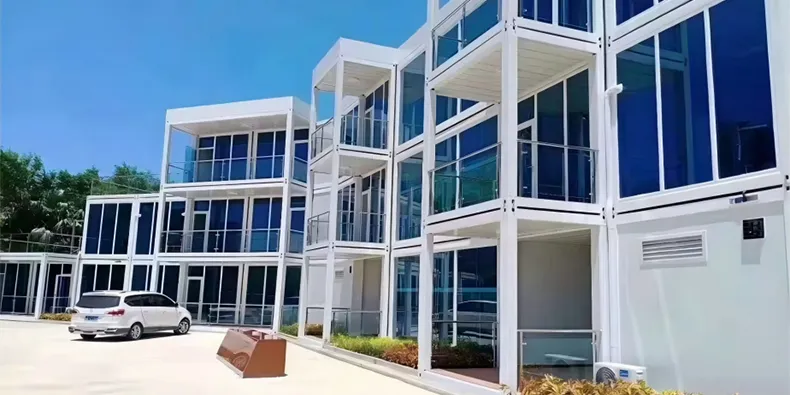
Hybrid Modular Construction
Key Selection Criteria for Decision-Makers
Choosing the right off-site construction method requires a thorough evaluation of project-specific variables:
- Design Repetition: A high percentage of repeated units (e.g., hotel rooms, apartments) strongly favors volumetric construction for maximum efficiency.
- Transportation & Logistics: Assess the entire route from factory to site for clearances. Transportation limitations may dictate the use of panelized systems over larger volumetric modules.
- On-Site Conditions: Evaluate crane accessibility, laydown areas, and local traffic constraints. Constricted urban sites may favor one method over another based on delivery and staging feasibility.
- MEP Complexity: Projects with complex and repetitive MEP systems, such as bathrooms and kitchens, can gain significant time and quality advantages from factory-installed volumetric pods.
- Local Codes & Permitting: Engage with local building authorities early. Ensure their familiarity and inspection processes are aligned with your chosen off-site method, as regulations for factory-built structures can vary.
Comparative Analysis of Modular Building Types
| Feature | Volumetric Construction (3D) | Panelized Construction (2D) | Hybrid Construction |
| Primary Unit | Fully finished 3D modules | Flat structural panels | Combination of 3D modules, 2D panels, and site-built elements |
| Schedule Impact | Highest potential for timeline reduction | Moderate timeline reduction | Significant timeline reduction, balanced with design needs |
| Design Flexibility | Moderate; constrained by transportable module dimensions | High; accommodates complex and open-plan designs | Very High; optimized for both repetition and customization |
| On-Site Activity | Minimal; primarily module setting, connections, and final finishes | Substantial; includes assembly, MEP installation, and full finishing | Variable; dependent on the ratio of manufactured to site-built components |
| Ideal Application | Projects with high unit repetition (hospitality, housing) | Custom residential, commercial shells, unique architecture | Complex projects requiring both speed and design freedom |
A Note on Permanence: Permanent vs. Relocatable Buildings
Beyond the construction method, modular buildings are also classified by their intended lifespan and foundation system.
- Permanent Modular Construction (PMC): These buildings are designed and engineered to the same codes and standards as conventional construction for long-term use. They are installed on permanent foundations and are indistinguishable from their site-built counterparts once complete.
- Relocatable Buildings: Designed for disassembly and reuse, these structures serve temporary needs. A practical application of this concept is the detachable container house, engineered for straightforward relocation to serve project-based needs like workforce housing or site management offices.
About This Comparison
This article serves as a technical guide for developers, general contractors, architects, and project owners evaluating modular construction methodologies. The performance metrics cited—such as potential reductions in schedule, cost, and waste—are based on industry reports and case studies.
It is critical to note that actual project outcomes are contingent upon numerous factors, including design complexity, material specifications, supply chain efficiency, logistical conditions, and the regional regulatory environment. The figures represent potential benefits achievable under optimized conditions and should not be interpreted as guaranteed results. A thorough feasibility analysis conducted with an experienced modular manufacturer is recommended to assess the viability and potential advantages for a specific project.