

Short summary:
If you’re planning workforce camps, site offices, schools, clinics, housing, or rapid commercial builds, you’ve likely heard that modular construction is faster than traditional construction. True—but only if you choose the right system. I’ll explain the three types of modular buildings (volumetric, panelized, and hybrid), how the construction process works, and how China-made container house systems (folding, detachable, flat pack, expandable) fit real projects.
PAS opener:
Projects slip when labor is tight, weather is bad, or the construction timeline is unrealistic. That pain hits budgets hard. The solution is often modular construction, but picking the wrong system creates new delays. I’ll break down the three main types so you can choose correctly.
Featured Snippet answer:
The three types of modular buildings most commonly used in modular construction are volumetric (3D modules built in a factory and assembled on-site), panelized modular construction (flat 2D panels like walls and floors prefabricated off-site), and hybrid modular (a combination of volumetric modules, panels, and sometimes traditional construction). Each type changes transportation logistics, site labor needs, speed, and design flexibility.
Article outline
Modular construction explained: what a modular building and a module really mean
What are the three types of modular buildings and why do they matter?
Volumetric modular construction: when full 3D modules are the fastest choice
Panelized modular construction (2D panels): is it better than volumetric for flexibility?
Hybrid modular construction: how do you combine modules with traditional methods safely?
Permanent modular vs relocatable: which building types fit camps, clinics, and schools?
What is the modular construction process from factory to on-site installation?
Cost-effective and sustainable: where modular construction offers advantages over traditional
How construction companies choose the right system (real project checklist)
Case study + FAQs: choosing modular homes, modular office, and modular hotel solutions
Modular construction explained: what a modular building and a module really mean
Let’s start simple. Modular construction is a method of construction where a building is made from repeatable module parts (or panels) that are built off-site in a controlled factory, then delivered and assembled on-site.
A modular building is the finished structure you occupy—housing, a clinic, a dorm, a modular office, a canteen, or a modular hotel. A module is the unit that gets manufactured and moved—anything from a full 3D room box to a wall panel. Think of the module like a “building block,” but engineered, insulated, wired, and tested before it arrives at the construction site.
This is why many project owners are turning to modular construction: it shifts risk away from unpredictable site conditions and toward controlled fabrication, quality checks, and repeatable workflows. It also makes coordination easier for EPC and workforce-camp builders who want predictable delivery.
What are the three types of modular buildings and why do they matter?
The question sounds academic, but it’s actually practical. The three main types of modular systems—volumetric, panelized (2D), and hybrid modular—change everything:
how much work happens in the factory
how much labor you need on-site
your transport limits and transportation logistics
your speed vs flexibility trade-off
how well you blend modular and traditional construction
Many industry explainers describe the three common categories as 2D panels, 3D modules, and hybrid combinations.
For global B2B buyers (contractors, developers, government owners, NGOs, mining operators), this choice determines whether modular is genuinely faster than traditional—or just “different.”
Volumetric modular construction: when full 3D modules are the fastest choice
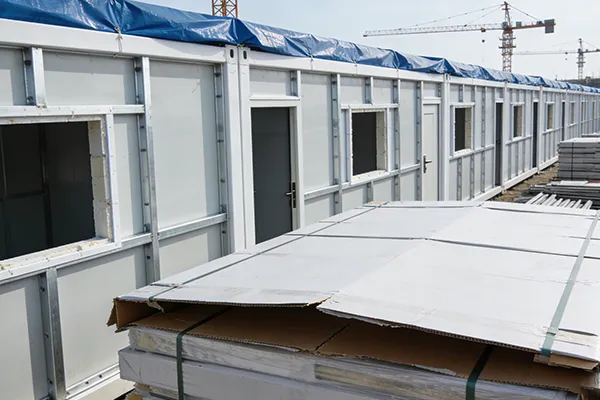
Volumetric modular construction involves producing 3D room-sized units—volumetric units—in a factory, often with walls, floors, ceilings, MEP, and interior finishes already installed. These modules are shipped and connected on-site to create complete structures.
Where volumetric shines
Volumetric is ideal when schedule matters most:
workforce camps and accommodation blocks
mining and industrial housing
fast classrooms and clinics
hotels where rooms repeat
emergency response housing
Because modules are built in parallel with foundations and site prep, modular construction saves time on the overall construction timeline—if your design is repeatable and logistics are planned early.
How container houses fit volumetric
As a China-based factory specializing in modular container houses, most of what we deliver is volumetric modular units in container-friendly formats—especially:
flat pack container houses (ship as packs, assemble quickly)
detachable container houses (flexible transport and replacement)
folding container houses (rapid deployment, compact shipping)
expandable container houses (bigger usable space per unit on arrival)
These are practical forms of volumetric modular for global projects because they match shipping realities and standard handling equipment. The key is to engineer for long-term use when you need permanent structures, and for fast redeployment when you need relocatable buildings.
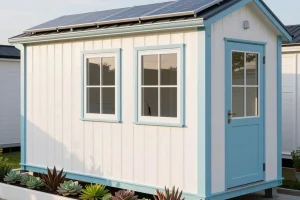
Volumetric modular construction involves
Panelized modular construction (2D panels): is it better than volumetric for flexibility?
Panelized modular construction uses 2D panels—walls, floors, roofs—manufactured off-site and then assembled on-site like a high-precision kit. It’s often called 2d panelized modular construction or 2D panelised construction.
Why panelized can be a smart choice
Panelized systems typically offer:
more design flexibility (fewer shipping shape limits)
easier integration with local materials
simpler upgrades to façade or rooflines
good fit for irregular footprints
In other words, panelized works well when building design is unique but you still want prefabrication benefits.
The trade-off
Panelized often needs more coordination and skilled assembly on-site than a fully volumetric approach. That’s not a problem—if your construction companies and crews are ready. But if you’re operating in remote areas or harsh weather, volumetric may reduce site labor risk.
If you’ve heard the phrase “a type of prefabricated construction,” panelized is a perfect example: it lets you prefabricate components while still building the final box on the jobsite.
Hybrid modular construction: how do you combine modules with traditional methods safely?
Hybrid modular construction combines multiple approaches—often 3D modules plus 2D panels—sometimes alongside traditional methods.
This is usually the “problem solver” option. If you need the speed of volumetric rooms but want architectural freedom in the lobby, roof, or corridor zones, hybrid can deliver.
Common hybrid patterns we see in projects
Volumetric sleeping rooms + panelized corridors
Modular bathrooms (pods) + panelized walls + site-built structure
Container modules + site-built stair cores and ramps
Volumetric units for repeat areas + traditional construction methods for complex features
The benefit is straightforward: you can use modular where repetition exists and use conventional building methods where local customization is necessary.
The warning is also straightforward: hybrid needs clear interface planning—how modules connect to steel, concrete, MEP, façade, and fire code details. Good quality control in the factory helps, but strong site management still matters.
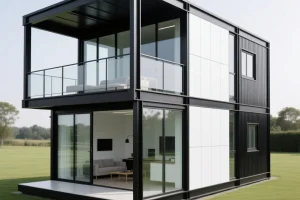
Hybrid modular construction
Permanent modular vs relocatable: which building types fit camps, clinics, and schools?
Many buyers also ask: are modular buildings always temporary? No. The industry often distinguishes between relocatable modular and permanent modular buildings.
Relocatable modular buildings: designed for short-term or moveable needs—site offices, temporary classrooms, short projects
Permanent modular buildings: designed for long-term occupancy and fixed installation, similar to traditional buildings in code intent
Practical guidance
If you’re building a workforce camp for a 2–5 year industrial project, relocatable makes sense—especially if you expect to move assets to the next site.
If you’re building municipal housing, a school campus, or public clinics, permanent modular construction is often the better fit.
In our factory experience, many “container house” systems are flexible enough to serve both goals—if engineered correctly. The difference is not the exterior look. It’s the structural standard, corrosion protection, insulation strategy, and long-term MEP integration.
What is the modular construction process from factory to on-site installation?
A clear modular construction process is what keeps projects predictable. The process usually follows these stages:
Building design + engineering (freeze the module grid early)
Prototype and prefabrication planning
Fabrication in a controlled factory environment
Factory testing (wiring, plumbing pressure checks, door/window QC)
Packing and transportation logistics planning
Foundations and utilities prep at the site
Delivery and crane setting
Mechanical connections + weatherproofing
Final finishes and inspections
This approach reduces uncertainty because major work happens off-site, while the site focuses on assembly and connections.
Why the “module grid” matters
A consistent module sizing strategy drives cost and speed. It reduces design changes, makes manufacturing repeatable, and helps construction companies plan lifting and staging.
It also affects shipping. If modules are too wide or too tall, transport becomes expensive and slow. That’s why many container-based modular structures use shipping-friendly footprints.
Cost-effective and sustainable: where modular construction offers advantages over traditional
Many project owners want proof, not buzzwords. While exact savings vary by project, modular can improve productivity by shifting work to controlled manufacturing and running site work in parallel. That productivity logic is a core theme in major industry discussions of modular and traditional construction comparisons.
A simple “speed + risk” visual (quick chart)
Below is a practical, not-perfect, rule-of-thumb view for typical projects:
Speed to Occupancy (Higher is faster)
Volumetric ██████████
Hybrid Modular ████████
Panelized ██████
Traditional ████
Where modular can be cost-effective
Modular can be cost-effective when:
repeatable layouts reduce design waste
labor availability is tight
weather delays are common
the project is remote (mining, infrastructure)
schedule penalties are high
Where modular supports sustainable goals
Modular can support sustainable building practices because factory workflows reduce rework, tighten material control, and limit site waste. That doesn’t automatically make every modular project “green,” but it does create a strong pathway for sustainable outcomes when designed well.
How construction companies choose the right system (real project checklist)
If you’re a contractor, EPC firm, or project owner, use this decision checklist. It’s based on the real questions we work through with global buyers.
Choose volumetric if:
you need speed and repeatable rooms
you want less site labor and fewer trades on-site
your site is remote or weather-risky
your building types include camps, dorms, clinics, hotels
Choose panelized if:
the footprint is unique or architectural
you have reliable skilled labor locally
transport limits are strict
you want maximum façade freedom
Choose hybrid modular if:
parts of the project repeat, and parts don’t
you want a “best of both” approach
you must integrate with concrete cores or steel frames
you need taller buildings with a mix of systems
This is the real reason modular techniques are revolutionizing the building industry: you can choose from various types of modular construction and match the method to the job, instead of forcing one system onto every site.
Case study + FAQs: choosing modular homes, modular office, and modular hotel solutions
Mini case study (real-world pattern, simplified)
A workforce-camp contractor needed housing for a remote industrial project. The site had short weather windows and limited skilled labor. They considered panelized, but the risk of slow assembly was high.
What we chose: a volumetric container-based solution—flat pack + detachable units for flexibility, with pre-installed electrical and interior finishes.
Why it worked: the construction process was split cleanly—site crews handled foundations and utilities while the factory ran fabrication and QC in parallel.
Result: faster occupancy and fewer onsite rework issues—because critical components were tested before shipping.
That is the practical benefit of using modular in the right way: not “prefab hype,” but predictable delivery.
Key comparison table: the three main types of modular
| Category | What it is | Best for | Biggest risk to manage |
| Volumetric | 3D modules (room-sized units) built off-site | Fast camps, hotels, repeat rooms | Shipping size + crane planning |
| Panelized modular construction | 2D panels assembled on-site | Custom footprints, façade flexibility | More site labor coordination |
| Hybrid modular | Combination of 3D + 2D + sometimes traditional | Mixed complexity projects | Interface detailing + code coordination |
This is the simplest way to remember the three types of modular and select the right path.
FAQs
What are the three types of modular buildings?
The three common types are volumetric (3D modules), panelized (2D panels), and hybrid modular (a combination).
Is modular construction always temporary or relocatable?
No. Modular includes both relocatable and permanent modular buildings. The difference depends on design intent, code requirements, and long-term installation details.
Which type of modular construction is fastest?
Volumetric is often the fastest for repeatable rooms because most work is completed in the factory and only assembly happens on-site.
When should I choose panelized modular construction?
Choose panelized when you need more flexibility in building design, have reliable site labor, and want off-site prefabrication without shipping full 3D modules.
What is hybrid modular construction used for?
Hybrid modular construction is used when part of the building is repeatable (great for modules) but other areas need traditional methods or 2D panels for architectural freedom.
How do I reduce risk on a modular project?
Freeze the module grid early, plan transportation logistics, confirm site crane access, and align factory QA with on-site installation sequencing. Good planning is the difference between modular success and modular stress.
Final bullet-point summary: what to remember
The three main types of modular systems are volumetric, panelized modular construction (2D panels), and hybrid modular construction.
Volumetric is best for repeatable rooms and fast schedules; panelized is best for flexibility; hybrid solves mixed-complexity projects.
Modular construction shifts work to a controlled factory and reduces uncertainty compared with purely on-site building.
Permanent vs relocatable matters—choose based on project duration and long-term use.
For global B2B projects, good module planning + logistics is the key to being truly faster than traditional and truly cost-effective.
If you want, I can also turn this into a buyer-facing landing page structure (H1/H2 blocks + CTA + product modules) for your folding, detachable, flat pack, and expandable container house categories.