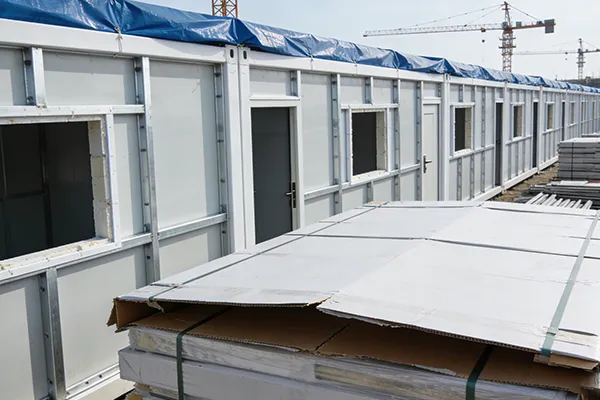


Construction projects often hit the same wall: slow schedules, messy sites, rising labor cost, and hard-to-move housing. When you need workforce rooms, offices, clinics, or emergency housing fast, “build it the old way” can feel like a trap. A flat pack approach flips the problem—ship compact, then assemble quickly and safely.
A flat pack building (often a flat pack container system) is a modular housing solution that ships as a compact package of panels and components, then gets assembled on-site into ready-to-use rooms. For contractors, EPC teams, and government buyers, it’s a practical path to quicker deployment, lower transport cost, and reliable quality—especially when timelines are tight and locations are remote.
flat pack container building home for modular construction housing
Outline
What is a flat pack building and how does it work?
Flat pack container vs expandable vs folding vs detachable: what’s the difference?
Are flat pack homes cheaper to build than traditional housing?
How fast is on-site assembly for modular buildings and building kits?
How do you transport and store a flat-pack container kit efficiently?
What sizes and dimensions matter for container housing projects?
What’s inside: panels, structure, and durability in flat pack construction
How customization works for developers, EPC, and construction companies
Where do flat pack container buildings work best (case studies)?
How to buy: specs, instruction, installation, and project checklist (FAQs included)
What is a flat pack building and how does it work?
When I say flat pack, I mean the same smart idea that made flat pack furniture popular: ship things compact, then assemble them where you need them. A flat pack building applies that idea to real construction and housing.
In practice, our China-based factory fabricates the structural frame, wall panel sets, roof system, doors, windows, and key components in a controlled factory setting. We prefabricate the kit so it arrives organized, labeled, and ready for assembly. Your team receives the instruction, bolts the frame, installs panels, and finishes the interior—often with standard tools and a trained crew.
Why B2B buyers like it: you can maximize shipping efficiency, keep costs low, and deploy project housing with predictable quality and repeatable steps.
Flat pack container vs expandable vs folding vs detachable: what’s the difference?
Buyers often ask me, “Which model should I choose?” Here’s the simplest way to think about it:
Flat pack container: ships as panels + frame; great for camps, offices, classrooms, clinics; strong logistics value.
Expandable container home: ships compact, then expands horizontally (and sometimes with slide-out sections) for larger interior space.
Folding container house: uses hinged walls/roof to fold down; very fast setup for temporary needs.
Detachable container house: breaks into individual components; flexible for irregular layouts and mixed room types.
All of these are modular buildings in spirit. The big decision is your project priority: transport volume, speed, layout flexibility, or reuse and relocation.
Here’s a quick comparison:
| Model | Best For | Shipping Efficiency | On-site Speed | Flexibility |
|---|---|---|---|---|
| Flat pack | workforce camp, site office, clinics | ★★★★☆ | ★★★★☆ | ★★★★☆ |
| Expandable | larger living units, demo homes | ★★★☆☆ | ★★★★☆ | ★★★★☆ |
| Folding | emergency shelters, rapid deployment | ★★★★☆ | ★★★★★ | ★★★☆☆ |
| Detachable | EPC mixed layouts, phased projects | ★★★★☆ | ★★★☆☆ | ★★★★★ |
If you’re an EPC firm or a contractor running multiple sites, I usually recommend starting with a flat pack baseline, then adding folding/expandable units where speed or space is the main constraint.
Are flat pack homes cheaper to build than traditional housing?
Often, yes—cheaper to build than traditional can be realistic, but only when you compare the full project cost, not just materials.
A flat pack construction model can reduce hidden costs like:
repeated mobilization
wasted site material
long on-site labor hours
weather delays
rework from inconsistent workmanship
Research also points to meaningful waste reductions from prefabrication: one analysis cites an average construction and demolition waste reduction level up to 52% with prefabrication adoption. Another industry article references claims of very high waste reductions in modular workflows (up to 90% in some reports).
In real bids, I see three “big levers”:
Transport savings (you ship compact packs, not fully assembled units)
Time savings (quicker setup = fewer overhead days)
Quality control (factory repeatability improves durability and reduces rework)
So yes—flat pack housing can be cost-effective, especially for workforce camps, remote industrial sites, and municipal projects where speed and repeatability matter.
How fast is on-site assembly for modular buildings and building kits?
Speed is one of the main reasons buyers choose building kits and house kits in the first place. In a typical project flow, we deliver the packaged kit to site, your crew sets the foundation (or simple platform), then completes on-site assembly.
A realistic timeline depends on unit size, interior finish level, utilities, and local crew experience. But compared with conventional construction, the schedule is usually quicker because:
parts arrive ready to fit
the assembly steps are standardized
less wet work happens on-site
weather has less impact on core structure
I recommend a simple deployment plan:
confirm layout + utilities
plan crane/forklift access
assign a trained crew leader
follow the installation instruction sequence
inspect and sign off each unit
That’s how you scale from 10 units to 200 units without chaos.
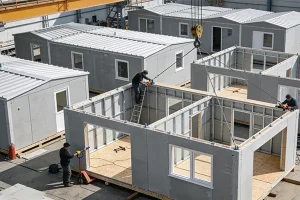
flat-packed transport
How do you transport and store a flat-pack container kit efficiently?
A key advantage of flat pack is that it is flat-packed and compact for shipping and staging. This matters when you ship to islands, mining regions, deserts, or disaster zones.
What I tell importers and project managers:
treat it like a logistics “package system”
label each component set by unit number
keep hardware and critical parts in sealed cartons
stage panels in a dry storage area near the build zone
Shipping containers follow standardized dimensions so they can be stacked and moved globally. Sources commonly cite standard widths around 2.44 m (8 ft) and typical 20 ft / 40 ft formats.
That standardization is why flat pack shipping is so attractive: it’s built to move through existing containerized logistics.
What sizes and dimensions matter for container housing projects?
Every project has constraints: road permits, site gates, lifting limits, ceiling height rules, and room-size standards.
Three practical dimension checks I use with clients:
Transport route limits
Bridge height, road width, local escort rules—these can change which unit format is suitable.
Foundation footprint and stacking
Will you stack units vertically? If yes, plan structural loads early.
Interior space needs
Ask: how many beds, desks, toilets, showers, and storage do you need per unit?
A quick reference many teams use is standard container geometry for planning logistics. For example, a typical 40 ft container is commonly listed around 12.19 m external length and 2.44 m width, with internal dimensions slightly smaller.
This doesn’t mean every flat pack home is “an ISO container.” But it does mean the logistics thinking is similar and predictable.
What’s inside: panels, structure, and durability in flat pack construction
A good flat pack building is not a flimsy box. Buyers care about durability, thermal performance, safety, and long service life—especially for industrial and government projects.
Typical system elements include:
structural steel frame (main load path)
wall and roof panel system (often insulated)
door/window sets
electrical and plumbing preparation (where requested)
hardware kits and seals for weather resistance
Because we manufacture in a factory environment, we can keep tolerances stable and protect finish quality better than open-site fabrication. That supports durable performance and consistent results—especially when you roll out 50, 200, or 1,000 units across multiple sites.
One small but important detail: we design components so crews can assemble efficiently without improvising. Less improvisation means fewer failures later.
How customization works for developers, EPC, and construction companies
For B2B clients, “customization” is not a slogan. It’s a delivery system.
Here’s how we usually customize for different buyers:
Construction contractors: fast site office + dorm clusters; simple installation steps; repeatable units
Real estate developers: better exterior look, upgraded interiors, more attractive layouts
Government / municipal owners: standardized specs, compliance documents, scalable procurement
Engineering and EPC companies: mixed-use blocks (office + accommodation + clinic + canteen)
NGOs / disaster relief: rapid deployment, simplified utilities, easy relocation
Industrial & mining operators: tougher finishes, better insulation, long-term camp planning
Customization options often cover:
layout and room function
window/door positions
insulation and climate packages (hot/cold regions)
interior finishes and furniture integration (yes—sometimes clients want “furniture ready” delivery)
branding, signage, and unit numbering for camp management
If you want a real win: define your specific needs early (occupancy, climate, utilities, target lifetime). Then we build the kit around your project reality.
Where do flat pack container buildings work best (case studies)?
Flat pack is strongest when speed + scale + logistics matter. Here are the most common applications I see:
Workforce camps for roads, rail, oil & gas, wind/solar, and mining
Temporary site offices for contractors
Classroom blocks and training centers
Clinics and isolation rooms
Disaster relief and transitional housing
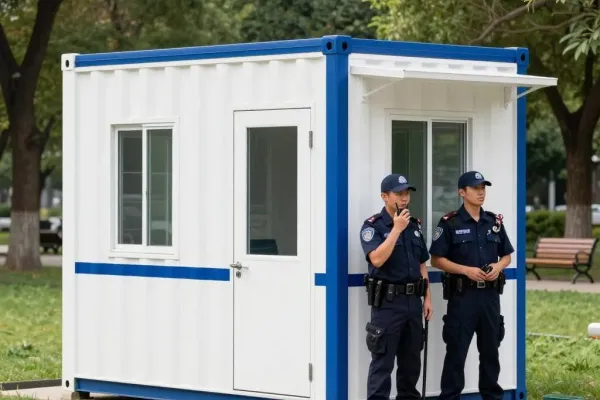
Security cabins, gatehouses, and utility rooms
Why it fits these use cases: you can deploy a repeatable unit fast, keep schedules steady, and plan a phased build-out without stopping your main construction work.
Mini case study: mining workforce camp (phased deployment)
Client: Industrial and mining project operator
Need: dorms + office + canteen support spaces
Challenge: remote access, high logistics cost, limited local labor
Approach: flat pack modular camp delivered in phases; standard room blocks repeated for predictable assembly
Outcome: fewer site delays, easier supervision, and a cleaner handover process because the build steps were standardized and auditable.
That’s the hidden power of a flat pack system: it’s not just the product—it’s the process.
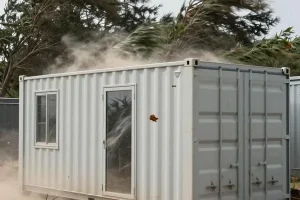
shipping container office
How to buy: specs, instruction, installation, and project checklist (FAQs included)
When procurement teams evaluate building kits, I recommend a checklist that avoids expensive mistakes.
Project-ready checklist (simple but powerful)
Site conditions: soil, drainage, wind, snow load assumptions
Utilities: power, water, sewage (or tank-based options)
Occupancy plan: beds, toilets, showers, office seats
Climate needs: insulation, ventilation, heating/cooling
Logistics plan: port, inland transport, crane/forklift access
Compliance docs: drawings, material specs, inspection plan
Installation plan: who leads, how many workers, daily targets
Spare parts: seals, fasteners, critical components for maintenance
A small quote I live by: “Fast projects fail when the checklist is skipped.”
Cost drivers table (what changes the number?)
| Cost Driver | Why it matters | How to control it |
|---|---|---|
| Finish level | flooring, bathroom grade, wiring scope | define a standard spec tier |
| Climate package | insulation thickness, windows, sealing | match local weather reality |
| Layout complexity | more partitions and wet areas | use repeatable room modules |
| Transport distance | inland trucking + handling | consolidate shipments and staging |
| On-site labor | crew skill and speed | provide clear instruction + supervision |
If you’re buying at scale, we can also supply a deployment guide so your team can build efficiently and safely, unit after unit.
FAQs
What is a flat pack container building used for?
It’s used for housing, site offices, classrooms, clinics, and workforce camps where you need fast deployment, predictable quality, and easier transport.
Are flat pack homes durable enough for long-term projects?
Yes—when designed with the right structural frame, panel system, and weather protection. Many industrial buyers choose them specifically for durability and repeatable performance.
How is a flat-pack building different from a shipping container home?
A shipping container home starts from an ISO container shell. A flat pack building ships as panels and components that are assembled on site, usually to reduce shipping volume and increase layout flexibility.
Is flat pack construction sustainable?
It can be. Prefabrication and modular workflows are often linked with waste reduction and site efficiency. Research and industry sources discuss significant waste reduction potential in prefabrication/modular methods.
What should I send you for a fast quotation?
Send your layout (or room list), location, target occupancy, finish level, and timeline. If you have a procurement spec, include it. We’ll respond with a configuration, packing plan, and delivery schedule.
Can you support NGOs and emergency deployment projects?
Yes. For disaster relief, we recommend fast-install models, simple utilities, and clear deployment planning so units can be deployed and relocated with minimal friction.
Key takeaways (remember these)
A flat pack system ships compact and gets assembled fast, making it ideal for large-scale project housing.
Flat pack container solutions are popular with construction companies, EPC teams, government owners, and industrial operators because deployment is quicker and easier to standardize.
Total project cost improves when you consider transport, labor, schedule risk, and waste reduction—not just materials.
The best results come from clear specs, repeatable modules, and a serious installation checklist.
If you want a project-ready proposal, share your layout, site location, climate needs, and timeline—and we’ll build the right modular package for your deployment.