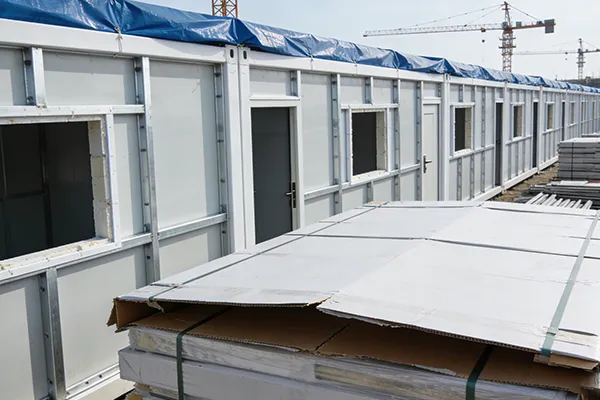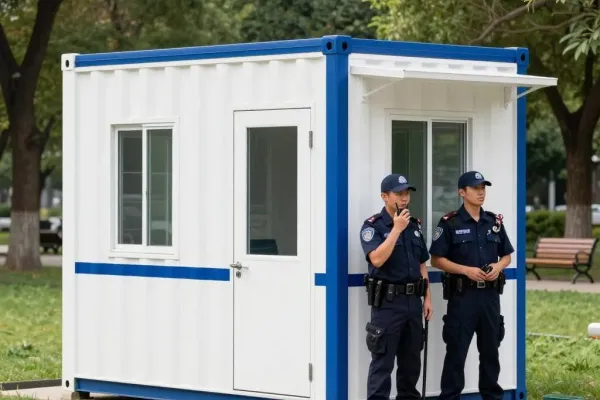


You need fast, safe housing for a project site, but traditional buildings take too long. Delays increase labor costs, disrupt schedules, and create real risk for workforce welfare. As a China-based factory specializing in container house systems—folding, detachable, flat pack container, and expandable container models—I’ll break down how buyers pick the right solution and the right container house manufacturer for real projects.
The most common choice for fast projects is an expandable container house because it ships compact, expands into usable living space, and supports quick assembly on site. A reliable container house manufacturer should offer multiple container home models (expandable, folding, flat pack), clear steel structure specs, insulation options, and project services like drawings, packing plans, and export documents. Choose based on site timeline, climate, capacity needs (e.g., 2 bedrooms), and installation resources.
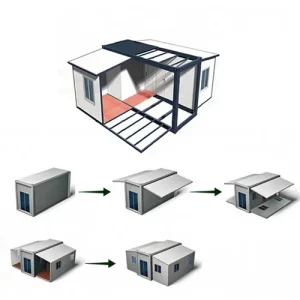
Expandable Container House
Article Outline
Why do projects choose a container house instead of traditional buildings?
What is an expandable container house, and how does it work?
Expandable container vs folding container house vs flat pack container: which is best?
How do you choose between 20ft and 40ft container sizes for a container home?
What are the most requested container home models and floor plans (bedroom, toilet)?
What should you check in steel structure, insulation, and sandwich panel specifications?
How “movable” and “cost-effective” are container solutions in real projects?
Residential vs camp vs pop-up shops: how use case changes the modular design
How we customize and export prefab container housing: OEM/ODM and quality control
A procurement checklist + FAQs for contractors and EPC buyers
Why do projects choose a container house instead of traditional buildings?
When contractors and EPC teams come to us, they usually have one urgent need: time. A traditional site build needs permits, wet trades, and long coordination. A container house solution ships as a finished prefab module, so you can start installation the moment the foundation is ready.
In workforce camps, mining sites, and municipal projects, we see the same story: the best option is the one that keeps the schedule safe. That is why prefabricate and prefabricated modular housing has become a practical default for temporary and semi-permanent accommodation.
From a supplier view, the “real value” isn’t only the unit price. It’s predictable delivery, repeatable quality, and fast installation. That is what makes container solutions feel truly cost-effective for bulk buyers.
What is an expandable container house, and how does it work?
An expandable container is a container unit that ships in a compact form and expands on site to create larger living space. Many buyers call it an expandable house because it creates a “pop-out” interior footprint while staying simple to transport.
In practice, an expandable container house is popular because:
It reduces shipping volume while maximizing usable area
It supports faster setup than many site-built options
It can include electrical, wall systems, and finishes preinstalled
We often ship prefab expandable units for project clients who need a quick mobile house for staff housing, clinics, or site offices. This “expandable living” concept works well for urgent schedules—especially when you want a neat, repeatable building that still feels spacious.
Expandable container vs folding container house vs flat pack container: which is best?
Buyers don’t want one product. They want the right container home format for their team, location, and logistics. Here’s how we guide them.
Comparison table (buyer-friendly)
| Model | Best for | Key advantage | Watch-outs |
|---|---|---|---|
| Expandable container house | Fast site housing, offices, clinics | Compact shipping + bigger interior after expansion | Ensure lifting plan + site leveling |
| Folding container house | Emergency response, rapid deployment | Very fast setup, low labor | Confirm folding joints & durability |
| Flat pack container | Large projects, repeated units, camp towns | Efficient packing, scalable, easy to transport | Needs a trained crew for assembly |
| Detachable modular | Permanent/semi-permanent projects | Flexible layout, long-term stability | More site work than fully finished units |
If your project needs speed and comfort, the expandable container is often the easiest “middle path.” If you need to ship hundreds of units, flat pack container systems can win on logistics. If you need “today,” a folding container house can be the fastest.
How do you choose between 20ft and 40ft container sizes for a container home?
A lot of buyers ask about 20ft versus 40ft container options like it’s only about size. But it’s really about transport and site plan.
20ft units often fit tighter sites, smaller cranes, and faster re-positioning. A 20ft container home also supports simple foundation layouts and quicker deployment.
A 40ft container format can create larger spans and fewer joints for bigger modules, especially when you want fewer separate units.
For a workforce camp or on-site office zone, the best answer usually comes from your layout and utilities plan. We commonly recommend mapping floor plans first, then matching module sizes to:
access roads and turning radius
crane capacity and lifting points
required bedroom count and shared spaces
What are the most requested container home models and floor plans (bedroom, toilet)?
From our production and export experience, the top requests are simple, repeatable layouts that work for real people. Buyers often ask for:
1 bedroom + small living + toilet
2 bedrooms for shared staff housing
Dormitory-style dormitory layouts with multiple beds
Office + meeting room + toilet module
The big reason: you need a layout that fits furniture, walking paths, and basic hygiene needs without redesigning the building every time. That’s why we keep a standard library of container home models and allow you to customize details like window positions, internal partitions, and finishes.
Quick layout tip from our engineer team: Keep wet zones (like the toilet) aligned across units so plumbing runs stay short and maintenance stays simple.
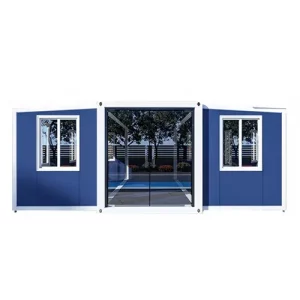
Expandable Container House
What should you check in steel structure, insulation, and sandwich panel specifications?
This is where professional buyers separate suppliers from true partners. A good-looking container house can fail on site if the structure and envelope are weak.
Here’s what I recommend checking in every proposal:
Steel structure design: wall frame thickness, roof beams, welding standards
Climate system readiness: insulation options for hot/cold regions
Wall build-up: sandwich panel selection, joint design, and sealing
Surface and durability: color steel plate quality and coating
Safety and compliance: ask for ce related documentation if required for your market
As a factory, we do strict quality control because B2B buyers do not want surprises after arrival. We share packing lists, loading plans, and inspection photos because “trust” in prefab projects comes from visible proof.
How “movable” and “cost-effective” are container solutions in real projects?
Buyers love the idea of a movable building. The truth is: mobility depends on how you install and how often you plan to relocate.
For example:
If you use a simple foundation and plan utilities with quick connections, a container unit is truly movable.
If you embed deep foundations and hard-plumb everything, the building becomes less mobile—but still faster than traditional construction.
On cost-effectiveness, the hidden savings often come from:
reduced site labor
fewer weather delays
predictable timeline and scope
repeatable designs across multiple projects
That’s why large contractors and camp builders usually standardize 2–3 models, then repeat them at scale.
Residential vs camp vs pop-up shops: how use case changes the modular design
Your use case changes the spec more than you think.
Residential projects care about comfort, finish, privacy, and long-term durability. You may want better insulation, quieter doors, and a nicer interior feel.
Camps and industrial housing care about speed, maintenance, and easy cleaning. You may prioritize rugged surfaces and simple layouts.
Commercial and pop-up shops care about appearance, signage, and customer flow. Here, the “wow” factor matters, but the building still needs reliable structure.
Some clients also ask for vacation home or tiny house style layouts. In those cases, we often recommend an expandable modular approach because it provides more room without complex on-site construction.
How we customize and export prefab container housing: OEM/ODM and quality control
As a China-based factory, we don’t only sell one unit—we deliver integrated housing packages for projects. That includes design, production, packing, and export support.
What we usually provide for B2B clients:
Standard models + ability to customize layouts and finishes
OEM and ODM support for distributors and brand owners
Project drawings, packing plan, and installation guidance
Export documents and logistics coordination (export)
Optional furnishing packages (furnish) to speed up commissioning
We also specialize in project-ready solutions: if your timeline is tight, we can lock the spec quickly, run production, and ship in batches aligned to your site readiness.
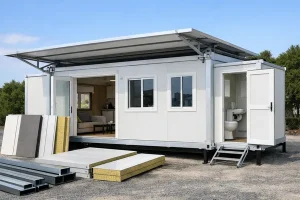
prefab expandable container house
A procurement checklist for choosing an expandable container house manufacturer
When you shortlist an expandable container house supplier, ask these questions:
Can you show multiple container home models (expandable, folding, flat pack)?
Do you provide clear steel structure details and material specs?
What insulation and wall options do you recommend for my climate?
Can you support a layout like 2 bedrooms with a separate toilet?
How do you handle quality checks and strict quality control before loading?
Do you provide installation documents and an engineer contact (engineer) for guidance?
Can you support oem/odm if I’m a distributor or project brand?
What is your expected lifespan under typical project use?
Do you have compliance support (e.g., ce) for my market?
Can you scale for camps, dormitory blocks, or municipal housing?
Mini “buyer scoring” table
| Factor | What “good” looks like |
|---|---|
| Design clarity | Standard drawings + clear options list |
| Production | Factory-controlled process, repeatable QC |
| Logistics | Packing plan + container loading photos |
| Installation | Simple steps + troubleshooting support |
| Customization | Fast spec confirmation, stable lead time |
FAQs
What is an expandable container house best used for?
An expandable container house works well for site offices, workforce housing, medical rooms, and fast project accommodation because it ships compact and opens into larger living space.
Is a folding container house faster than an expandable house?
Often yes. A folding container house can be very quick to deploy, especially in urgent or disaster-response settings. The tradeoff is that your layout and long-term durability requirements must be checked carefully.
Can I get 2 bedrooms and a toilet in one unit?
Yes. Many container house layouts support 2 bedrooms and a toilet. The final design depends on module size and how you want to route plumbing.
What should I check first when choosing a container house manufacturer?
Start with structure and system details: steel structure, wall panels, insulation, and quality documents. Then confirm packing plan, installation guidance, and export support.
Are container homes sustainable?
They can be sustainable when designed for long service, reuse, and efficient installation. The key is durability, repairability, and smart logistics—not just the word “green.”
Is a flat pack container better for large projects?
Often yes. A flat pack container system scales well for camp towns and repeated buildings. It can reduce shipping cost per unit and works well with trained assembly teams.
Summary: what to remember
The best container house choice depends on speed, logistics, and site conditions.
Expandable container models balance transport efficiency with comfortable living space.
Compare folding, flat pack, and detachable modular options to match your project scale.
Always verify steel structure, insulation, and sandwich panel specs—these decide long-term performance.
A reliable container house manufacturer supports drawings, packing plans, QC evidence, and export delivery.
Standardize a few container home models and scale them to cut risk and cost.
If you want, tell me your target country, climate (hot/cold/humid), unit quantity, and whether you need 20ft or mixed sizes. I can draft a procurement-ready spec sheet and a comparison quote template for your contractor/EPC bidding workflow.