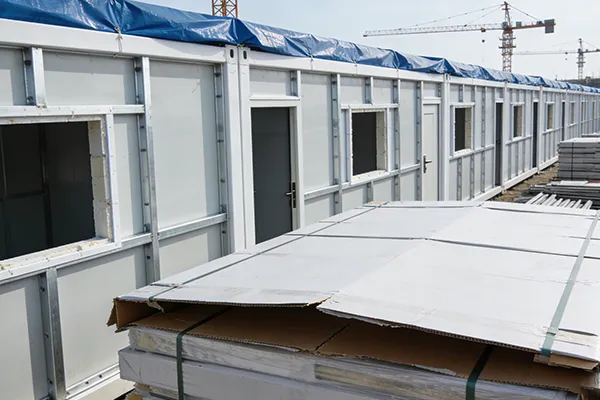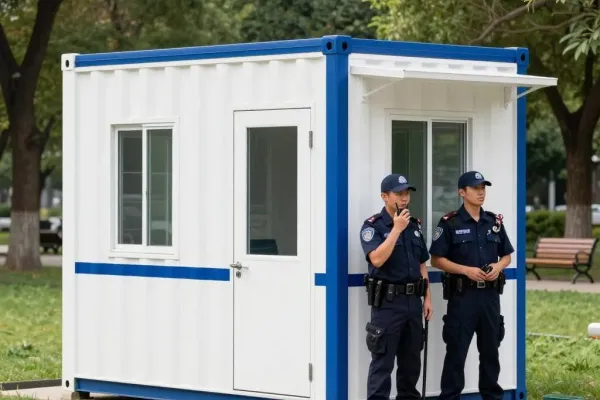


Project developers, contractors, and government agencies face immense pressure to deliver housing and infrastructure projects on time and within budget. Traditional construction methods are plagued by slow timelines, high labor costs, and logistical complexities, especially in remote locations.
These delays directly impact project ROI, increase the total cost of ownership (TCO), and can jeopardize mission-critical operations, from housing a workforce to deploying emergency relief shelters. A single delay can cascade, causing budget overruns and damaging stakeholder confidence. The need for a rapid, scalable, and financially viable building solution has never been more critical.
This analysis details the investment case for expandable container houses as a strategic solution. We will examine the capital expenditure (CAPEX), operational efficiency, structural lifespan, and return on investment (ROI) for commercial and government projects, providing the data needed for informed procurement decisions.
What Is an Expandable Container House? (Project-Level Overview)
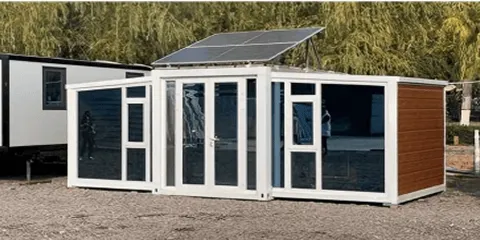
From an engineering perspective, an expandable container house is a prefabricated, volumetric modular building system. It is designed around a high-tensile Corten steel frame, conforming to standard ISO shipping container dimensions for transport. Its key feature is an integrated mechanical expansion system (folding or sliding) that increases the interior floor space by 2-3x upon deployment.
Unlike a standard container conversion, these units are manufactured specifically for habitation and commercial use. The entire building envelope—including structural insulated panels (SIPs), pre-installed electrical (Romex wiring, LED lighting), plumbing (PEX piping), and HVAC systems—is completed in a controlled factory environment. This ensures quality control and radically accelerates on-site commissioning.
Initial Cost vs. Traditional Construction (CAPEX Comparison)
For project owners, the primary financial advantage lies in the significant reduction of initial Capital Expenditure (CAPEX). Factory-based manufacturing and minimized on-site labor lead to predictable and substantially lower costs.
| Metric | Expandable Container House (Project Grade) | Traditional On-Site Construction | Analysis |
| Unit CAPEX | $15,000 – $60,000+ | $150,000 – $500,000+ | 50-70% lower initial investment per unit. |
| On-Site Labor | Minimal (assembly/utility hookup) | Extensive (framing, MEP, finishing) | Reduces dependency on skilled local labor. |
| Construction Timeline | 4-8 weeks (factory) + 1-3 days (on-site) | 6-12+ months | Accelerates project completion and revenue generation. |
| Total Cost of Ownership (TCO) | Lower due to durable materials & low maintenance | Higher due to prolonged build & material costs | Predictable TCO is a key benefit for budget planning. |
This cost structure makes affordable modular homes a feasible solution for large-scale housing projects.
Lifespan & Structural Durability (Steel Frame & Design Life)
Investment value is directly tied to asset longevity and durability. The engineering of these units is focused on performance in demanding environments. The typical service life for a steel frame expandable container house is 15–25 years, which can be extended with proper site placement and scheduled maintenance.
- Structural Core: The primary frame is built from Corten steel, known for its high tensile strength and weather-resistant properties.
- Compliance & Standards: Structures are engineered to meet specific wind and snow load requirements. All components, from the light gauge steel internal framing to insulation, can be specified to meet international standards (e.g., ISO, CE).
Transportation & Deployment Efficiency
Logistics are a critical cost center for any large-scale project. This is where expandable units provide a clear competitive advantage.
- Shipping Efficiency: In its folded state, the unit’s dimensions allow for high-density transport. A single 40ft High Cube (HQ) container can transport 6-10 folded units, compared to only 1-2 fixed modular units. This drastically reduces per-unit shipping costs.
- Deployment Speed: On-site installation is rapid. A small crew with a crane or forklift can position and expand a unit in 2-4 hours. A complete camp of 50+ units can be operational in a matter of days, not months. This makes it an ideal emergency housing solution.
- Reduced Site Impact: As a demountable home, it requires minimal foundation work (piers or slab-on-grade) and reduces on-site construction waste, simplifying site management and environmental compliance.
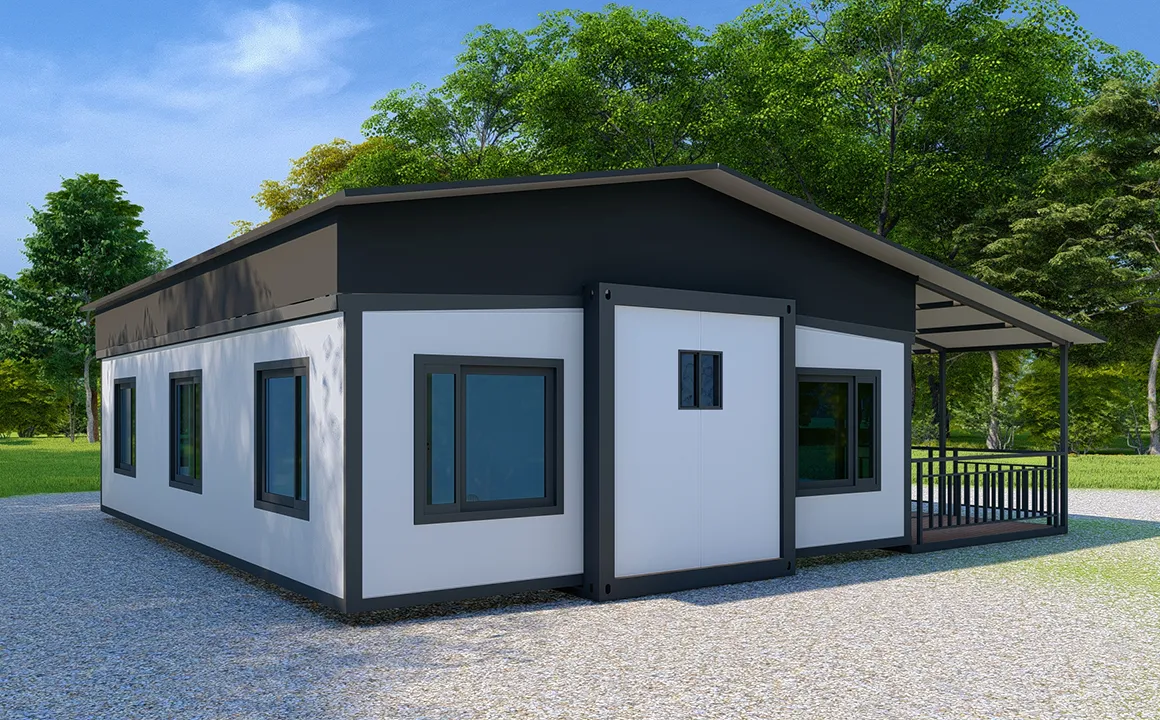
ROI Scenarios: Workforce Camps, Schools, Clinics & Housing Projects
The return on investment extends beyond initial cost savings. The primary value is speed-to-occupancy.
- Workforce Housing: For mining or construction projects, establishing a construction worker housing camp quickly means operations can begin sooner, accelerating revenue generation. The TCO is significantly lower than renting temporary accommodations.
- Disaster Relief Shelters: Government and NGO agencies can deploy housing 10x faster than traditional methods. The high transport efficiency means more lives are impacted with the same logistical budget.
- Modular Office & Education: As a modular office system or temporary school, units can be deployed to meet immediate demand, preventing operational downtime or educational disruption.
- Affordable Housing Developments: Developers can complete multi-unit projects in a fraction of the time, reducing carrying costs and accelerating the sales or rental cycle.
When Expandable Container Houses Are NOT a Good Investment
To ensure project suitability, it’s critical to understand the limitations:
- Permanent, Multi-Story Structures: While they can be stacked (typically 2-3 stories high), they are not designed to replace traditional methods for permanent high-rise buildings.
- Complex Architectural Designs: The modular, rectangular form factor is inherent to the design. Projects requiring highly irregular footprints or complex architectural facades may be better suited to other methods.
- Extreme Luxury Residential: While interiors can be finished to a high standard, the underlying structure is engineered for efficiency and durability, not for the bespoke requirements of the ultra-high-end luxury market.
Manufacturer Capabilities That Affect Investment Value
The quality of the manufacturer is the single most important factor in securing your investment. A capable partner provides more than just a product; they provide a project solution.
Sinomega House (Qingdao) Co., Ltd. is a certified container house factory with over a decade of experience in global project delivery. Our capabilities directly impact your project’s success:
- In-House Manufacturing: Our 10,000㎡ facility near Qingdao Port gives us full control over the production of Folding Container Houses, Detachable Container Houses, and Expandable Container Houses. This ensures quality and delivery timelines.
- OEM/ODM & Engineering Support: We provide full OEM/ODM support, allowing for project-specific customization of layouts, insulation levels, and electrical systems to meet local codes and requirements.
- Compliance & Documentation: We are experts in providing the necessary project documentation (engineering drawings, material certifications, etc.) required for government contracts and commercial developments.
- Logistical Expertise: Our proximity to a major international port and our experience in global export ensure efficient and cost-effective delivery to your project site.
FAQ for Project Buyers
- What is the typical lead time for a bulk order?
Lead time is typically 4-8 weeks for production, depending on order volume and customization. - Can you accommodate different electrical standards (e.g., 110V/220V)?
Yes, our prefabricated container house electrical systems are fully customizable to meet regional standards. - What kind of foundation is required?
A simple concrete slab or pier foundation is sufficient. We provide foundation drawings and specifications. - Do you provide on-site installation support?
We provide detailed installation manuals and video guides. For large-scale projects, on-site supervision can be arranged.
Your Next Step: Project-Specific Analysis
General data provides a baseline, but a true investment analysis requires specifics. The next step is to evaluate this building solution against your project’s unique requirements.
We provide a complimentary, no-obligation project assessment to help you define the scope and potential ROI.