

PAS
Traditional offices are slow to build, expensive to maintain, and hard to relocate. Projects stall, teams wait, and budgets stretch. Containers for office use solve this by delivering fast, flexible, and durable office space wherever your project needs it.
Featured SnippetContainers for office use are modular, portable office solutions made from shipping containers or prefabricated units. They provide secure, customizable, and efficient workspace for construction sites, government projects, and remote operations. With fast delivery, flexible layouts, and long-term durability, container offices are a cost-effective alternative to traditional buildings.
Container House
Executive Summary
Fast deployment: Offices installed in days, not months
Flexible use: Suitable for temporary or long-term projects
Cost-efficient: Lower CAPEX than traditional buildings
Custom-ready: Layout, insulation, utilities, and finishes tailored to needs
Global logistics: Shipping-friendly modular units
Best fit when: Projects need speed, mobility, and predictable budgets
As a China-based factory specializing in modular container houses, we work closely with contractors, EPC companies, governments, and NGOs worldwide. In this article, I’ll share practical insights from real projects to help you decide whether a container office is the best choice for your next build—and how to specify it correctly.
Outline
What are containers for officeuse and why are they growing fast?
How does an office containercompare with traditional buildings?
Why choose mobile office containersfor construction sites?
How can a container officeintegrate storage and workspace?
What sizes and layouts fit different office spaceneeds?
Are container offices suitable as a home officeor remote base?
What customization options improve comfort and productivity?
Rent or buy: which rentalmodel makes sense?
How shipping, delivery, and installation really work
How to request a custom quoteefficiently
1. What are containers for office use and why are they growing fast?
An office built from modular units is designed to deliver immediate, usable workspace with predictable costs. Unlike permanent buildings, a container-based office arrives mostly finished, reducing on-site work and delays.
In global projects—mining camps, disaster relief bases, infrastructure sites—we see strong demand because these offices combine space-saving design with speed. They also adapt easily to changing location needs, which is critical for temporary or phased developments.
2. How does an office container compare with traditional buildings?
A traditional office requires foundations, permits, and long build cycles. An office container, by contrast, is prefabricated in a controlled factory environment and delivered ready to use.
| Aspect | Traditional Office | Office Container |
| Build time | 3–12 months | 2–6 weeks |
| Cost control | Variable | Predictable |
| Mobility | Fixed | Portable |
| Reuse | Limited | High |
| Sustainability | Medium | Efficient |
From my experience, clients choose container offices as the best choice when timelines are tight and flexibility matters.
3. Why choose mobile office containers for construction sites?
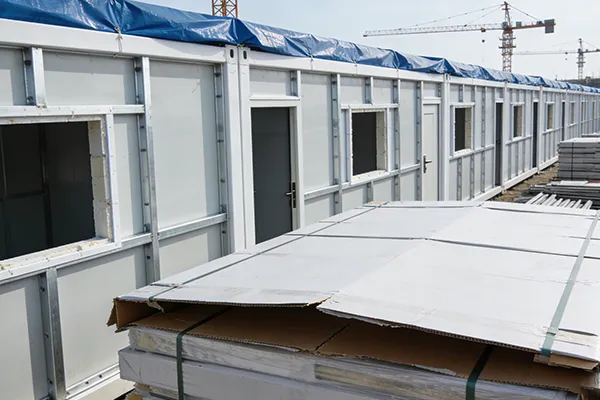
Construction sites need workspace close to operations. Mobile office containers provide on-site management rooms, meeting areas, and secure document handling.
They can be installed as a ground level office with direct access via a reinforced door, proper clearance, and anti-slip floor systems. For large projects, stacking units vertically creates scalable office space without expanding the footprint.
4. How can a container office integrate storage and workspace?
Many projects require both administration and storage. A combo layout merges desks with secure storage for tools, files, or IT equipment.
Typical configurations include:
Front office storage area with shelve systems
Rear storage container section for inventory
Shared lighting and ventilation for efficiency
This dual-function design optimizes storage space while maintaining daily productivity.
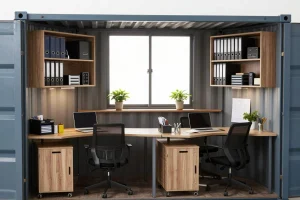
How can a container office integrate storage and workspace?
5. What sizes and layouts fit different office space needs?
Standard modules commonly use 20’ or 40’ footprints, measured in ft. A single unit suits small teams, while multiple modules combine into open-plan layouts.
Layout planning focuses on:
Desk spacing and ergonomic circulation
Natural light via insulated window systems
Electrical outlets for IT and communications
Choosing the right size early prevents costly modifications later.
6. Are container offices suitable as a home office or remote base?
Yes—especially for remote professionals, engineers, or site managers. A container-based home office offers privacy, security, and separation from living areas.
With insulation, heating, and acoustic panels, these offices remain comfortable year-round. In remote location projects, they become the ideal workspace for supervision and reporting.
7. What customization options improve comfort and productivity?
Every project has unique requirement. Our factory supports customization including:
Wall and ceiling insulation
Integrated furniture and built-in desk systems
LED lighting and climate control
Interior paint and exterior coatings
We use steel frames with interior plywood panels, balancing strength and comfort. These upgrades transform a basic module into a professional environment.
8. Rent or buy: which rental model makes sense?
Short-term projects often prefer mobile office containers for rent. Long-term operations benefit from ownership due to lower lifecycle costs.
| Scenario | Recommendation |
| 3–12 months | Rent |
| 1–3 years | Evaluate both |
| 3+ years | Purchase |
A clear rental or purchase plan ensures cost efficiency and simplifies maintenance planning.
9. How shipping, delivery, and installation really work
Our modules are designed for international shipping. Each shipping container format fits standard transport, loaded by truck and crane.
Key steps:
Factory pre-installation
Global deliverycoordination
On-site setupand utilities connection
Final inspection and handover
Once installed, offices are ready for immediate use, backed by a clear warranty and service coverage.
10. How to request a custom quote efficiently
To receive an accurate quote, we recommend sharing:
Intended office use
Required workspace capacity
Climate and location conditions
Desired custom features
A detailed brief allows us to provide a fast custom quote aligned with your budget and timeline.
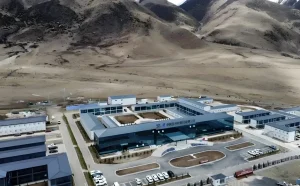
Container houses are applied in factories
FAQs
Are container offices durable enough for harsh environments?
Yes. They are weather-resistant, durable, and designed for industrial and remote sites.
Can container offices be relocated after use?
Absolutely. They are flexible and can be moved multiple times with minimal wear.
Do container offices meet safety standards?
They are built with certified material, proper electrical outlets, and compliant fire protection options.
How long can a container office last?
With proper maintenance, they support long-term use comparable to permanent structures.
Are container offices affordable for large projects?
Yes. Their affordable pricing and modular nature make them a perfect solution for scaling.
Key Takeaways
Containers for office use deliver speed, flexibility, and cost control
Ideal for construction, government, and remote projects
Modular designs combine workspace and storage efficiently
Customization improves comfort and productivity
Renting or buying depends on project duration
Next Step:
If you’re planning a project and need a reliable, scalable office solution, I recommend starting with a requirements review. Share your project details, and we’ll help you define the most efficient container office configuration—before you commit capital or timelines.