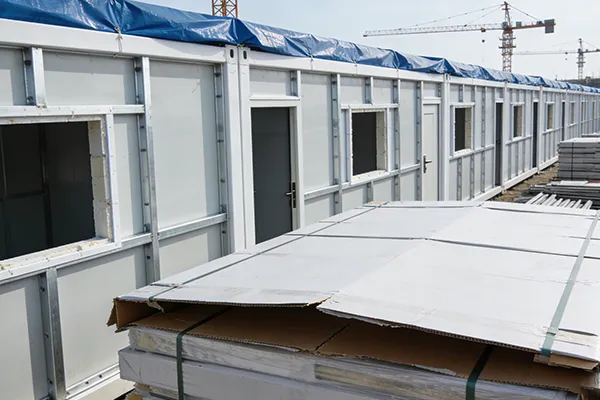


Bad jobsite offices slow projects down. Paperwork gets messy, meetings feel cramped, and teams waste time walking to off-site buildings. That cost adds up fast. The solution is simple: use a shipping container and convert it into a safe, comfortable container office that’s ready on day one.
Yes—you can use a shipping container as an office. A shipping container office works well as temporary office space or long-term office space when you plan the right modification: windows and doors, insulation, power, hvac, and permits. Many B2B teams choose a steel shipping container because it’s durable, portable, and easy to place on-site—especially on a construction site.
construction worker housing
Article Outline
What is a container office, and how is it different from a storage container?
Is a shipping container office legal—do I need permits or approvals?
20ft, 40 ft, or 10 ft: what size shipping container works for a small office?
What modifications do you need to turn a shipping container into an office?
How do insulation, ventilation, and HVAC affect comfort in a container office?
Windows and doors: how do you balance daylight, security, and airflow?
Is a container office cost-effective compared with traditional office space?
How do container offices perform on-site in tough weather conditions?
Container office conversion for business needs: layouts, partitions, and amenities
How to buy the right shipping container for an office container project (new vs used)
1) What is a container office, and how is it different from a storage container?
A container office is a shipping container (also called a cargo container) that we convert into usable office space. It’s not just a storage container with a desk inside. A real office container needs comfort, safety, and daily workflow features—lights, sockets, data lines, and climate control.
Here’s the key point I tell contractors and EPC buyers: shipping containers are designed for transport strength, but office comfort requires smart modification. That’s why a proper container office conversion includes insulation, ventilation, and usually hvac.
As a China-based factory making modular container houses (folding, detachable, flat pack, expandable), we build container-based workspaces to be ready to use on arrival. Our B2B clients want fewer surprises, faster setup, and a smooth handover.
Quick comparison table
| Use case | Basic storage container | Shipping container office |
|---|---|---|
| Purpose | Store tools/materials | Daily workspace for staff |
| Comfort | Minimal | insulation, air conditioning, lighting |
| Access | One door | windows and doors, secure entry |
| Fit-out | None | wiring, hvac, flooring, ceiling finishes |
| Best for | storage container needs | site office, meetings, admin |
2) Is a shipping container office legal—do I need permits or approvals?
In most places, the answer is: you usually need approval when a shipping container becomes occupied office space. Rules vary by country, state, and city, so we always advise buyers to check local zoning and building departments early.
A practical way to think about it:
A storage container placed temporarily may have simpler rules.
A shipping container office with power, people, and long-term placement often triggers permits and code checks.
For safety and standardization, many containers follow international container standards. For example, ISO classifies and defines freight container dimensions and ratings (useful when you specify a steel shipping container size in procurement).
And the IMO’s Convention for Safe Containers (CSC) focuses on safety requirements for containers used in international transport and handling.
What we see in real B2B projects
Government and municipal owners often require permits, site plans, and fire safety checks.
Mining and industrial operators often add internal HSE requirements on top of local rules.
NGOs and relief organizations may use fast-track temporary approvals—but still need safe electrical and ventilation.
Quote we often repeat internally: “Speed is great, but compliance keeps the project open.”
3) 20ft, 40 ft, or 10 ft: what size shipping container works for a small office?
Size planning is where projects get easy—or painful.
A 20ft shipping container is the most common choice for a small office on a construction site. It’s easy to transport, fits many sites, and supports a clean layout. Larger teams often choose a 40 ft container, or connect multiple units for conference rooms and admin zones.
Simple size guide (buyer-friendly)
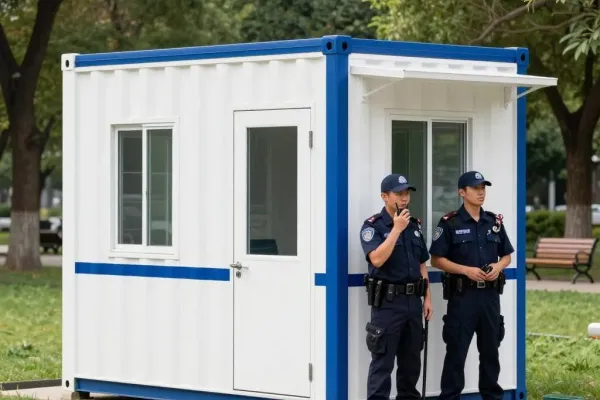
10 ft: guard booth, check-in, compact supervisor desk
20ft: 2–4 people workspace, small meeting corner
40 ft: 6–10 people or split zones (admin + meeting + storage)
A good container office conversion also considers:
one location vs frequent moves (how often you will relocate)
the site’s crane/forklift access
whether you need a mobile office or semi-permanent site office
guard booth
4) What modifications do you need to turn a shipping container into an office?
This is the heart of the question: Can I use a shipping container as an office?
Yes—if you do the right modification.
When we modify a container, we focus on three priorities: safety, comfort, and work efficiency.
Core modifications checklist
Windows and doors (security + daylight + emergency egress planning)
Electrical system (lights, sockets, breaker box, optional data points)
Insulation (walls + roof; “add insulation” is not optional for comfort)
HVAC or at least strong ventilation (heat/cold management)
Interior finishing (flooring, wall panels, ceiling)
Optional partition for privacy or meeting areas
Exterior paint and corrosion protection (for harsh weather conditions)
Extra options B2B buyers often request
solar panels to provide power in remote areas
restroom module (depending on project and permits)
furniture pack: desks, cabinets, seating
enhanced security: steel shutters, reinforced frames
Because containers are designed as structural steel boxes, cutting openings must be engineered carefully. If you cut large windows or doors, reinforcement and proper fabrication matter—often involving cutting, bracing, and professional weld work.
5) How do insulation, ventilation, and HVAC affect comfort in a container office?
If your team sweats in summer and freezes in winter, the office will fail—no matter how nice it looks.
A steel shipping container transfers heat quickly. That’s why insulation and hvac are the big difference between “just a box” and real office space.
Comfort system basics
Insulation reduces heat gain/loss and helps keep sound and vibration down.
Ventilation keeps air fresh and reduces moisture risks.
HVAC (heating + cooling) makes the space stable and productive.
For construction environments, ventilation is a key safety concept in occupational health guidance. OSHA highlights ventilation as an important engineering control for maintaining air quality in workplaces.
Rule of thumb from our project experience
Hot climates: stronger insulation + reliable cooling (air conditioning) + shading
Cold climates: thicker insulation + sealed openings + heating planning
Humid zones: moisture control + ventilation strategy to avoid condensation
This is where many buyers ask us to customize the package. We build to your specific needs, because “one size fits all” doesn’t work across deserts, coastal sites, and mountain projects.
6) Windows and doors: how do you balance daylight, security, and airflow?
Windows and doors are the most visible part of a shipping container office—and the most likely to cause problems if done wrong.
What we recommend (simple and practical)
Use daylight windows on the “safe side” of the site (avoid direct equipment traffic).
Add opening sections for natural airflow, but keep security in mind.
If the office is on-site overnight, choose anti-theft window grills or shutters.
Plan door swing and steps for safe daily entry.
Common mistake: Too many large openings without reinforcement.
A cargo container is strong because of its frame. When you cut openings, you must preserve strength with proper framing and structural design.
In many projects, we help clients tailor the window/door plan to the workflow:
reception window for permits and paperwork
side door for staff
emergency exit if required by local code
7) Is a container office cost-effective compared with traditional office space?
For many B2B clients, the big win is speed and predictability.
A container office can be more cost-effective than building a traditional office on a short schedule—especially when your project is temporary or remote.
Why many buyers choose shipping containers
Relatively inexpensive compared with brick-and-mortar buildouts
Faster deployment (factory fabrication + quick placement)
Easy to move (a portable solution you can relocate)
Strong structure (a durable steel shipping container)
That said, the price depends on your business needs:
more insulation + better HVAC + more finishes = higher initial cost
but often lower life-cycle cost because the unit is long-lasting and reusable
Mini ROI chart (simple visual)
Value over time (higher is better)
Traditional office space: ████████████ (high comfort, slow to build)
Shipping container office: ██████████ (fast, reusable, strong)
Basic used storage containers: █████ (cheap, low comfort)
If your project is a workforce camp, a mining operation, or a fast-start municipal site, a versatile and cost-effective solution is usually the reason buyers contact us.
8) How do container offices perform on-site in tough weather conditions?
This is where steel containers shine.
A shipping container is built to withstand transport stress. On a jobsite, that means:
good structural integrity in wind and handling
strong resistance to impact compared with light site cabins
reliable security for documents and equipment
But performance still depends on the conversion quality:
roof treatment and sealing
door/window flashing
insulation and condensation control
proper base and leveling (avoid twisting)
We often remind EPC teams: even a strong steel box needs correct installation on the foundation or blocks. A twisted base can cause doors to stick and can stress the frame over time.

shipping container office
9) Container office conversion for business needs: layouts, partitions, and amenities
The best container office conversion starts with how people work.
Ask these “buyer questions” before you build:
How many people work here daily?
Do you need quiet calls or conference rooms?
Is this a site office for supervisors, or a full admin hub?
Will the office stay in one location, or will you move it monthly?
Popular layouts we build
Small office layout (2–4 seats) + filing wall + coffee corner
Meeting-first layout: table + screen + storage
Split layout with partition: admin side + manager side
Multi-unit complex: office + dorm + clinic + storage
Amenity options
kitchenette corner
restroom module (where permitted)
smart access control
optional renewable add-ons like solar panels
Because we are a factory specializing in modular container houses (folding, detachable, flat pack, expandable), we can configure and ship project-ready units—so contractors install fast and start work.
10) How to buy the right shipping container for an office container project (new vs used)
Buyers often ask whether they should use a new container or repurposing used units.
New or “one-trip” containers
Cleaner interiors
Less repair work
More predictable conversion quality
Good for brand owners and long-term projects
Used containers / used storage containers
Lower purchase cost
May need refurbish work (rust, dents, floor condition)
Best for tight budgets or temporary deployments
When you’re trying to convert used units, inspect:
door sealing and alignment
corrosion (especially roof and corner posts)
floor condition (chemical smells, stains)
structural damage from past handling
As a supplier, we guide customers toward the option tailored to your needs—because the cheapest container can become expensive after repairs and delays.
FAQs
Can a shipping container be used as a permanent office?
Yes. A shipping container office can be permanent office space if permits, foundation, and building services meet local rules. Many owners use it long-term because a steel shipping container is durable and long-lasting when converted correctly.
Do I need insulation in a container office?
In most climates, yes. Insulation helps control heat and cold, improves comfort, and protects interior finishes. If you skip it, your workspace may feel like an oven or a fridge.
Is it safe to cut windows and doors into a cargo container?
It can be safe if the modification is engineered and reinforced. Cutting large openings without proper structure can weaken the container frame. Use professional fabrication and reinforcement for windows and doors.
Is a container office cost-effective for construction sites?
Often, yes. A container office is usually more cost-effective than building a traditional office space when you need fast deployment, security, and the ability to relocate.
Should I buy new or repurpose used storage containers?
If you want speed and clean finish, new is easier. If budget is tight, repurposing used containers can work, but inspect carefully and expect some refurbish work.
Key takeaways (save this)
Yes, you can use a shipping container as an office—with the right container office conversion.
Plan permits early for occupied office space, especially for government and EPC projects.
A 20ft unit fits most small office and jobsite admin needs; 40 ft suits bigger teams.
Core modification items: windows and doors, electrical, insulation, hvac, and good sealing.
A shipping container office is portable, secure, and often cost-effective for temporary office space and remote on-site projects.
Choose new vs used storage containers based on schedule, finish level, and risk tolerance.
Work with a factory that can customize and deliver units ready to use—so you can start work faster.